
How Ministry Civil Servants Drive Innovation in Public Service Delivery?
Gusti Ayu Tita P
27 Juli 2026
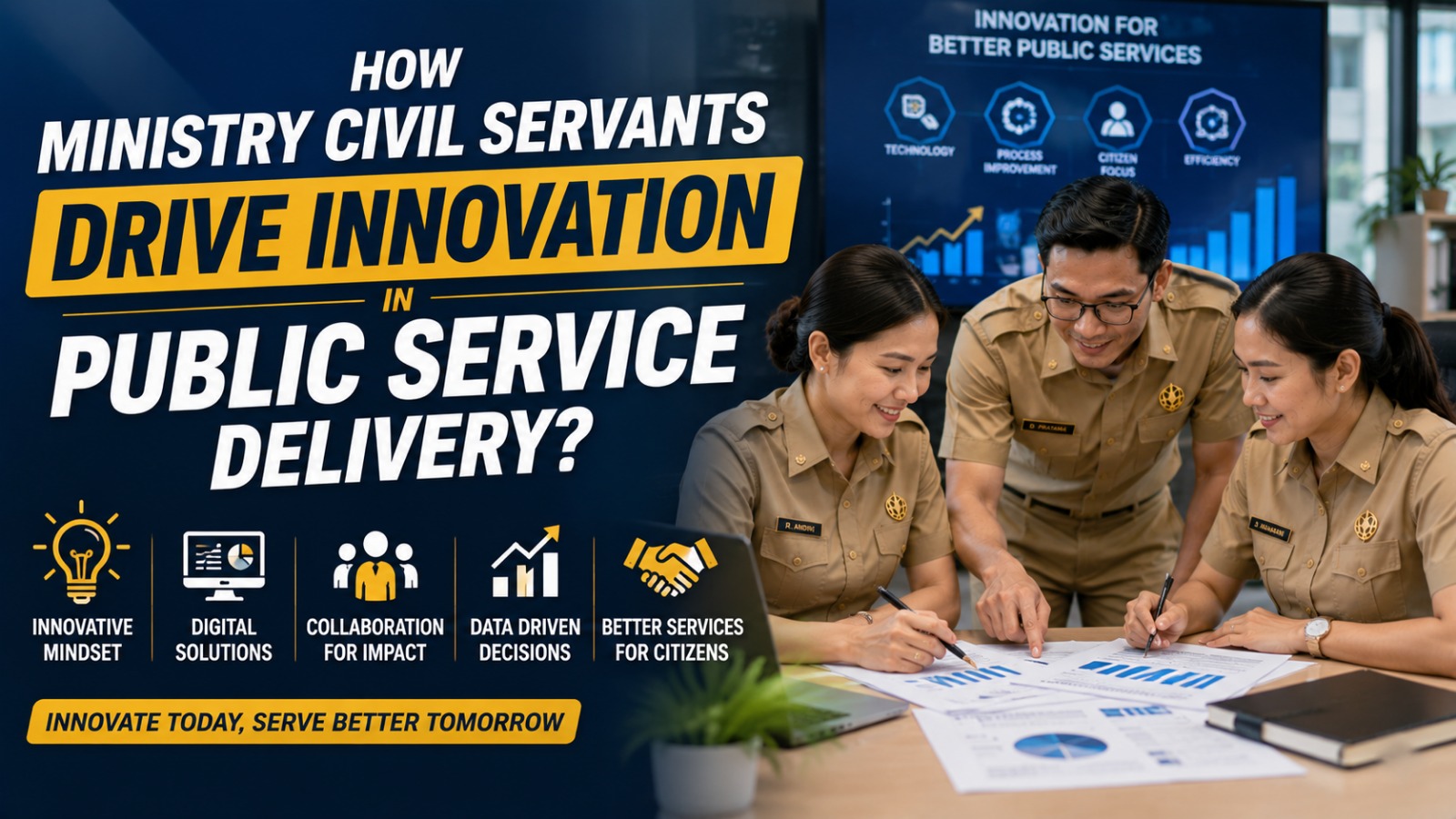
Public service delivery continues to evolve as communities expect government services to become faster, easier, more transparent, and more responsive. In this changing environment, ministry civil servants have an important role in creating and implementing public service innovation. Their work is not limited to following existing procedures but also includes identifying problems, finding better solutions, and improving the way government services reach citizens.
Innovation in public services does not always require complex technology or major organizational changes. Simple improvements in procedures, communication, accessibility, and service management can also create meaningful benefits. By combining professional competence, digital skills, creativity, and a strong commitment to citizens, ministry civil servants can help build government services that are more effective and relevant to public needs.
UNDERSTANDING INNOVATION IN PUBLIC SERVICE DELIVERY
Innovation in public service refers to the development or adoption of new and better approaches to delivering services to citizens. It can involve new technologies, improved procedures, simplified administrative processes, or creative ways of responding to public needs. The main purpose is to create services that provide greater value and improve the experience of citizens.
Ministry civil servants are often in a strong position to identify areas that need improvement because they understand government processes and interact with various stakeholders. Their direct experience can help reveal unnecessary procedures, communication gaps, or difficulties faced by service users. By turning these observations into practical solutions, civil servants can become important drivers of government innovation.
IDENTIFYING PROBLEMS AND PUBLIC NEEDS
Effective innovation begins with understanding the actual problems faced by citizens. Ministry civil servants can gather information through public feedback, complaints, surveys, consultations, and service evaluations. These sources can help government institutions identify which services are difficult to access or which procedures need improvement.
Understanding public needs also requires civil servants to look beyond internal organizational perspectives. A process that appears efficient from inside an institution may still be complicated for citizens. By adopting a citizen-centered approach, civil servants can develop solutions that address real challenges and make public services more accessible and convenient.
USING DIGITAL TECHNOLOGY FOR BETTER SERVICES
Digital technology is one of the most important tools available for improving public service delivery. Ministry civil servants can support the development of digital platforms, electronic document systems, online applications, and integrated information services. These solutions can reduce unnecessary administrative steps and make services available more conveniently.
However, successful digital innovation requires more than simply introducing new technology. Civil servants need to ensure that digital services are easy to use, secure, and accessible to different groups of citizens. Digital transformation should also consider people who have limited internet access or digital skills so that innovation does not create new barriers to public services.
SIMPLIFYING ADMINISTRATIVE PROCESSES
Complex procedures can make public services difficult and time-consuming for citizens. Ministry civil servants can contribute to innovation by reviewing existing processes and identifying steps that are unnecessary or repetitive. Simplifying procedures can reduce administrative burdens while allowing employees to focus on tasks that require greater attention.
Process improvement should still comply with applicable regulations and accountability requirements. The goal is not simply to remove procedures but to make them more efficient, transparent, and user-friendly. When administrative processes are designed carefully, citizens can understand what they need to do and complete services with fewer difficulties.
CONCLUSION
Ministry civil servants have an important role in supporting public service innovation by identifying problems, understanding citizen needs, improving administrative processes, and using digital technology effectively. Innovation does not always require major changes, because simple improvements in procedures, communication, and accessibility can also make government services more efficient and responsive.
By developing professional competence, digital skills, creativity, and a citizen-centered mindset, ministry civil servants can contribute to better public services. Continuous evaluation and willingness to improve are also important to ensure that innovation remains relevant to the changing needs of communities.
About the Author
Gusti Ayu Tita P
Author — STEKOM University
An active author focused on academic issues, educational technology, and human resource development in the campus environment.















