
How Ministry Of Public Works Programs Support Better National Connectivity?
Gusti Ayu Tita P
11 Agustus 2026
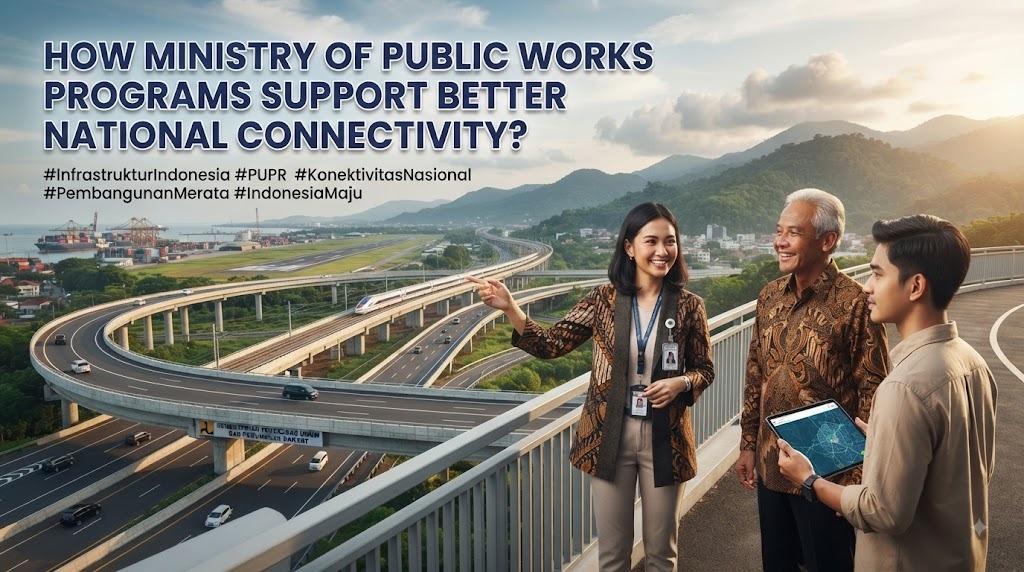
National connectivity is an important foundation for economic growth and equal access to public services. Roads, bridges, water infrastructure, and other public facilities help connect communities, regions, and economic centers. In Indonesia, the Ministry of Public Works has an important role in developing and maintaining infrastructure that supports national connectivity. These programs can make travel, transportation, trade, and regional development more efficient.
Good infrastructure is especially important for a country with a large territory and diverse geographical conditions. Remote areas may face higher transportation costs and limited access to markets, education, and health services. Through infrastructure development and maintenance, the government can reduce connectivity gaps between regions. Better national connectivity can therefore support economic opportunities while improving mobility for communities.
THE ROLE OF THE MINISTRY OF PUBLIC WORKS
The Ministry of Public Works is responsible for important areas of national infrastructure development, including roads, bridges, water resources, and housing-related infrastructure according to its governmental responsibilities. These sectors are closely connected to the movement of people and goods. Well-planned infrastructure can reduce travel barriers and improve access between urban and rural areas. The ministry also works with other government institutions and regional authorities to support infrastructure development.
Infrastructure programs need to consider both current needs and long-term development goals. Projects are generally planned based on factors such as population, economic activity, regional potential, and existing infrastructure conditions. Infrastructure planning helps ensure that public investment is directed toward areas with significant connectivity needs. Proper planning can also reduce inefficient spending and improve the benefits received by communities.
ROAD DEVELOPMENT FOR BETTER REGIONAL ACCESS
Road infrastructure is one of the most visible elements of national connectivity. Roads connect cities, villages, industrial areas, ports, agricultural centers, and other important locations. Better roads can shorten travel times and reduce transportation costs for businesses and communities. This makes road connectivity an important factor in supporting economic activity.
Road development is not limited to building new routes. Maintaining and improving existing roads is also essential for keeping transportation safe and reliable. Damaged roads can increase vehicle operating costs and create delays. Regular maintenance can extend infrastructure life and ensure that connectivity remains effective over the long term.
BRIDGES CONNECTING SEPARATED AREAS
Bridges provide important connections across rivers, valleys, coastal areas, and other geographic barriers. In regions with difficult terrain, a bridge can significantly improve access to schools, markets, health facilities, and workplaces. Bridge infrastructure can also reduce travel distances and make transportation more efficient. This is particularly valuable for communities that previously depended on indirect routes.
Bridge construction must consider safety, environmental conditions, traffic demand, and long-term durability. Engineers need to assess factors such as structural loads, flooding, earthquakes, and local geographic conditions. Proper design and maintenance help ensure that bridges remain safe for public use. Strong bridge networks can contribute to more reliable national transportation systems.
SUPPORTING ECONOMIC CENTERS AND LOGISTICS
National connectivity is closely related to the movement of goods. Farmers, manufacturers, traders, and businesses depend on reliable transportation networks to distribute products. Better roads and bridges can reduce logistical delays and improve connections between production areas and markets. Efficient logistics can strengthen competitiveness and support regional economic development.
Infrastructure development can also improve access to ports, industrial zones, tourism destinations, and agricultural areas. When transportation networks are connected, businesses can reach consumers more easily. This can create new economic opportunities in regions that were previously difficult to access. As a result, infrastructure can become an important driver of regional growth.
CONNECTING RURAL AND REMOTE COMMUNITIES
Infrastructure development has an important social dimension because connectivity affects access to essential services. Rural and remote communities may experience difficulties when roads or bridges are limited or poorly maintained. Better infrastructure can make it easier for residents to reach schools, hospitals, markets, and government services. Rural connectivity can therefore contribute to more balanced regional development.
Improving access in remote areas also creates opportunities for local economic activities. Farmers and small businesses can transport products more efficiently when transportation routes become more reliable. Tourism and other local industries may also benefit from improved accessibility. However, infrastructure projects should be designed according to local conditions and community needs.
WATER INFRASTRUCTURE AND REGIONAL DEVELOPMENT
Although roads and bridges are central to connectivity, water infrastructure also contributes to regional development. Irrigation systems can support agricultural production and improve the reliability of farming activities. Water infrastructure can also help manage floods and support water availability in different regions. These functions can indirectly strengthen local economies and community resilience.
Effective water management requires infrastructure that is properly planned, operated, and maintained. Water infrastructure should consider environmental conditions, population needs, and long-term sustainability. Coordinated planning can reduce risks associated with flooding, water shortages, and inefficient resource use. This supports broader development by creating more stable conditions for communities and economic activities.
IMPROVING SAFETY AND TRAVEL EFFICIENCY
Connectivity is not only about having physical infrastructure but also about ensuring that people can use it safely and efficiently. Road quality, bridge conditions, drainage, traffic management, and maintenance all influence transportation safety. Infrastructure programs that prioritize safe transportation can reduce risks for road users. Good infrastructure can also make travel more predictable.
Travel efficiency is another important benefit. Better road conditions can reduce unnecessary delays and vehicle operating costs. Reliable infrastructure is particularly important for logistics services that depend on predictable travel times. Improving both safety and efficiency can increase the overall value of infrastructure investment.
USING TECHNOLOGY IN INFRASTRUCTURE DEVELOPMENT
Digital technology is increasingly useful in planning and managing infrastructure. Geographic information systems, digital mapping, remote sensing, and construction monitoring can provide more detailed information for infrastructure projects. These technologies can support better decision making and help identify infrastructure conditions. Smart infrastructure management can also improve maintenance planning.
Technology can also help monitor construction progress and infrastructure performance. Digital data can support inspections and make it easier to identify areas that require maintenance. However, technology must be supported by skilled personnel and reliable data. Combining digital tools with professional expertise can improve the effectiveness of infrastructure programs.
MAINTAINING INFRASTRUCTURE FOR LONG TERM BENEFITS
Building infrastructure is only one part of improving national connectivity. Roads, bridges, and other facilities require regular inspection and maintenance to remain functional. Without proper maintenance, infrastructure can deteriorate and eventually require more expensive repairs. Infrastructure maintenance is therefore essential for protecting public investment.
Long-term maintenance planning can also improve service reliability. Authorities can identify potential problems early and address them before they become major failures. This approach can reduce disruption to transportation and economic activities. Sustainable connectivity requires infrastructure that remains usable throughout its intended service life.
CHALLENGES IN DEVELOPING NATIONAL CONNECTIVITY
Indonesia faces several challenges in developing national infrastructure. Its large territory, diverse geography, natural disasters, and uneven regional development can make infrastructure projects complex. Construction in mountainous, remote, or island regions may require additional resources and specialized approaches. Geographical challenges must therefore be considered during project planning.
Funding, land acquisition, environmental considerations, and coordination between institutions can also affect project implementation. Infrastructure development needs transparent planning and effective supervision to ensure that projects achieve their intended objectives. Public participation can also help identify local needs and potential impacts. Addressing these challenges requires cooperation between national and regional stakeholders.
SUPPORTING SUSTAINABLE NATIONAL CONNECTIVITY
Future infrastructure development needs to consider environmental sustainability. Projects should assess potential impacts on ecosystems, water resources, communities, and surrounding areas. Sustainable construction practices can help reduce unnecessary environmental damage. Sustainable infrastructure can provide connectivity while supporting long-term environmental and social goals.
Climate resilience is also becoming increasingly important. Roads and bridges need to withstand risks such as flooding, landslides, extreme rainfall, and other environmental hazards. Designing infrastructure according to local risks can improve its durability. By combining connectivity with sustainability and resilience, infrastructure investment can provide greater long-term benefits.
CONCLUSION
Programs led by the Ministry of Public Works can play an important role in improving national connectivity through road development, bridge construction, water infrastructure, maintenance, and regional access improvements. Better infrastructure helps connect communities with markets, education, health services, and economic opportunities. It can also reduce transportation barriers and support more balanced regional development.
However, successful connectivity requires more than constructing physical facilities. Good planning, regular maintenance, safety, technology, sustainability, and cooperation are essential for achieving long-term results. By continuing to improve infrastructure quality and adapting projects to regional needs, public works programs can help build a more connected, efficient, and resilient Indonesia.
About the Author
Gusti Ayu Tita P
Author — STEKOM University
An active author focused on academic issues, educational technology, and human resource development in the campus environment.















