
How Parents Can Help Children Deal With Family Conflict?
Gusti Ayu Tita P
8 September 2026
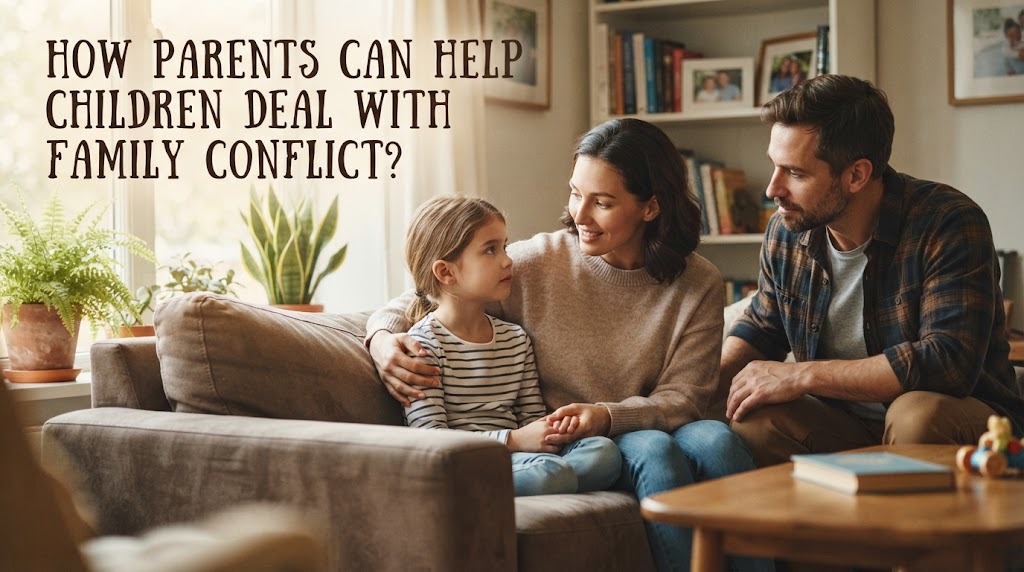
Family conflict can affect children even when the disagreement is between adults. Children may feel confused, worried, angry, or responsible for problems that are not their fault. The way parents respond during and after conflict can strongly influence how children understand emotions, communication, and relationships. Parents do not need to create a completely conflict-free home, because disagreements can happen in every family. Instead, they can teach children healthy ways to cope with conflict and provide a safe environment for emotional development.
REASSURE CHILDREN THAT THE CONFLICT IS NOT THEIR FAULT
One of the most important things parents can do is clearly tell children that they are not responsible for family conflict. Young children may misunderstand arguments and believe that something they did caused the problem. Parents should explain the situation using simple language that matches the child's age and understanding. They should avoid making children feel responsible for fixing disagreements between adults. Reassurance can help children feel safer and reduce unnecessary guilt.
Parents should also remind children that adults sometimes have different opinions and emotions. A disagreement does not automatically mean that the family will stop loving or caring for one another. Consistent reassurance can help children feel emotionally secure during difficult periods.
CREATE A SAFE SPACE FOR CHILDREN TO TALK
Children need to know that they can express their feelings without being mocked or punished. Parents can create a safe emotional environment by listening calmly when children want to talk about family problems. Instead of immediately correcting their feelings, parents should first try to understand what the child is experiencing. Simple questions such as how they feel or what worries them can encourage honest communication. This helps children learn that their emotions are important and deserve attention.
Parents should avoid forcing children to choose sides during disagreements. Children should not become messengers or mediators between family members. Allowing them to remain outside adult conflicts protects their emotional wellbeing and reduces unnecessary pressure.
LISTEN TO THEIR FEELINGS WITHOUT JUDGING
Every child responds to conflict differently. Some children may talk openly, while others may become quiet or avoid discussing their feelings. Parents should pay attention to changes in behavior and give children opportunities to communicate at their own pace. Active listening means giving full attention, avoiding unnecessary interruptions, and taking the child's concerns seriously. This can help children feel understood rather than alone.
Parents do not always need to provide an immediate solution. Sometimes children mainly need someone who will listen and acknowledge what they are feeling. Statements such as “I understand that this feels difficult” can show emotional support without judging the child's reaction.
KEEP DAILY ROUTINES AS STABLE AS POSSIBLE
Family conflict can make children feel that their normal world has become uncertain. Maintaining familiar routines such as school schedules, meals, homework, and bedtime can provide a sense of stability. Predictable routines help children know what to expect even when family relationships are experiencing tension. Parents should try to maintain normal activities whenever it is safe and practical to do so. Stability can make stressful situations easier for children to manage.
Parents can also continue spending positive time with their children. Reading together, eating meals, playing, or simply talking can remind children that they are still loved and supported. Small moments of connection can make a meaningful difference in a child's emotional wellbeing.
TEACH HEALTHY WAYS TO HANDLE CONFLICT
Parents can use family disagreements as opportunities to teach children about healthy conflict resolution. Children can learn that disagreements should be handled through calm communication rather than insults, threats, or physical aggression. Parents should demonstrate how to express feelings respectfully and listen to different opinions. When adults make mistakes, they can model accountability by apologizing and correcting their behavior. Children often learn communication habits by observing the adults around them.
Parents should also teach children that feeling angry is normal, but hurting others is not an appropriate way to express anger. Emotional regulation can be developed through simple strategies such as taking a short break, breathing slowly, or talking about feelings. These skills can benefit children in relationships both inside and outside the family.
PROTECT CHILDREN FROM ADULT ARGUMENTS
Parents should make an effort to prevent children from being exposed to intense adult disagreements whenever possible. Arguments involving shouting, threats, insults, or aggressive behavior can be particularly distressing for children. Adults should discuss sensitive issues privately when possible and avoid making children witnesses to hostile interactions. Children also should not be asked to carry messages or personal information between adults. Protecting them from inappropriate conflict helps maintain a safer emotional environment.
However, parents do not need to pretend that disagreements never happen. If children witness a disagreement, parents can calmly explain afterward that the situation was handled poorly and that adults are responsible for resolving their own problems. Repairing the situation openly and appropriately can help children understand that conflict can be managed and relationships can recover.
SHOW LOVE AND SUPPORT CONSISTENTLY
During periods of family conflict, children may worry about losing attention or affection. Parents can reduce this fear by showing consistent love, care, and reassurance. Simple actions such as spending time together, asking about school, giving encouragement, and maintaining normal affection can strengthen a child's sense of security. Children need to know that family problems do not change their value or importance. Emotional support is especially important when the home environment feels unpredictable.
Parents should also avoid using affection as a reward for taking a particular side. Unconditional support helps children feel accepted regardless of their opinions or emotional reactions. This can strengthen trust between parents and children over time.
SEEK PROFESSIONAL SUPPORT WHEN NEEDED
Some family conflicts are temporary, while others are serious or continue for a long time. If a child shows persistent fear, sadness, withdrawal, sleep problems, major changes in behavior, or difficulty functioning at school, parents should consider seeking professional guidance. A qualified mental health professional can help children process difficult emotions in an age-appropriate way. Family counseling can also help family members improve communication and develop healthier ways to resolve disagreements. Seeking support does not mean that parents have failed.
Parents should take particular care when conflict involves violence, threats, abuse, or situations that make a child feel unsafe. In such circumstances, safety should be the priority, and appropriate professional or emergency support should be sought.
CONCLUSION
Parents play an important role in helping children cope with family conflict. They can begin by reassuring children that the problems are not their fault and creating a safe space for honest communication. Listening to children's feelings, maintaining stable routines, and showing consistent love can provide important emotional security. Parents should also model healthy communication and protect children from inappropriate adult disagreements. When conflict becomes serious or begins to affect a child's wellbeing, professional support can be valuable. With patience, understanding, and consistent care, parents can help children develop healthier ways to manage difficult emotions and relationships.
About the Author
Gusti Ayu Tita P
Author — STEKOM University
An active author focused on academic issues, educational technology, and human resource development in the campus environment.