
How Peaceful Protests Help Strengthen Democracy
Gusti Ayu Tita P
30 Juli 2026
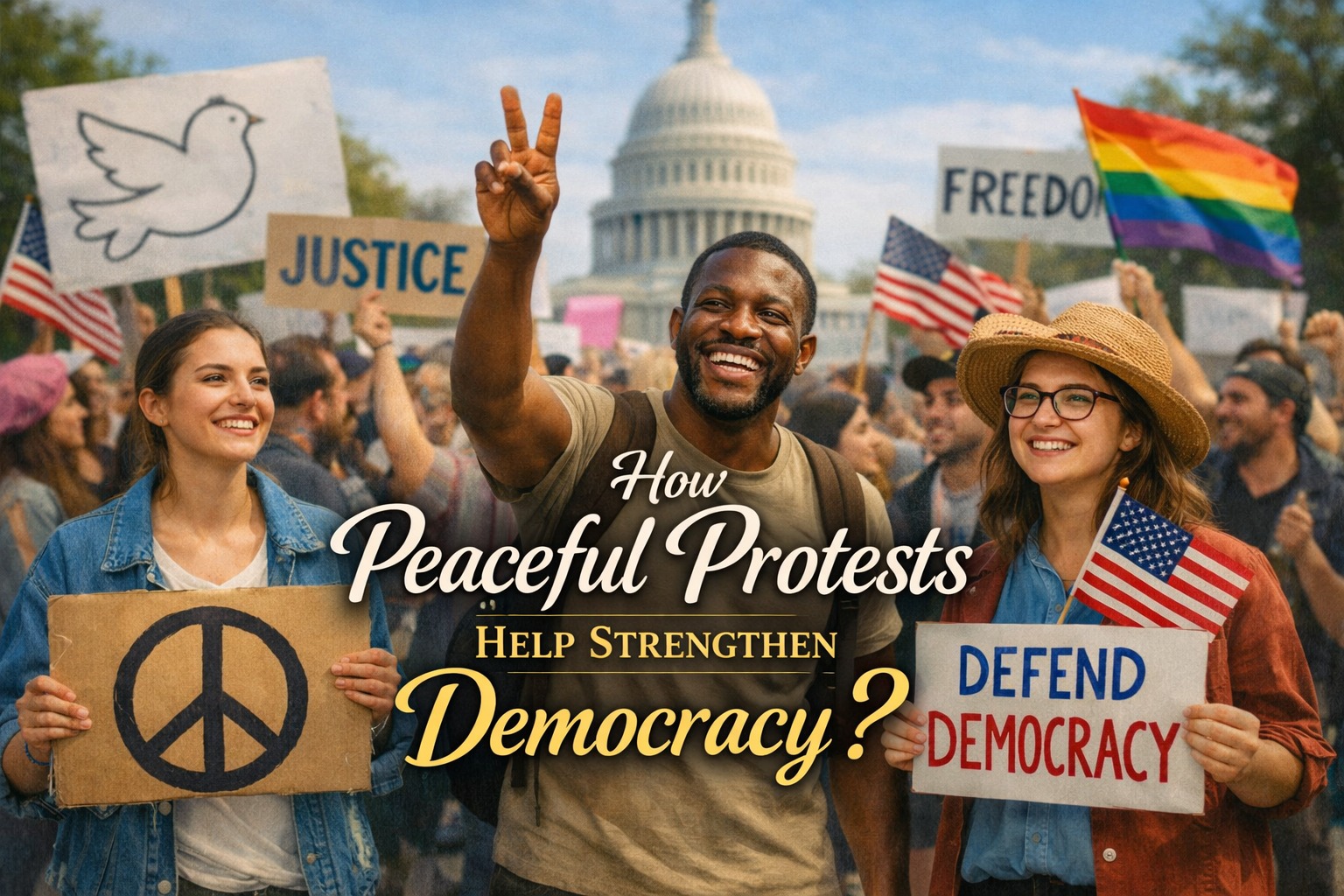
Peaceful protests have always played an important role in democratic societies. They allow people to express opinions, demand justice, and encourage governments to listen to public concerns without using violence. Throughout history, many important social and political changes have been achieved through peaceful demonstrations that united communities around shared goals.
A healthy democracy depends on the participation of its citizens. Peaceful protests give individuals the opportunity to speak up about issues that affect their lives while respecting the rights of others. When demonstrations remain organized, respectful, and lawful, they become a powerful symbol of democratic values and civic responsibility.
THE ROLE OF PEACEFUL PROTESTS IN A DEMOCRACY
A peaceful protest is one of the most visible forms of public participation in a democratic country. It allows citizens to communicate their concerns directly to decision-makers while remaining within the boundaries of the law. Instead of creating fear, peaceful demonstrations encourage discussion and mutual understanding. They also remind leaders that public opinion matters in shaping government policies.
In many countries, peaceful protests have contributed to positive reforms in areas such as education, labor rights, environmental protection, and social justice. These actions show that democracy is not only about voting during elections but also about continuous public engagement. Freedom of expression and freedom of assembly are essential rights that support this process.
HOW PEACEFUL PROTESTS ENCOURAGE GOVERNMENT ACCOUNTABILITY
One of the biggest benefits of peaceful protests is that they encourage government accountability. When citizens gather respectfully to raise concerns, public officials become more aware of the issues affecting society. Constructive criticism can motivate governments to review existing policies and improve public services.
Peaceful demonstrations also increase transparency by bringing important topics into public discussion. News coverage, community conversations, and public debates often grow after a peaceful protest takes place. As a result, governments may become more responsive because they recognize the importance of maintaining public trust.
WHY NONVIOLENCE MAKES PROTESTS MORE EFFECTIVE
Nonviolence helps protests gain greater public support because the message becomes the main focus rather than conflict. Peaceful participants demonstrate discipline, responsibility, and respect for democratic values. This positive image often attracts wider community participation and encourages meaningful dialogue.
Violent actions, on the other hand, can distract attention from the original purpose of a demonstration. Property damage or physical confrontations may reduce public sympathy and weaken the credibility of the movement. By maintaining peaceful behavior, protesters are more likely to achieve long-term influence and positive outcomes.
THE IMPORTANCE OF CIVIC PARTICIPATION
A strong democracy depends on active and informed citizens. Civic participation includes voting, volunteering, joining community organizations, and participating in peaceful demonstrations. These activities strengthen the relationship between the public and government while encouraging cooperation in solving common problems.
Peaceful protests also educate citizens about their rights and responsibilities. People become more aware of social issues and learn how democratic systems function. This increased awareness helps build a society that values dialogue, respect, and shared responsibility.
HOW PEACEFUL PROTESTS BUILD SOCIAL UNITY
Peaceful protests often bring together people from different backgrounds who share the same concerns. Individuals with different professions, cultures, religions, and ages can unite around a common purpose while respecting each other's differences. This cooperation demonstrates that democracy values inclusion and equal participation.
When communities work together peacefully, they strengthen social trust and mutual respect. Open communication allows different viewpoints to be heard without creating unnecessary conflict. Over time, this cooperation contributes to a more united and resilient democratic society.
CHALLENGES OF ORGANIZING PEACEFUL PROTESTS
Although peaceful protests provide many benefits, organizing them requires careful planning and responsibility. Participants should understand local laws, respect public spaces, and cooperate with organizers to ensure safety. Clear communication also helps prevent misunderstandings during demonstrations.
Social media can quickly spread information about protests, but it may also spread misinformation. Therefore, participants should verify information before sharing it with others. Responsible planning and accurate information help ensure that peaceful protests remain effective and constructive.
CONCLUSION
Peaceful protests are an essential part of every healthy democracy because they allow citizens to express their views responsibly and encourage positive change. By promoting nonviolence, government accountability, and civic participation, peaceful demonstrations strengthen democratic institutions while protecting fundamental freedoms.
When people choose respectful dialogue over violence, they help create solutions that benefit society as a whole. A democracy becomes stronger when citizens actively participate, listen to different perspectives, and work together to achieve a fair, inclusive, and peaceful future.
About the Author
Gusti Ayu Tita P
Author — STEKOM University
An active author focused on academic issues, educational technology, and human resource development in the campus environment.















