
How Royal Palaces Help Preserve Indonesia Cultural Identity?
Gusti Ayu Tita P
4 September 2026
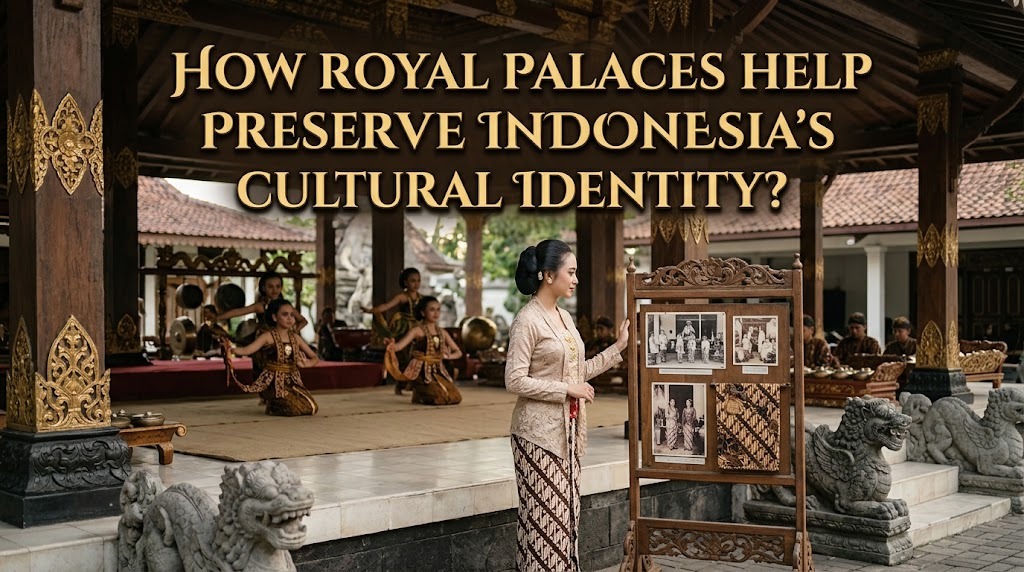
Royal palaces are more than historic buildings. They are important cultural spaces where traditions, arts, values, ceremonies, and local knowledge continue to be practiced and passed from one generation to another. Across Indonesia, palaces have played an important role in maintaining cultural identity despite social and technological changes.
From traditional performances to ceremonial customs, palace communities help keep cultural heritage connected to everyday life. Understanding their role also helps younger generations appreciate the diversity and history that shape Indonesia today.
ROYAL PALACES AS CULTURAL HERITAGE
Royal palaces are among the important places that reflect Indonesia’s long cultural history. Many palaces preserve traditional architecture, historical objects, royal collections, manuscripts, and ceremonial spaces that tell stories about earlier generations. These elements provide valuable information about the development of local societies and their cultural values. Visiting a palace can therefore offer more than a historical tour because visitors can observe how heritage is preserved in a living environment.
Palaces in Java and other parts of Indonesia also demonstrate the diversity of regional traditions. Their architecture, language, clothing, ceremonies, and artistic practices can differ from one palace to another. This cultural diversity strengthens Indonesia’s national identity because it shows how different traditions can exist as part of one country. Preserving these places means protecting physical heritage as well as the knowledge and traditions associated with them.
PRESERVING TRADITIONAL ARTS AND PERFORMANCES
One important way royal palaces preserve cultural identity is through traditional arts. Palaces have historically supported forms of music, dance, theater, craftsmanship, and traditional literature. In some palace environments, traditional gamelan performances, dances, and ceremonial arts continue to be practiced and introduced to visitors. These activities provide opportunities for artists and younger generations to learn cultural expressions that might otherwise become less familiar.
Traditional arts also contain values and stories that communicate ideas about society, history, and local philosophy. When these arts are performed and taught continuously, cultural knowledge can survive across generations. Young artists can learn directly from experienced practitioners, helping maintain techniques and performance traditions. As a result, the palace can function as a cultural learning space rather than simply a monument from the past.
KEEPING TRADITIONAL CEREMONIES ALIVE
Traditional ceremonies are another important part of palace culture. Various royal communities continue to organize ceremonies connected with Javanese customs, religious traditions, historical events, and important moments in palace life. These ceremonies often involve traditional clothing, music, language, offerings, processions, and specific forms of etiquette. Each element can carry cultural meaning that connects present communities with their historical heritage.
The continuation of these ceremonies allows cultural practices to remain visible and meaningful. People can learn not only what a ceremony looks like but also why certain traditions are practiced. Cultural continuity depends on active practice, because traditions are more likely to survive when communities continue to understand and use them. Palaces therefore contribute to preserving customs through direct participation rather than relying only on written historical records.
TEACHING VALUES AND LOCAL WISDOM
Royal palaces also preserve cultural identity by maintaining traditional values and local wisdom. Concepts related to respect, responsibility, harmony, discipline, etiquette, and community relationships can be reflected in palace customs. Traditional languages and forms of respectful communication may also remain part of palace activities. These values help demonstrate how earlier societies understood relationships between individuals, communities, nature, and spiritual life.
Local wisdom is particularly important because cultural identity is not limited to physical objects. It also includes knowledge, beliefs, social practices, and ways of interpreting the world. Passing these values to younger generations helps prevent cultural heritage from becoming disconnected from modern life. When young people understand the meaning behind traditions, they can appreciate heritage while still adapting to contemporary society.
PALACES AS CULTURAL TOURISM DESTINATIONS
Many royal palaces have become cultural tourism destinations where visitors can learn about Indonesian history and traditions. Tourists may explore palace architecture, museums, collections, traditional performances, and cultural activities depending on the palace and access arrangements. This form of tourism can create direct cultural experiences that are more engaging than learning about history only through books or digital content.
Cultural tourism can also provide economic and social benefits for surrounding communities when managed responsibly. Local guides, artists, craftsmen, transportation providers, and small businesses may benefit from visitors. At the same time, tourism needs to respect cultural rules, sacred spaces, conservation requirements, and community traditions. Responsible tourism can help ensure that cultural heritage remains protected while making it accessible to a wider audience.
THE ROLE OF YOUNGER GENERATIONS AND CONCLUSION
The future of palace heritage depends greatly on younger generations. Digital media can provide new ways to introduce traditional culture to modern audiences through educational content, virtual exhibitions, documentaries, and social media. However, digital promotion should complement direct cultural learning rather than replace genuine traditions and community participation. Young people can contribute by studying local history, supporting cultural events, learning traditional arts, and sharing accurate information about heritage.
In conclusion, royal palaces help preserve Indonesia’s cultural identity by protecting historic places while maintaining arts, ceremonies, values, local wisdom, and cultural knowledge. Their role extends beyond preserving the past because they can connect historical traditions with contemporary communities. With cooperation between palace communities, cultural institutions, educators, tourism stakeholders, and younger generations, Indonesian palace heritage can continue to develop without losing its cultural meaning.
About the Author
Gusti Ayu Tita P
Author — STEKOM University
An active author focused on academic issues, educational technology, and human resource development in the campus environment.















