
How Social Sciences Graduates Adapt to Rapid Workplace Transformations?
Gusti Ayu Tita P
11 Agustus 2026
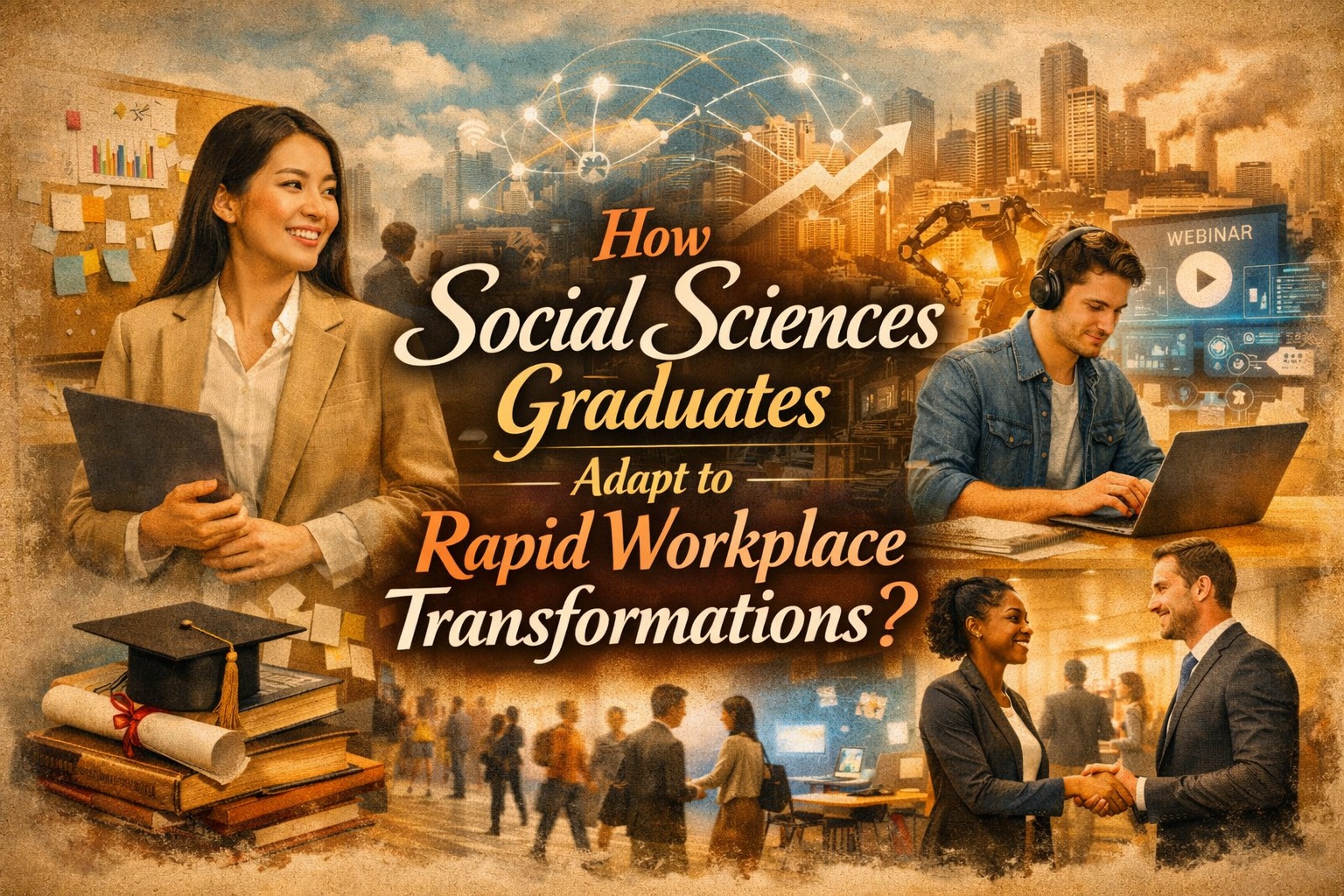
The modern workplace is evolving faster than ever. Advances in technology, digital communication, automation, and changing business models have transformed how organizations operate. As industries continue to adapt, professionals must develop new skills and remain flexible to stay competitive.
Fortunately, social sciences graduates possess unique strengths that help them navigate these rapid changes. Their ability to understand human behavior, analyze social trends, communicate effectively, and solve complex problems makes them valuable assets in today's dynamic work environment.
DEVELOPING STRONG ADAPTABILITY SKILLS
One of the greatest advantages of social sciences graduates is their ability to adapt to changing circumstances. Throughout their academic journey, they learn to evaluate different perspectives, analyze societal developments, and respond to new challenges. These experiences prepare them to work in industries that continuously evolve.
As businesses undergo workplace transformation, employees who can quickly learn new processes and embrace innovation become increasingly valuable. Social sciences graduates often demonstrate flexibility and resilience, enabling them to adjust to changing job responsibilities and organizational structures.
EMBRACING DIGITAL TRANSFORMATION
The rise of digital technology has significantly impacted almost every profession. Many social sciences graduates recognize the importance of improving their digital skills to remain competitive in the modern workforce. They often pursue additional training in data analysis, digital marketing, project management, and online communication tools.
Rather than viewing technology as a threat, successful graduates see it as an opportunity for growth. By combining their understanding of people and society with technological knowledge, they become well-equipped to contribute to digital transformation initiatives within organizations.
LEVERAGING CRITICAL THINKING AND PROBLEM-SOLVING ABILITIES
Employers increasingly seek professionals who can analyze information and make informed decisions. Social sciences education emphasizes critical thinking, research methodologies, and evidence-based analysis. These skills allow graduates to identify challenges and develop effective solutions.
In a rapidly changing workplace, businesses often face complex issues involving employee engagement, customer behavior, and organizational change. Social sciences graduates can assess these situations from multiple perspectives and provide valuable insights that support long-term success.
STRENGTHENING COMMUNICATION AND COLLABORATION
Effective communication remains one of the most important workplace skills. Social sciences graduates are trained to present ideas clearly, conduct research interviews, and engage with diverse groups of people. These abilities make them strong communicators in both traditional and digital work environments.
Modern organizations rely heavily on teamwork and cross-functional collaboration. Graduates who can communicate effectively, manage conflicts, and build positive relationships are often better prepared to thrive during periods of workplace transformation and organizational change.
COMMITTING TO CONTINUOUS LEARNING
The pace of change in today's economy requires professionals to continuously update their knowledge and skills. Successful social sciences graduates understand that learning does not end after graduation. They actively seek professional development opportunities through courses, certifications, workshops, and industry training programs.
This commitment to lifelong learning helps them remain relevant in emerging fields and adapt to evolving industry demands. As new technologies and business practices emerge, continuous learning becomes a critical factor for long-term career success.
EXPLORING DIVERSE CAREER OPPORTUNITIES
One reason social sciences graduates adapt well to workplace changes is the versatility of their education. Their knowledge can be applied across multiple industries, including human resources, public relations, education, research, marketing, government, and business consulting.
Because they are not limited to a single career path, graduates can pivot more easily when market demands shift. This flexibility allows them to explore new opportunities and remain competitive in an increasingly dynamic job market.
CONCLUSION
Rapid workplace transformations are reshaping industries worldwide, creating both challenges and opportunities for professionals. Social sciences graduates are uniquely positioned to succeed because of their adaptability, communication abilities, critical thinking skills, and commitment to continuous learning.
By embracing digital transformation, enhancing digital skills, strengthening critical thinking, and remaining open to lifelong learning, they can confidently navigate the future of work. As organizations continue to evolve, the value of social sciences graduates will remain strong in helping businesses understand people, solve complex problems, and drive meaningful change.
About the Author
Gusti Ayu Tita P
Author — STEKOM University
An active author focused on academic issues, educational technology, and human resource development in the campus environment.















