
How the 1945 Constitution Guides the Administration of the State?
Gusti Ayu Tita P
4 Agustus 2026
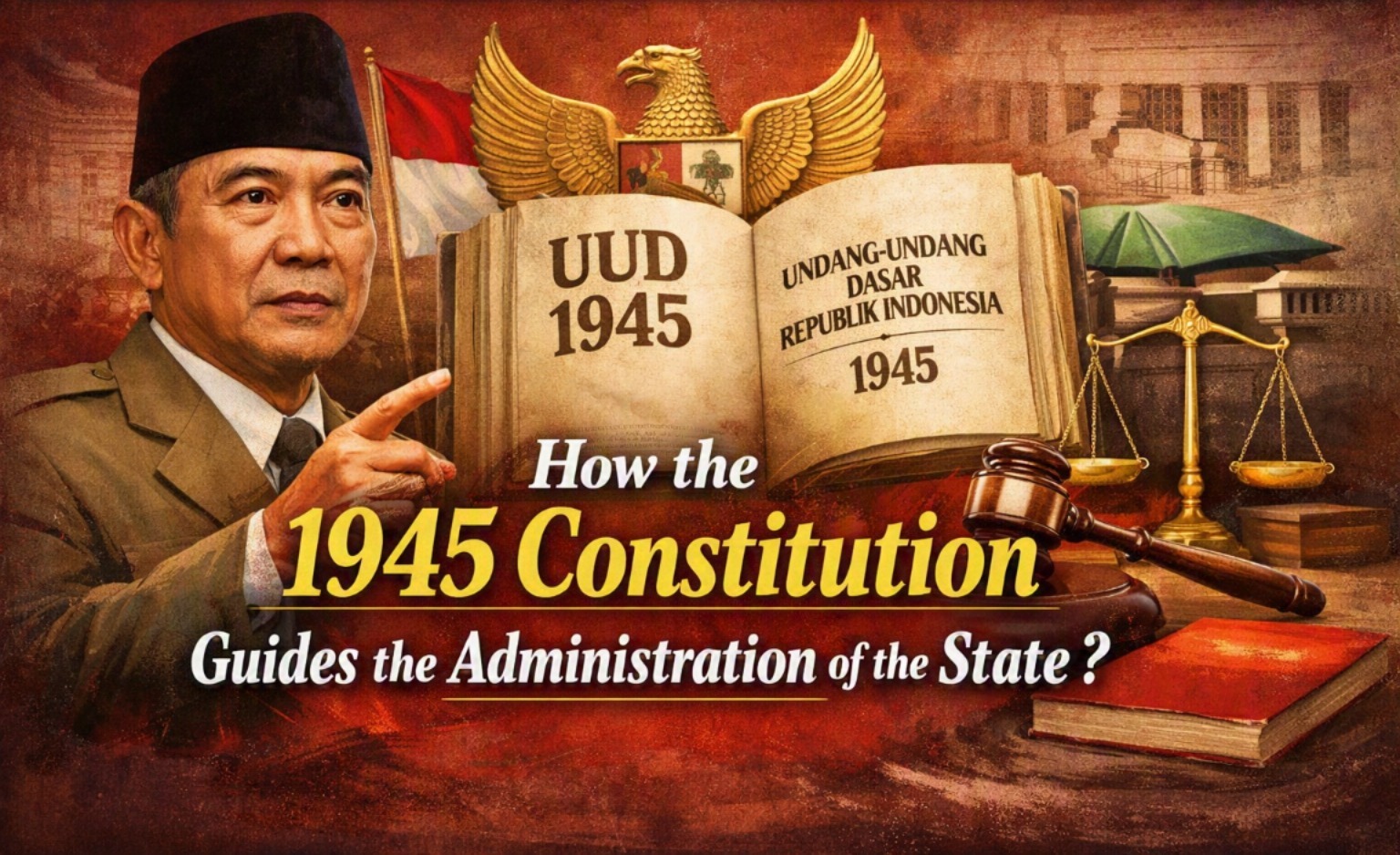
The 1945 Constitution is the highest legal foundation of Indonesia and serves as the main guideline for governing the country. It defines how the state administration should function, outlines the powers of government institutions, protects the rights of citizens, and ensures that every government action follows constitutional principles. As Indonesia continues to develop, the Constitution remains an essential reference for maintaining democracy, justice, and national stability. Understanding its role helps citizens appreciate how the government operates and why constitutional law is important in everyday life.
THE ROLE OF THE 1945 CONSTITUTION IN STATE ADMINISTRATION
The 1945 Constitution provides the legal framework for organizing the Indonesian government. It establishes the structure of the executive, legislative, and judicial branches while defining their responsibilities and limitations. This constitutional framework ensures that state institutions work together under a clear system of checks and balances. Every government policy must align with the principles established in the Constitution to maintain legal certainty.
In addition, the Constitution serves as the highest source of law for all regulations enacted in Indonesia. Any law or policy that conflicts with constitutional provisions can be reviewed and corrected through the appropriate legal process. This mechanism helps protect the rule of law and prevents the misuse of governmental authority. As a result, the Constitution plays a central role in maintaining an orderly and accountable system of governance.
HOW THE CONSTITUTION DISTRIBUTES GOVERNMENTAL POWERS?
One of the most important functions of the 1945 Constitution is to distribute governmental authority among different state institutions. The President is responsible for leading the executive branch and implementing national policies. Meanwhile, the legislative branch creates laws, approves budgets, and supervises government performance. The judiciary independently interprets laws and ensures justice is applied fairly.
This separation of powers prevents excessive authority from being concentrated in one institution. Each branch has its own constitutional duties while also monitoring the performance of the others. Such a balanced system promotes transparency, accountability, and democratic governance. It also strengthens public confidence in government institutions.
PROTECTING THE RIGHTS AND RESPONSIBILITIES OF CITIZENS
The 1945 Constitution guarantees a wide range of fundamental rights for Indonesian citizens. These include the rights to education, religion, freedom of expression, legal protection, and equal treatment before the law. Constitutional guarantees ensure that citizens are protected against arbitrary actions by the government. These rights support the development of a democratic and inclusive society.
At the same time, the Constitution emphasizes that citizens also have important responsibilities. Respecting the law, participating in national development, defending the country, and respecting the rights of others are among these obligations. A healthy democracy requires both protected rights and responsible citizenship. This balance strengthens national unity and social harmony.
ENSURING ACCOUNTABILITY AND GOOD GOVERNANCE
The 1945 Constitution encourages good governance by requiring public officials to perform their duties according to the law. Government institutions are expected to operate transparently, responsibly, and in the public interest. Constitutional principles discourage corruption, abuse of authority, and arbitrary decision-making. This creates a stronger foundation for public trust.
Furthermore, constitutional mechanisms allow institutions to oversee one another through legal and democratic procedures. Independent courts, legislative oversight, and constitutional review contribute to government accountability. These safeguards help maintain political stability and ensure that public power is exercised responsibly. As a result, the Constitution supports sustainable national development.
CONCLUSION
The 1945 Constitution continues to guide Indonesia through political, economic, and social changes. Although society evolves, the Constitution provides stable principles that help the government respond to new challenges without abandoning democratic values. Constitutional amendments have strengthened many aspects of governance while preserving the country's fundamental ideals. This flexibility keeps the Constitution relevant in the modern era.
For citizens, understanding the Constitution promotes greater awareness of their rights and responsibilities. It also encourages active participation in democratic processes and respect for constitutional law. By following the principles of the Constitution, Indonesia can continue building a government that is fair, accountable, and responsive to public needs. Therefore, the Constitution remains a vital pillar of the nation's future.
About the Author
Gusti Ayu Tita P
Author — STEKOM University
An active author focused on academic issues, educational technology, and human resource development in the campus environment.















