
How the 1945 Constitution Protects Human Rights in Indonesia?
Gusti Ayu Tita P
4 Agustus 2026
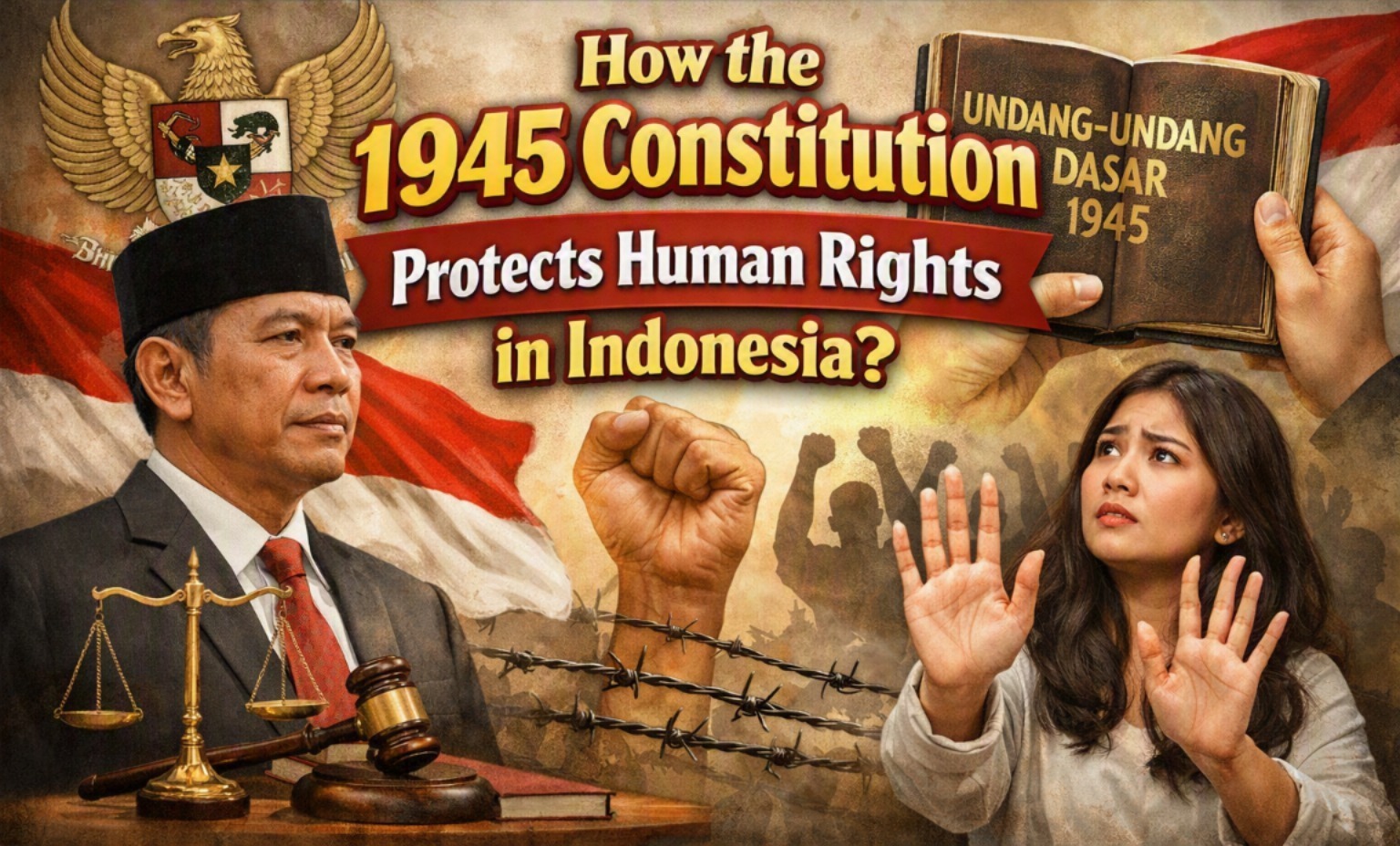
The 1945 Constitution of Indonesia is the highest legal foundation of the country and plays a vital role in protecting human rights. Since its amendments, the Constitution has strengthened the legal guarantees for every citizen by recognizing fundamental rights such as freedom of religion, education, equality before the law, and freedom of expression. These constitutional protections ensure that individuals are treated fairly and that the government must respect and uphold their rights. As Indonesia continues to develop as a democratic nation, the Constitution remains an essential guide for maintaining justice, equality, and the rule of law.
UNDERSTANDING THE ROLE OF THE 1945 CONSTITUTION
The 1945 Constitution serves as the supreme law of Indonesia and provides the legal framework for governing the country. It outlines the structure of government, the separation of powers, and the relationship between the state and its citizens. Every law and government policy must be consistent with the principles established in the Constitution. This ensures that legal decisions are based on a clear constitutional foundation. As a result, the Constitution becomes the primary safeguard against the misuse of governmental authority.
The amendments to the Constitution significantly expanded the protection of human rights by including a dedicated chapter that clearly defines the rights of every individual. These constitutional provisions reflect Indonesia's commitment to democracy and international human rights values. They also encourage government institutions to respect the dignity of every citizen. Through constitutional guarantees, Indonesia seeks to create a fair and inclusive society where everyone receives equal legal protection.
FUNDAMENTAL HUMAN RIGHTS GUARANTEED BY THE CONSTITUTION
The 1945 Constitution guarantees a wide range of fundamental rights that apply to all Indonesian citizens. These include the right to life, freedom of religion, freedom of speech, access to education, and the right to work. Citizens also have the right to receive equal treatment before the law regardless of their background. These protections help ensure that every individual has the opportunity to live with dignity and security.
The Constitution also protects economic, social, and cultural rights by encouraging the government to provide public welfare, healthcare, and educational opportunities. Citizens have the right to participate in national development without discrimination. These constitutional rights support social justice and reduce inequality within society. By recognizing these essential freedoms, the Constitution contributes to national stability and long-term development.
THE GOVERNMENT'S RESPONSIBILITY TO PROTECT HUMAN RIGHTS
The Constitution places a legal obligation on the government to respect, protect, and fulfill the human rights of all citizens. Government institutions must ensure that laws, regulations, and public policies do not violate constitutional rights. Officials are expected to carry out their duties with fairness, transparency, and accountability. This responsibility strengthens public trust in state institutions and promotes democratic governance.
In addition, independent institutions and the judicial system play important roles in protecting constitutional rights. Courts have the authority to review laws and resolve legal disputes involving human rights issues. Citizens who believe their rights have been violated may seek legal remedies through appropriate legal channels. This constitutional system helps maintain justice while preventing the abuse of power.
CONCLUSION
The 1945 Constitution continues to be highly relevant because it provides legal certainty in a rapidly changing society. Advances in technology, economic development, and globalization create new challenges that require strong constitutional protection. The Constitution serves as a stable legal reference that guides lawmakers when creating new regulations. It also ensures that democratic values remain protected despite social and political changes.
Understanding the Constitution helps citizens become more aware of both their rights and responsibilities. Public awareness encourages greater participation in democratic processes and promotes respect for the rule of law. When citizens understand their constitutional rights, they are better equipped to protect themselves against unfair treatment. Therefore, the 1945 Constitution remains a cornerstone of democracy, justice, and human rights protection in Indonesia.
About the Author
Gusti Ayu Tita P
Author — STEKOM University
An active author focused on academic issues, educational technology, and human resource development in the campus environment.















