
How the 1945 Constitution Strengthens Democracy in Indonesia?
Gusti Ayu Tita P
4 Agustus 2026
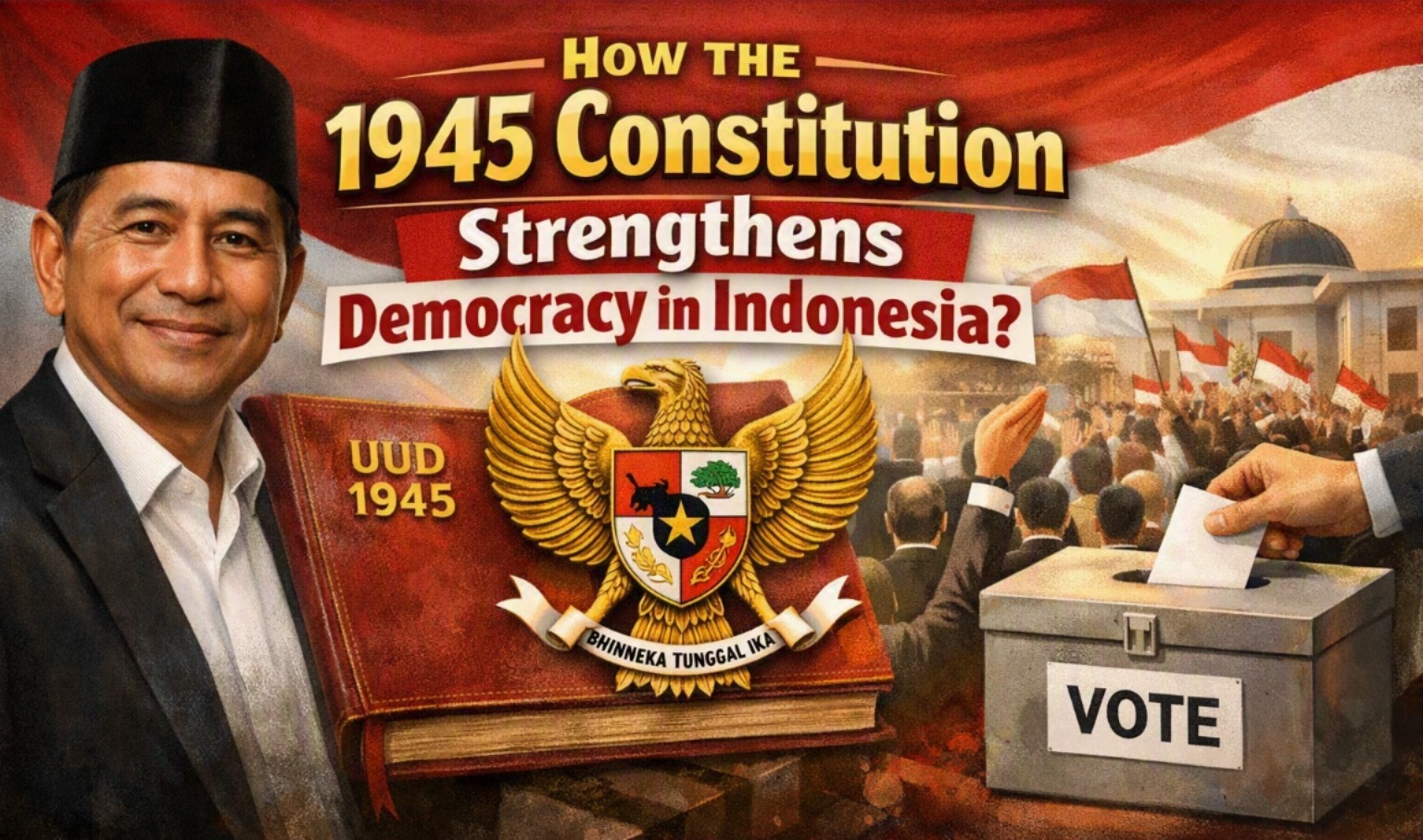
The 1945 Constitution is the highest legal foundation of Indonesia and plays a central role in shaping the country's democratic system. It establishes the framework for government institutions, protects the rights of citizens, and ensures that state authority is exercised according to the law. Since its adoption, the Constitution has evolved through several amendments to better reflect democratic values and meet the needs of modern society. Today, it serves as an essential guide for maintaining political stability, justice, and public participation. Understanding how the Constitution supports democracy helps citizens appreciate their rights and responsibilities in building a stronger nation.
THE ROLE OF THE 1945 CONSTITUTION IN INDONESIA'S DEMOCRACY
The 1945 Constitution provides the legal framework that defines how Indonesia's democratic system operates. It establishes the separation of powers among the executive, legislative, and judicial branches to prevent excessive concentration of authority. This structure encourages checks and balances, ensuring that every government institution performs its duties responsibly. The Constitution also outlines the process for creating laws, electing leaders, and resolving constitutional disputes through legal mechanisms.
In addition, the Constitution guarantees that the government remains accountable to the people through democratic elections and constitutional principles. It encourages transparency, fairness, and respect for the rule of law in public administration. Through constitutional governance, Indonesia promotes political stability while allowing citizens to actively participate in national development. These principles help strengthen democracy by ensuring that power is exercised according to established legal standards.
PROTECTING THE RIGHTS AND FREEDOMS OF CITIZENS
One of the greatest strengths of the 1945 Constitution is its commitment to protecting human rights and fundamental freedoms. It guarantees freedom of religion, expression, education, association, and equal treatment before the law. These protections enable citizens to participate confidently in social, political, and economic life without discrimination. Constitutional rights also encourage individuals to contribute to national progress while respecting the rights of others.
The Constitution provides legal safeguards against abuses of power by requiring government actions to comply with constitutional principles. Citizens have the right to seek justice through independent courts when their rights are violated. This legal protection builds public trust in democratic institutions and reinforces the principle that everyone is subject to the law. As a result, democracy becomes more inclusive, transparent, and accountable.
SUPPORTING FAIR ELECTIONS AND PUBLIC PARTICIPATION
A healthy democracy depends on free and fair elections, and the 1945 Constitution provides the legal basis for this process. Citizens have the constitutional right to vote and choose their leaders through democratic elections. Regular elections encourage peaceful transfers of power and strengthen public confidence in government institutions. This process reflects the democratic principle that sovereignty belongs to the people.
Beyond elections, the Constitution also promotes public participation in national development. Citizens can express opinions, join organizations, and contribute to policymaking within the limits of the law. Community involvement strengthens democratic accountability because public officials remain responsible to the people they serve. Active participation helps create better policies that reflect the interests of society.
MAINTAINING THE RULE OF LAW AND GOVERNMENT ACCOUNTABILITY
The rule of law is one of the most important democratic principles protected by the 1945 Constitution. Every government institution and public official must operate according to constitutional provisions and existing laws. This principle prevents arbitrary decision-making and ensures fairness in public administration. Independent judicial institutions help resolve disputes and protect constitutional values.
Government accountability is equally important for sustaining democracy. Constitutional oversight encourages transparency in decision-making and responsible management of public resources. State institutions are expected to perform their duties ethically while respecting legal limitations. This system reduces the risk of abuse of authority and strengthens public confidence in democratic governance.
CONCLUSION
As Indonesia continues to develop, the 1945 Constitution remains the foundation for democratic progress and national unity. It provides stability while allowing constitutional amendments that respond to changing social and political conditions. This balance between continuity and adaptation helps democracy remain relevant in a rapidly evolving world. The Constitution also encourages cooperation among government institutions and citizens to achieve national goals.
A strong democracy requires both effective institutions and responsible citizens. By understanding constitutional principles, people become more aware of their rights, obligations, and role in protecting democratic values. Respect for the Constitution promotes justice, equality, and peaceful political participation across society. Ultimately, the 1945 Constitution continues to strengthen democracy by ensuring that Indonesia remains a nation governed by law, constitutional principles, and the will of its people.
About the Author
Gusti Ayu Tita P
Author — STEKOM University
An active author focused on academic issues, educational technology, and human resource development in the campus environment.















