How The Ministry Of Finance Supports Investment And Economic Growth?
Gusti Ayu Tita P
12 Agustus 2026
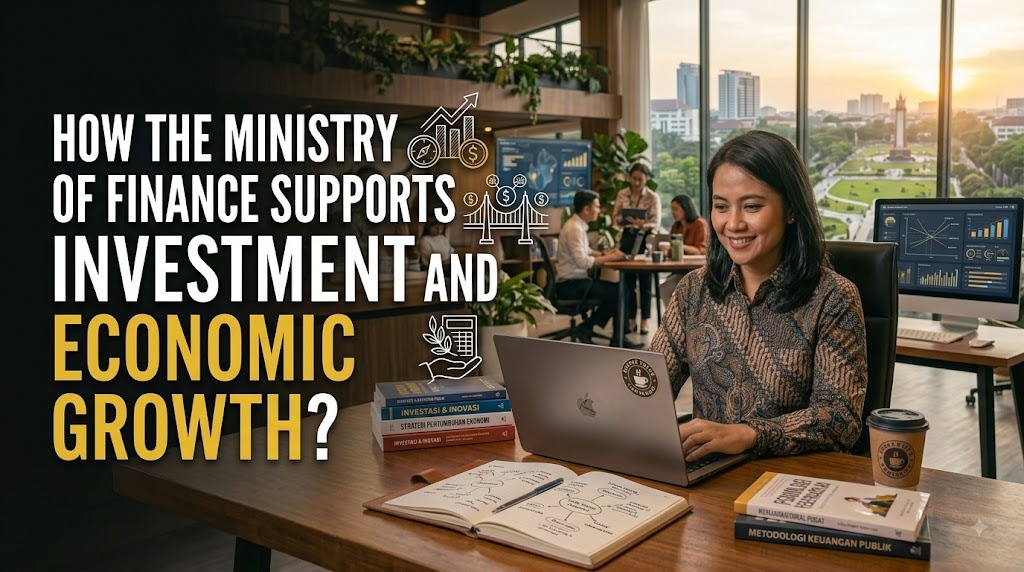
Investment is an important part of economic development because it can support business expansion, create employment, increase productivity, and strengthen productive capacity. In Indonesia, the Ministry of Finance contributes to the investment environment through fiscal policy, taxation, government spending, financing, and management of state assets. Its role is not limited to collecting revenue but also includes designing policies that support sustainable economic activity. Through appropriate financial policies, the government can create conditions that encourage investors and businesses to participate in national development.
DEVELOPING INVESTMENT FRIENDLY FISCAL POLICY
Fiscal policy influences the overall economic environment in which businesses and investors operate. The Ministry of Finance develops fiscal strategies that consider economic conditions, government priorities, revenue, expenditure, and financing needs. A well-designed policy can provide greater certainty for businesses when making long-term investment decisions. Investment friendly fiscal policy should support economic activity while maintaining responsible management of public finances.
Fiscal policy can also respond to changing economic conditions. During periods of economic weakness, government spending and selected fiscal measures can help support demand and productive activity. During stronger economic conditions, fiscal management can focus on maintaining stability and building fiscal capacity. Fiscal stability is important because investors generally need confidence that economic policies can be managed sustainably.
MANAGING STATE ASSETS TO SUPPORT ECONOMIC ACTIVITY
The government owns various assets, including land, buildings, infrastructure, and other forms of state property. These assets need to be managed efficiently so that they can provide public value. The Ministry of Finance has responsibilities related to state asset management, including policies concerning the administration, utilization, and management of government property.
Proper asset utilization can potentially support productive economic activities while maintaining public ownership and regulatory requirements. Unused or underutilized assets can be evaluated to determine whether they can provide greater value. Asset management must remain transparent and follow applicable regulations. Efficient state assets can contribute to better resource utilization and support broader development objectives.
SUPPORTING SMALL AND GROWING BUSINESSES
Small and growing businesses are important contributors to employment and local economic activity. Financial policies can support these businesses through appropriate taxation, financing programs, and government expenditure. The Ministry of Finance contributes to the fiscal framework that enables various business support policies to operate.
Helping businesses grow can create a wider investment ecosystem. When small businesses become more productive, they may expand operations, hire additional workers, and participate in larger supply chains. Policies should be designed carefully to avoid creating unnecessary dependence while helping viable businesses overcome genuine barriers. Business development can strengthen the broader economic base and create additional opportunities for investment.
SUPPORTING FINANCIAL MARKET DEVELOPMENT
Investment depends partly on the availability of reliable financial markets and financing instruments. The Ministry of Finance contributes to financial market development through government securities and policies related to public financing. A well-functioning market can help mobilize funds from investors toward productive economic activities. Financial market development can therefore support both government financing and broader investment activity.
Government securities can also provide investment instruments for financial institutions and other eligible investors. Effective debt management requires careful attention to borrowing costs, market conditions, and fiscal risks. Stable and transparent financial management can strengthen confidence among market participants. Investor confidence is important because investment decisions are strongly influenced by perceptions of economic and financial stability.
ENCOURAGING PUBLIC PRIVATE PARTNERSHIPS
Some infrastructure and public service projects can benefit from cooperation between government and private investors. Public private partnerships can provide a framework for combining public objectives with private-sector financing, expertise, and operational capabilities. The government can use such mechanisms when they are suitable for the characteristics and risks of a particular project.
These partnerships require clear contracts, risk allocation, financial analysis, and appropriate oversight. Private participation should not automatically be considered better than conventional public procurement. Each project needs to be evaluated based on value, affordability, risks, and public interest. When properly designed, strategic partnerships can help mobilize investment for development priorities.
MAINTAINING FISCAL AND ECONOMIC STABILITY
Investors generally pay attention to economic stability when deciding where and when to invest. Excessive fiscal risks can create uncertainty about future policies and economic conditions. The Ministry of Finance therefore needs to manage revenue, spending, financing, and risks in a coordinated way. Fiscal discipline can support confidence in the government's ability to manage public finances.
Economic stability also requires flexibility because unexpected events can affect government revenue and expenditure. Fiscal policies may need to adapt to global economic changes, commodity prices, financial market conditions, or domestic developments. The challenge is to respond to economic needs without weakening long-term fiscal sustainability. Stable economic conditions can create a more predictable environment for investment and business expansion.
PROMOTING SUSTAINABLE ECONOMIC GROWTH
Investment policies should not focus only on increasing the amount of capital entering the economy. The quality, productivity, and long-term impact of investment are also important. Fiscal policies can support sectors that contribute to productivity, employment, innovation, infrastructure, and economic diversification. Sustainable investment can provide benefits beyond short-term economic expansion.
The Ministry of Finance must also consider the relationship between investment and public welfare. Economic growth should ideally create broader opportunities and strengthen the capacity of businesses and workers. Policies that combine fiscal responsibility with productive investment can support long-term development. Inclusive economic growth can make the benefits of investment more widely distributed across society.
CONCLUSION
The Ministry of Finance supports investment and economic growth through fiscal policy, taxation, public spending, government financing, state asset management, financial market development, and strategic partnerships. These responsibilities help create an economic environment where businesses and investors can operate with greater confidence. Tax incentives and infrastructure investment can encourage productive activity, while responsible financing and fiscal discipline help maintain long-term stability. The effectiveness of these policies depends on careful planning, transparent implementation, regular evaluation, and coordination with other government institutions. Ultimately, sound fiscal management can strengthen investment, productivity, employment, and sustainable economic growth.
About the Author
Gusti Ayu Tita P
Author — STEKOM University
An active author focused on academic issues, educational technology, and human resource development in the campus environment.