How The Ministry Of Home Affairs Improves Civil Registration And Population Administration Through Digital Innovation
Gusti Ayu Tita P
11 Agustus 2026
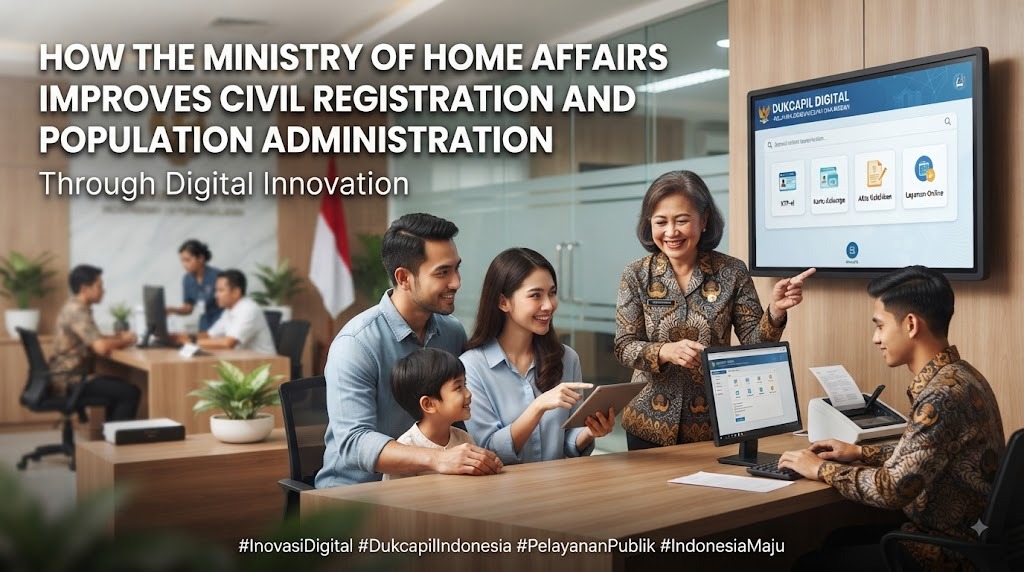
Population administration is an important part of public services because it provides official records that identify citizens and support access to many government services. In Indonesia, the Ministry of Home Affairs plays an important role in developing population administration policies and systems. As technology continues to develop, digital innovation is increasingly used to make civil registration services more efficient and accessible. This transformation is expected to reduce complicated procedures while improving the quality of public services.
Digital transformation also changes the way citizens interact with government institutions. Services that previously required repeated visits to government offices can increasingly be supported by electronic systems and integrated databases. Through proper digital management, population information can be processed more efficiently while maintaining data security. These improvements are important for creating faster, simpler, and more transparent population services.
THE ROLE OF THE MINISTRY OF HOME AFFAIRS IN POPULATION ADMINISTRATION
The Ministry of Home Affairs has an important role in managing national policies related to population administration and civil registration. Through the Directorate General of Population and Civil Registration, the government develops systems and standards for population documents and citizen registration. These services include population identity, family records, birth registration, death registration, and other civil registration needs. The goal is to ensure that citizens can obtain accurate and legally recognized population documents.
The ministry also works with regional governments because many population services are delivered at the local level. Coordination between central and regional institutions is necessary to ensure that population data can be managed consistently. Digital systems can support this coordination by allowing information to be processed and exchanged more efficiently. As a result, citizens can receive services that are more organized and responsive.
DIGITAL TRANSFORMATION IN CIVIL REGISTRATION
Digital transformation has changed the way civil registration services are provided. Government institutions increasingly use electronic systems to record, process, and manage population information. This approach can reduce dependence on manual paperwork and help officers process applications more efficiently. Digital civil registration can also make administrative procedures easier to monitor.
Technology can support various registration processes, including birth, death, marriage, and other population records according to applicable regulations. Digital records can be stored and managed systematically, making it easier to retrieve information when needed. However, digital systems must be supported by accurate data entry and proper verification. Reliable information is essential because population data is used for many public services.
ELECTRONIC POPULATION IDENTITY SERVICES
One important development in population administration is the use of electronic population identity services. Electronic identity systems help citizens access identity-related services through digital technology. Indonesia has developed electronic population identity initiatives to support easier access to population documents and services. These systems are designed to complement population administration rather than simply replace existing physical documents in every situation.
Digital identity can also support more efficient interactions between citizens and public institutions. When identity information can be verified through secure systems, some administrative processes can become simpler. Nevertheless, the use of digital identity requires strong authentication and protection against unauthorized access. Public trust is essential for the successful implementation of digital identity services.
INTEGRATING POPULATION DATA THROUGH DIGITAL SYSTEMS
Data integration is another important part of digital innovation in population administration. Government agencies need accurate population information to support planning, public services, and social programs. Integrated systems can help reduce duplicated records and improve the consistency of information between institutions. Population data integration can therefore contribute to more accurate government decision making.
The use of integrated population data must also follow strict rules concerning privacy and data protection. Population records contain sensitive personal information that should not be accessed or used carelessly. Government institutions need appropriate security controls, access management, and monitoring systems. Responsible data management can improve services while protecting citizens from potential misuse.
MAKING PUBLIC SERVICES FASTER AND EASIER
Digital innovation can make population administration more convenient for citizens. Online services can reduce the need for citizens to visit government offices repeatedly for certain administrative procedures. Information about requirements, procedures, and service channels can also be provided digitally. This creates a more accessible public service experience.
Faster services can also benefit government officers by reducing repetitive administrative work. Electronic records make it easier to organize information and track certain service processes. However, digital services should remain simple enough for people with different levels of technological ability. Public service innovation should focus on both efficiency and accessibility.
IMPROVING DATA ACCURACY AND SERVICE QUALITY
Accurate population data is essential for effective public administration. Digital systems can help officers identify incomplete records, update information, and manage population databases more systematically. Better data quality can support government planning and improve the delivery of public programs. It can also help reduce administrative errors that may occur when information is handled manually.
Service quality depends not only on technology but also on the people who operate it. Government officers need appropriate technical skills and an understanding of population administration procedures. Regular evaluation can help identify weaknesses in digital services. By combining technology, accurate data, and competent personnel, government institutions can improve the overall quality of civil registration.
SUPPORTING INCLUSIVE PUBLIC SERVICES
Digital innovation can expand access to population administration, but it must be implemented inclusively. Not every citizen has the same access to internet connections, smartphones, or digital skills. Some groups may still need assistance when using electronic services. Therefore, digital transformation should not completely eliminate alternative service channels where they are still necessary.
Government institutions can provide assistance, information, and offline support for citizens who face digital barriers. Improving infrastructure in underserved areas is also important. Digital inclusion ensures that technological progress benefits a wider range of citizens. A successful digital transformation should make services easier without creating new obstacles.
CHALLENGES IN DIGITAL POPULATION ADMINISTRATION
Despite its benefits, digital population administration faces several challenges. One major issue is personal data security because population systems contain large amounts of sensitive information. Cybersecurity threats, unauthorized access, and misuse of data can damage public trust. Strong technical safeguards and responsible data governance are therefore essential.
Another challenge is the difference in technological readiness between regions and communities. Some areas may have limited infrastructure or fewer personnel with advanced digital skills. Continuous training and investment are needed to address these differences. Cooperation between central and regional governments is also important for ensuring consistent service quality.
THE IMPORTANCE OF DIGITAL LITERACY AND PUBLIC PARTICIPATION
Citizens play an important role in the success of digital population services. They need to understand how to use official digital platforms and protect their personal information. Digital literacy can help citizens recognize legitimate government services and avoid sharing sensitive information through unreliable channels. Public awareness can therefore strengthen the security of digital administration.
Government agencies also need to listen to citizen feedback. Complaints, suggestions, and user experiences can reveal problems that may not be visible during system development. Regular improvements based on public feedback can make digital services more practical. Collaboration between government and citizens can create a more responsive population administration system.
THE FUTURE OF DIGITAL POPULATION ADMINISTRATION
The future of population administration will likely involve greater use of integrated digital services, secure electronic identity systems, data analytics, and automated processes. These technologies can help government institutions respond more quickly to changing population needs. However, technological development must continue to prioritize security, accuracy, accessibility, and public trust.
Digital innovation should ultimately serve citizens rather than simply introduce new technology. The Ministry of Home Affairs and regional governments need to ensure that digital systems remain reliable and easy to use. Continuous evaluation, staff development, and responsible data management will remain important. With a balanced approach, digital innovation can support a more modern and efficient population administration system.
CONCLUSION
The Ministry of Home Affairs plays an important role in improving civil registration and population administration through digital innovation. Electronic systems, digital identity initiatives, integrated population data, and online services can help make public administration faster and more efficient. These developments also provide opportunities to improve data accuracy and the overall citizen experience.
However, successful digital transformation requires more than advanced technology. Data security, digital inclusion, infrastructure, skilled personnel, and public participation must develop together. When these elements are managed properly, digital innovation can help create population administration services that are more accessible, reliable, and responsive to the needs of Indonesian citizens.
About the Author
Gusti Ayu Tita P
Author — STEKOM University
An active author focused on academic issues, educational technology, and human resource development in the campus environment.