How the Ministry of Home Affairs Supports Transparent and Accountable Local Governance?
Gusti Ayu Tita P
30 Juli 2026
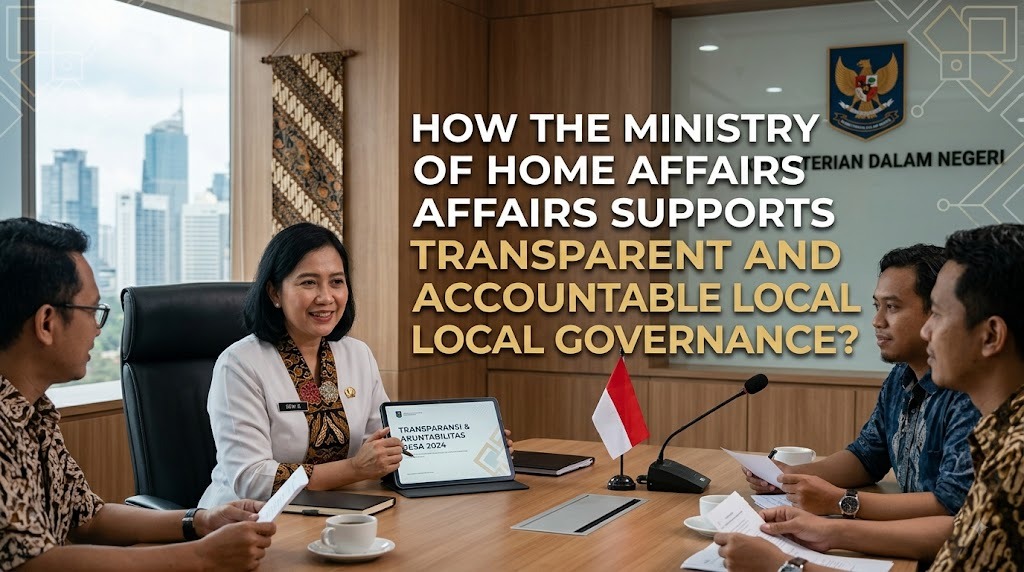
The development of transparent and accountable local governance is an important goal in improving the quality of government administration in Indonesia. Local governments have a direct responsibility to provide public services and manage regional resources effectively. Therefore, strong governance systems are needed to ensure that government activities are carried out responsibly and benefit society.
The Ministry of Home Affairs plays a strategic role in supporting local governments to implement better governance practices. Through regulations, supervision, and institutional development programs, the ministry encourages regional governments to improve transparency, accountability, integrity, and public trust. These efforts are essential for creating a government system that is more open and responsive to citizens.
THE ROLE OF THE MINISTRY OF HOME AFFAIRS IN LOCAL GOVERNANCE
The Ministry of Home Affairs is responsible for guiding and supervising regional governments in managing their administrative responsibilities. The ministry ensures that local governments follow national policies and implement government programs effectively. This role helps create consistency between central government objectives and regional development plans.
The ministry also provides support in improving local government management systems. Through guidance and evaluation, regional governments can identify weaknesses and develop better strategies. This process strengthens the foundation of good governance at the local level.
PROMOTING TRANSPARENCY IN GOVERNMENT MANAGEMENT
Transparency is one of the main principles of effective governance. The Ministry of Home Affairs encourages local governments to provide clear information about policies, programs, and the use of public resources. Open access to information allows citizens to understand government activities and participate more actively.
The implementation of transparency helps prevent misunderstandings and improves communication between governments and communities. When citizens can monitor government performance, public confidence can increase. Transparent governance also encourages officials to carry out their duties more carefully and responsibly.
STRENGTHENING ACCOUNTABILITY IN LOCAL GOVERNMENTS
Accountability ensures that government officials are responsible for their decisions and actions. The Ministry of Home Affairs supports local governments in developing evaluation systems and performance measurements. These mechanisms help ensure that government programs achieve their intended goals.
Through accountability practices, local governments are encouraged to manage resources efficiently and prioritize public interests. Strong accountability also reduces the risk of administrative errors and misuse of authority. As a result, local governments can become more professional and trustworthy.
IMPLEMENTING DIGITAL SYSTEMS FOR BETTER GOVERNANCE
Digital transformation has become an important tool for improving government transparency and accountability. The Ministry of Home Affairs encourages local governments to use digital platforms for administration, data management, and public services. Technology makes government processes easier to monitor and evaluate.
Digital systems also help improve the accuracy of government information. With reliable data, officials can make better decisions and create more effective policies. The use of technology supports the development of modern local governments that are more efficient and citizen-oriented.
IMPROVING THE QUALITY OF LOCAL GOVERNMENT OFFICIALS
Human resources are an important factor in creating accountable governance. The Ministry of Home Affairs supports the improvement of regional civil service capacity through training and competency development programs. Skilled officials are needed to manage government responsibilities professionally.
Professional government employees can provide better services and respond to community needs effectively. Continuous learning also helps officials adapt to changes in technology and public expectations. Strong human resources contribute to stronger and more reliable local governance.
ENCOURAGING PUBLIC PARTICIPATION IN GOVERNMENT PROCESSES
Public participation is an important element of transparent governance. The Ministry of Home Affairs encourages local governments to involve communities in development planning and policy discussions. Citizen involvement helps ensure that government programs reflect real social needs.
When people participate in government processes, they develop a stronger sense of responsibility toward regional development. Public input can also help governments identify problems and create better solutions. This collaboration strengthens the relationship between citizens and local authorities.
CHALLENGES IN BUILDING TRANSPARENT AND ACCOUNTABLE GOVERNANCE
Although many improvements have been made, local governments still face challenges in implementing transparency and accountability. Differences in regional capacity, limited infrastructure, and human resource issues can affect governance quality. These challenges require continuous improvement and cooperation.
The Ministry of Home Affairs continues to strengthen supervision, provide guidance, and encourage innovation. Consistent implementation of good governance principles is necessary to create sustainable improvements. With strong commitment, local governments can provide better services and increase public trust.
CONCLUSION
The Ministry of Home Affairs has an important role in supporting transparent and accountable local governance in Indonesia. Through supervision, digital transformation, human resource development, and policy guidance, the ministry helps regional governments improve their performance.
Transparent and accountable governance creates stronger relationships between governments and citizens. By strengthening good governance, integrity, efficiency, and public participation, local governments can provide better services and contribute to national development.
About the Author
Gusti Ayu Tita P
Author — STEKOM University
An active author focused on academic issues, educational technology, and human resource development in the campus environment.