
How to Avoid Scams When Using Online Personal Shopper Services?
Gusti Ayu Tita P
10 September 2026
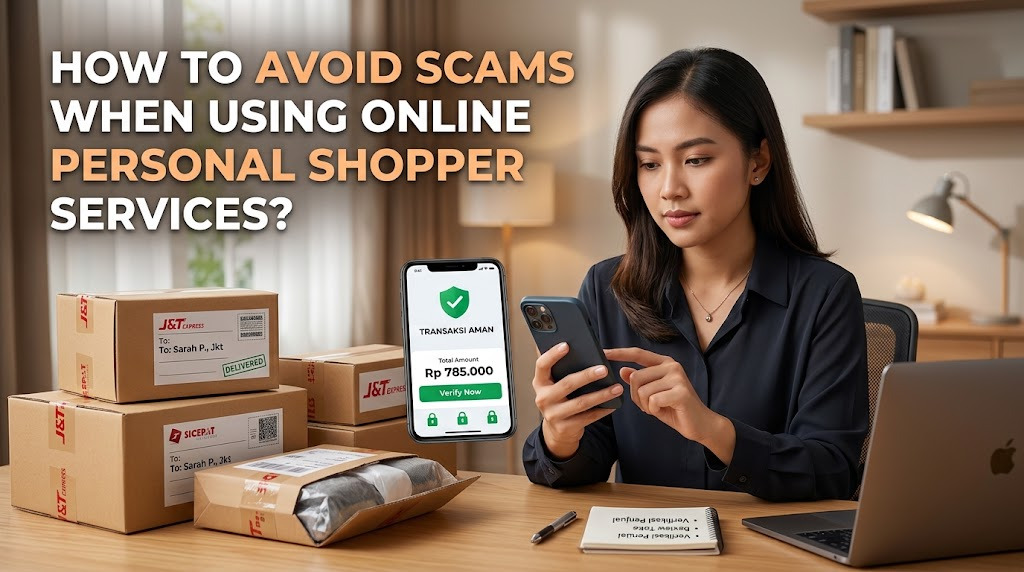
Online personal shopper services make it easier for customers to buy products from other cities, stores, or shopping centers without visiting the location themselves. However, the growing popularity of this service also creates opportunities for online scams. Customers may encounter fake personal shoppers, misleading product information, false payment requests, or accounts that disappear after receiving money. Therefore, understanding how to identify a trustworthy service is important before making a transaction. This article explains practical ways to avoid personal shopper scams and make online shopping safer.
UNDERSTANDING ONLINE PERSONAL SHOPPER SERVICES
A personal shopper service is a service that helps customers purchase products on their behalf. The shopper usually receives an order, buys the requested item, and arranges delivery to the customer. This service is useful for people who want products from other cities, special stores, or locations that are difficult for them to visit. Transactions are commonly handled through social media, messaging applications, or other digital platforms. Because the entire process may happen online, customers need to pay attention to the credibility of the service provider.
A legitimate online personal shopper should provide clear information about the products, prices, service fees, payment procedures, and delivery process. Customers should not immediately trust an account simply because it has attractive photos or many followers. Checking the available information before making a payment can reduce the risk of financial loss. A careful customer should also understand the terms and conditions of the transaction. These simple steps can make the personal shopper transaction safer.
CHECK THE IDENTITY AND CREDIBILITY OF THE SHOPPER
Before ordering, customers should examine the identity of the personal shopper. Check the account name, profile information, contact details, location, and history of activity. A trustworthy shopper will generally provide consistent information and communicate clearly with potential customers. Customers can also look for previous customer reviews, testimonials, or documented transactions. However, reviews should not be accepted blindly because fake testimonials can also be created.
Another useful step is checking whether the shopper has a consistent online presence. Accounts that have existed for a long time and regularly show shopping activities may provide more information for customers to evaluate. Be careful with newly created accounts that immediately offer unusually attractive deals or demand urgent payment. Customers can also search for the account name or phone number to see whether other users have reported suspicious experiences. Taking a few minutes to conduct these checks can help identify potential personal shopper scams.
BE CAREFUL WITH UNUSUALLY CHEAP PRICES AND PROMOTIONS
Extremely cheap prices can be attractive, but they may also be a warning sign. A scammer may use unrealistic discounts to encourage customers to transfer money quickly. Before ordering, compare the product price with the official store price or prices from other trusted sellers. Customers should also calculate additional costs such as personal shopper fees, shipping, packaging, and possible taxes. If the final price is significantly lower without a reasonable explanation, customers should investigate further.
Customers should also be cautious about limited-time offers that create unnecessary pressure. Statements such as requiring immediate payment or claiming that only one item remains can make customers act without checking the service properly. A legitimate business should normally be able to explain its pricing and transaction procedures. Asking questions before paying is better than regretting a rushed transaction later. Price comparison is therefore an important part of safe online shopping.
USE SAFE PAYMENT AND TRANSACTION METHODS
Payment is one of the most important stages in avoiding online shopping scams. Customers should carefully check the recipient's name and payment information before transferring money. If possible, use a payment method that provides transaction records or additional consumer protection. Customers should keep screenshots, invoices, receipts, and conversations related to the transaction. These records can become useful evidence if a dispute occurs.
Customers should also avoid sharing sensitive financial information unnecessarily. A personal shopper should not need passwords, PINs, or verification codes that are intended to protect a customer's financial account. Be particularly careful if someone asks for an additional payment through an unfamiliar account after the original transaction has been completed. Before sending extra money, confirm the reason and verify the information through a trusted communication channel. Safe payment habits can significantly reduce the risk of financial fraud.
VERIFY PRODUCT INFORMATION AND SHOPPING PROOF
Customers should make sure that the product information provided by the shopper is accurate. Check the product name, variant, size, color, quantity, condition, and estimated price before confirming an order. If the product is purchased from a physical store, customers can ask the shopper to provide reasonable proof of purchase, such as a receipt or shopping documentation. This does not guarantee that every transaction is safe, but it can provide additional transparency.
It is also important to understand the difference between proof of purchase and proof that can be easily manipulated. Photos and screenshots may not always be sufficient because digital images can be edited or taken from other sources. Customers should maintain communication about the order and request updates when necessary. Clear documentation from the beginning can prevent misunderstandings about what was purchased and how much was paid. Good documentation is especially useful when dealing with valuable or limited products.
RECOGNIZE WARNING SIGNS OF A SCAM
Several warning signs can indicate that an online personal shopper may be unreliable. These include refusing to answer basic questions, changing payment details repeatedly, providing inconsistent product information, or pressuring customers to pay immediately. Another warning sign is when the account suddenly becomes difficult to contact after receiving payment. Customers should not ignore these signs simply because the offered product appears attractive.
Scammers may also use fake identities, copied product photos, fabricated reviews, or misleading claims about well-known stores. Customers should remain cautious even when an account looks professional. If something feels inconsistent, stop the transaction and conduct additional verification before paying. It is better to lose an attractive shopping opportunity than to lose money because of an unverified seller. Careful evaluation is one of the strongest protections against personal shopper fraud.
CONCLUSION
Using an online personal shopper can be convenient, especially when customers want products from other cities or stores that are difficult to access. However, convenience should be balanced with careful verification and safe transaction practices. Customers should check the shopper's identity, compare prices, use secure payment methods, verify product information, and keep transaction records. Recognizing common scam warning signs can also help customers avoid suspicious services before financial loss occurs. By applying these precautions, customers can enjoy the benefits of online personal shopper services while reducing the risk of scams.
About the Author
Gusti Ayu Tita P
Author — STEKOM University
An active author focused on academic issues, educational technology, and human resource development in the campus environment.