
How To Build A Career In Homecoming Transportation Operations Management?
Gusti Ayu Tita P
10 Agustus 2026
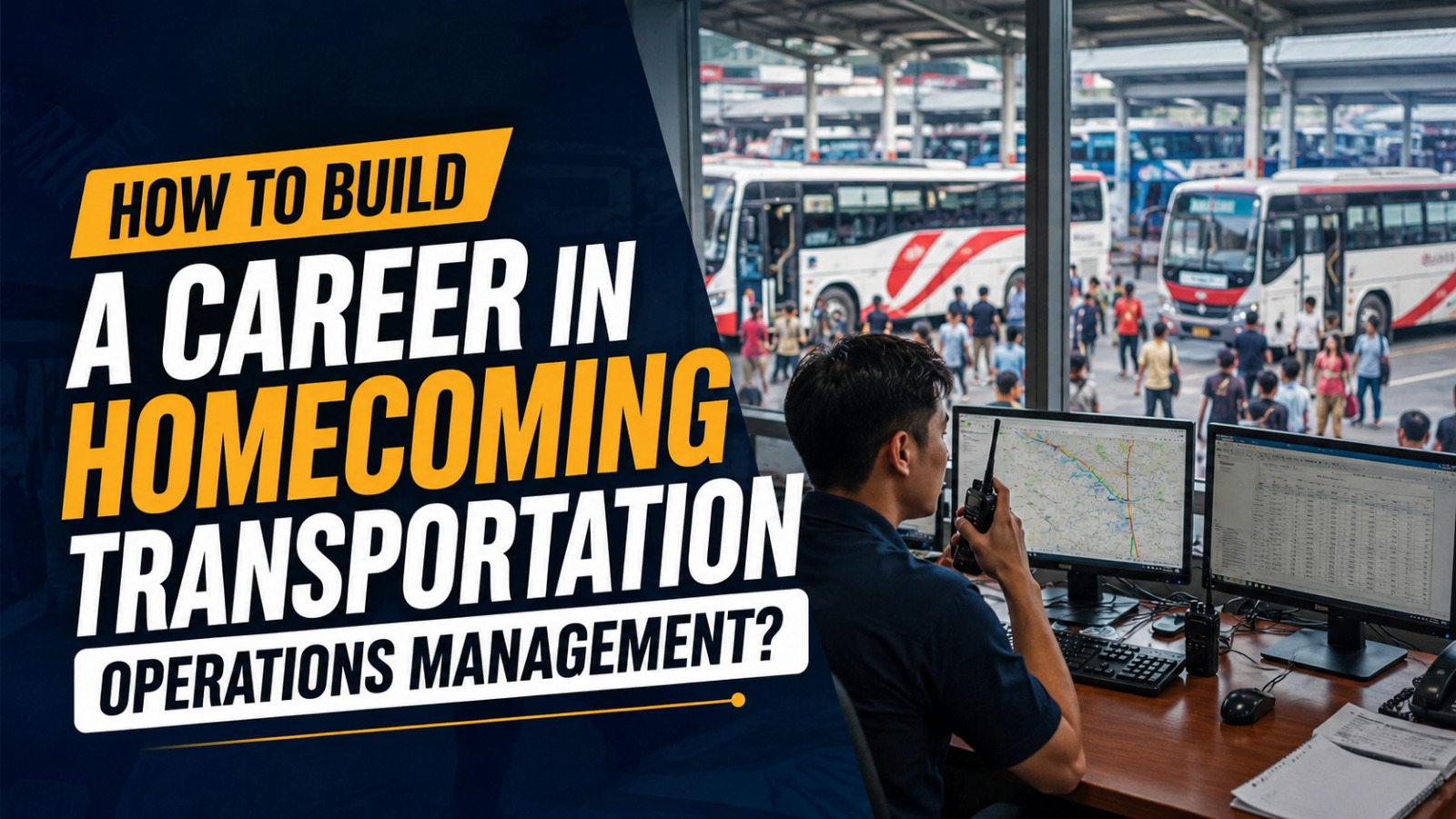
Transportation Management is an important field that focuses on organizing people, vehicles, routes, schedules, facilities, and transportation resources. During the homecoming season, this responsibility becomes more challenging because travel demand increases significantly. Transportation operations managers help ensure that services continue to operate safely and efficiently. They may work with drivers, dispatchers, technicians, customer service teams, authorities, and other stakeholders.
A career in this field requires both technical knowledge and strong management abilities. Professionals must be able to understand transportation systems while also coordinating people and resources. They may need to make quick decisions when traffic conditions, schedules, or passenger demand changes. For this reason, Operations Management can be a suitable career path for people who enjoy planning, coordination, and problem-solving.
LEARN THE BASICS OF TRANSPORTATION
The first step toward building a career is understanding how transportation systems work. Candidates should learn about routes, schedules, vehicle operations, passenger services, traffic conditions, and transportation regulations. Knowledge of these areas provides a strong foundation for future responsibilities.
Formal education can help, but practical experience is also valuable. Students can learn through transportation-related courses, internships, training programs, or entry-level positions. Understanding real operational challenges can make theoretical knowledge easier to apply. Continuous learning is essential because transportation systems continue to change.
DEVELOP OPERATIONS MANAGEMENT SKILLS
Strong Operations Management skills are essential for transportation professionals. Managers need to organize schedules, allocate resources, monitor performance, and respond to operational problems. They also need to understand how different parts of a transportation system affect one another.
Time management and organization are especially important during the homecoming period. A small scheduling problem can affect many vehicles and passengers. Professionals must therefore pay close attention to operational details while maintaining a broader view of the entire system. Good management can improve efficiency without compromising safety.
IMPROVE COMMUNICATION SKILLS
Communication is one of the most important skills for transportation operations managers. These professionals regularly communicate with drivers, employees, passengers, supervisors, authorities, and business partners. Clear communication helps ensure that everyone understands schedules, instructions, and operational changes.
During homecoming, communication becomes even more important because conditions can change quickly. Managers may need to explain delays, coordinate emergency responses, or adjust operational plans. They must remain calm and professional even when dealing with pressure. Strong Communication Skills can significantly improve career opportunities in transportation.
LEARN TRANSPORT PLANNING
Transport Planning involves deciding how vehicles, routes, schedules, and resources should be organized to meet travel demand. Professionals need to understand passenger patterns and identify possible operational problems. During the homecoming season, planning becomes particularly important because travel demand can increase rapidly.
Candidates can develop planning skills by studying traffic patterns, transportation data, and operational reports. They can also learn how different transportation modes interact with each other. Understanding these relationships helps managers create more effective strategies. Good planning can reduce delays, improve passenger service, and support safer transportation operations.
UNDERSTAND SAFETY MANAGEMENT
Safety should be a major priority in any transportation career. Operations managers need to understand basic safety procedures and ensure that employees follow established standards. They should also be aware of risks related to driver fatigue, vehicle condition, passenger movement, traffic, and emergency situations.
During the homecoming season, safety management becomes even more important because vehicles and facilities may operate under higher demand. Managers should monitor potential risks and ensure that appropriate procedures are followed. Safety Management is not simply a legal requirement; it is also an essential part of responsible transportation operations.
BUILD LEADERSHIP SKILLS
Leadership is another important part of a transportation operations career. Managers may supervise teams with different responsibilities and experience levels. They need to provide clear direction while encouraging employees to work together.
Good leaders listen to their teams and respond constructively to problems. They also understand that transportation operations depend on cooperation rather than individual effort. Building trust and maintaining professional relationships can improve team performance. Leadership Skills therefore have an important role in long-term career growth.
LEARN FROM HOMECOMING OPERATIONS
The homecoming season can provide valuable lessons for people interested in transportation management. Large-scale travel creates real examples of congestion management, passenger coordination, fleet operations, emergency response, and public communication. Observing these activities can help aspiring professionals understand how transportation systems operate under pressure.
Students and job seekers can follow transportation news, official announcements, and industry developments during the homecoming period. They can study how transportation organizations respond to changing conditions. These observations can strengthen their understanding of Homecoming Operations and broader transportation management.
CREATE A PROFESSIONAL CAREER PLAN
Building a career should involve clear and realistic goals. Candidates can begin with an entry-level position and gradually move toward supervisory or management roles. They should identify the qualifications and skills required for each stage of their desired career path.
Professional development should continue after obtaining a job. Employees can attend training programs, earn relevant certifications, improve digital skills, and seek additional responsibilities. Networking with transportation professionals can also provide useful insights and opportunities. A long-term plan can make Career Development more focused and achievable.
CONCLUSION
Building a career in Transportation Management requires a combination of education, practical experience, communication, planning, technology, safety, and leadership skills. The homecoming season provides a useful environment for understanding how transportation systems operate under high demand. Aspiring professionals can learn from these challenges and use them to develop relevant abilities.
A successful career does not happen immediately. Candidates should gain practical experience, improve their Operations Management skills, understand Transport Planning, and develop strong problem-solving abilities. With continuous learning and professional development, transportation operations can become a promising career path for people interested in managing complex travel systems.
About the Author
Gusti Ayu Tita P
Author — STEKOM University
An active author focused on academic issues, educational technology, and human resource development in the campus environment.