How to Develop Strong Critical Thinking Skills for Better Daily Decision Making?
Gusti Ayu Tita P
7 Agustus 2026
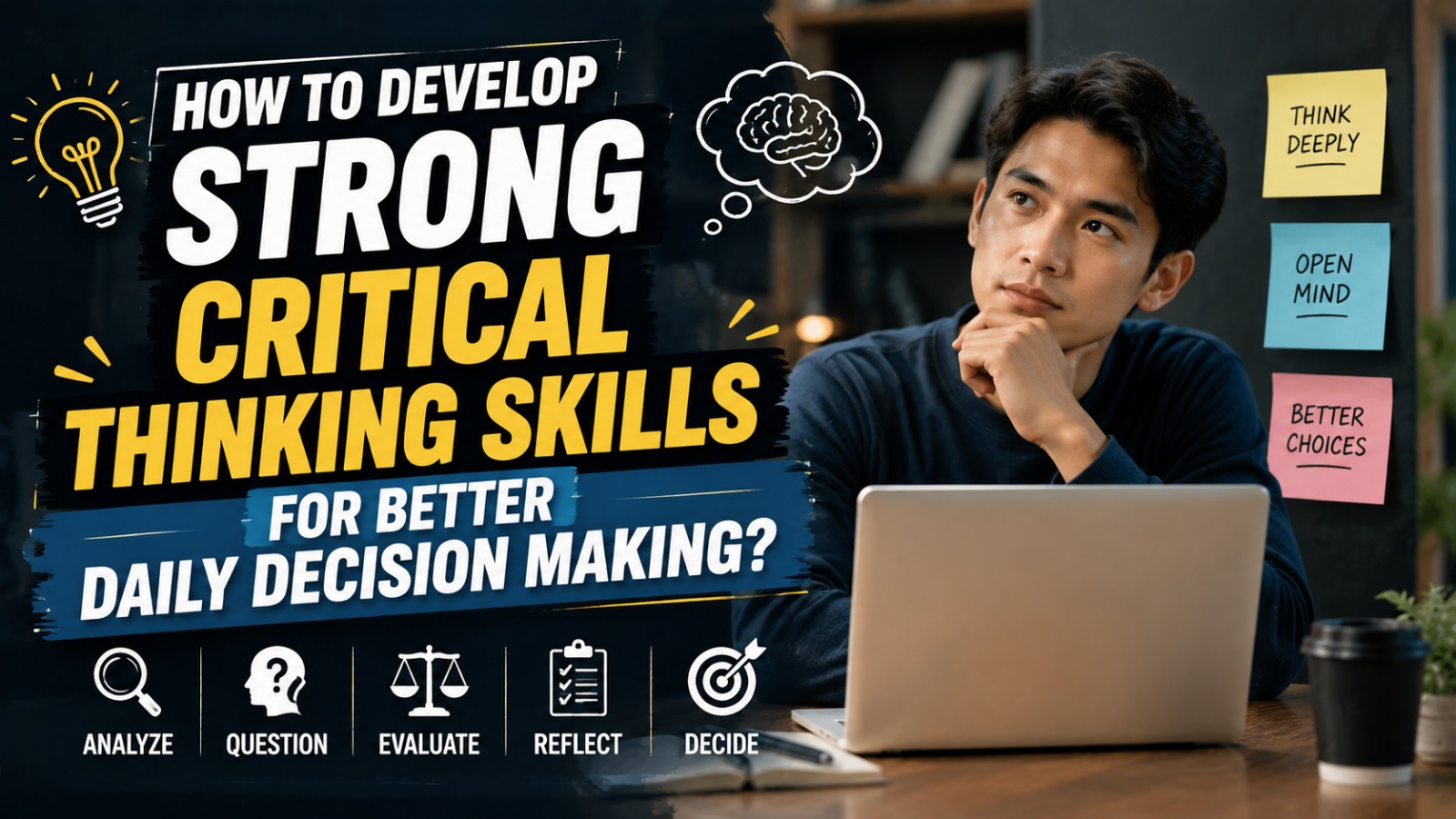
Making good decisions is an essential part of everyday life. Whether choosing a career, managing finances, solving personal problems, or evaluating online information, people constantly face situations that require careful thinking. Developing strong critical thinking skills allows individuals to analyze information objectively, consider different perspectives, and make logical decisions based on facts rather than emotions. As the amount of information available continues to grow, critical thinking has become one of the most valuable skills for personal and professional success.
Critical thinking is not an ability that people are simply born with. It can be improved through regular practice, curiosity, and a willingness to learn from different experiences. By building this skill, individuals become more confident in making decisions, solving problems, and adapting to new challenges in daily life.
UNDERSTANDING THE VALUE OF CRITICAL THINKING
Critical thinking is the ability to evaluate information logically before reaching a conclusion. It involves analyzing evidence, identifying assumptions, and considering different viewpoints before making decisions. Instead of accepting information immediately, critical thinkers ask questions and seek reliable facts. This approach helps reduce mistakes caused by misinformation or emotional reactions.
Strong critical thinking also encourages independent judgment. Rather than relying solely on the opinions of others, individuals learn to assess situations based on logic and evidence. This skill is valuable in education, the workplace, and everyday personal decisions.
ASK QUESTIONS BEFORE MAKING DECISIONS
One of the most effective ways to strengthen decision making is by asking thoughtful questions. Before accepting information or choosing a course of action, consider who provided the information and whether the source is trustworthy. Questions such as "What evidence supports this claim?" or "Are there alternative explanations?" encourage deeper analysis. This habit leads to more informed and balanced decisions.
Questioning information also improves curiosity and learning. Instead of making quick assumptions, individuals become more interested in understanding the complete picture. Over time, this habit naturally strengthens critical thinking abilities.
ANALYZE INFORMATION FROM MULTIPLE SOURCES
Reliable decisions require accurate information. Information analysis involves comparing facts from different trustworthy sources rather than depending on a single opinion. Reading multiple perspectives helps individuals recognize bias, identify missing details, and develop a more complete understanding of a topic. This process leads to better judgment and stronger reasoning.
Analyzing different viewpoints also reduces the influence of personal assumptions. People become more open to new ideas while maintaining logical evaluation. This balance helps improve both personal and professional decision-making skills.
DEVELOP LOGICAL REASONING THROUGH DAILY PRACTICE
Improving logical reasoning requires regular practice in everyday situations. Simple activities such as solving puzzles, reading analytical articles, participating in discussions, or evaluating real-life scenarios can strengthen thinking skills. These exercises encourage individuals to recognize patterns, identify causes, and predict possible outcomes. Daily practice gradually improves mental flexibility and confidence.
Reflection is another useful habit. After making an important decision, review the results and consider what worked well or what could have been improved. Learning from experience is one of the most effective ways to develop stronger reasoning abilities.
AVOID EMOTIONAL DECISION MAKING
Emotions are a natural part of life, but relying entirely on feelings can lead to poor decisions. Rational thinking helps individuals separate emotions from facts before making important choices. Taking time to pause, gather information, and evaluate possible consequences often results in better outcomes. This approach is especially valuable during stressful situations.
Remaining calm also improves communication and problem-solving. Instead of reacting impulsively, critical thinkers consider different solutions before responding. This habit reduces unnecessary conflicts and supports more effective decision making.
CONTINUE LEARNING AND EXPANDING KNOWLEDGE
Continuous learning is essential for developing critical thinking skills. Reading books, attending educational workshops, listening to expert discussions, and exploring different subjects expose individuals to new perspectives. The broader a person's knowledge, the easier it becomes to evaluate information accurately. Learning also encourages intellectual curiosity and lifelong personal growth.
Accepting constructive feedback is equally important. Listening to different opinions and reflecting on personal mistakes helps improve reasoning abilities. People who remain open to learning become more adaptable and confident when facing complex situations.
BUILD DAILY HABITS THAT STRENGTHEN CRITICAL THINKING
Developing critical thinking is a gradual process that depends on consistency. Small daily habits such as verifying online information, reading quality content, writing personal reflections, and discussing ideas with others can significantly improve analytical skills. Daily practice strengthens the ability to think logically and make informed decisions. Over time, these habits become a natural part of everyday life.
Another valuable habit is setting aside time to evaluate important decisions before acting. Avoid rushing whenever possible, especially when facing significant personal or financial choices. Careful thinking leads to better long-term outcomes and greater confidence.
CONCLUSION
How to develop strong critical thinking skills for better daily decision making begins with building habits that encourage logical reasoning, curiosity, and careful information analysis. Asking thoughtful questions, evaluating multiple sources, practicing rational thinking, and learning continuously all contribute to stronger decision-making abilities. These skills help individuals navigate everyday challenges with greater confidence and accuracy.
Critical thinking is one of the most valuable life skills in the modern world. By practicing it consistently, anyone can improve problem-solving abilities, make smarter decisions, and achieve greater success in both personal and professional life.
About the Author
Gusti Ayu Tita P
Author — STEKOM University
An active author focused on academic issues, educational technology, and human resource development in the campus environment.