How to Handle Social Pressure in Everyday Relationships?
Gusti Ayu Tita P
8 September 2026
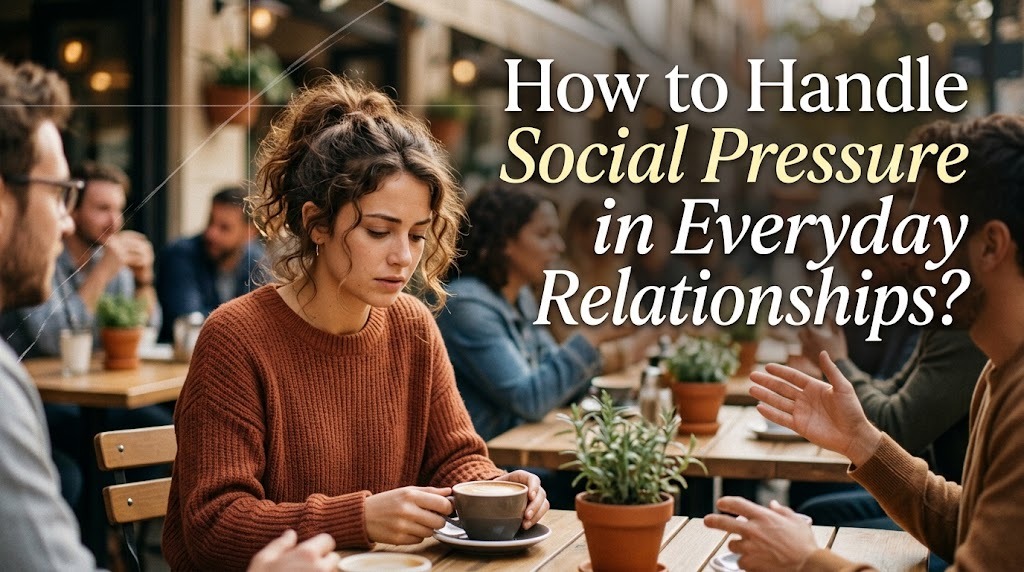
Social pressure can appear in many everyday relationships, including friendships, family interactions, school communities, and workplaces. People may feel pressured to agree with others, follow certain habits, or make choices that do not match their personal preferences. Sometimes the pressure is direct, but it can also appear through criticism, comparison, expectations, or fear of rejection. Learning how to recognize and manage social pressure can help people maintain healthier relationships without losing their sense of identity.
Healthy relationships should provide support while allowing individuals to have different opinions and personal boundaries. Disagreement does not always mean a relationship is unhealthy. However, constant pressure to behave according to someone else's expectations can become emotionally exhausting. The goal is not to avoid other people's opinions, but to respond to them without giving up personal judgment.
RECOGNIZE WHEN SOCIAL PRESSURE IS HAPPENING
The first step in handling social pressure is recognizing it. A person may feel uncomfortable, guilty, anxious, or afraid of disappointing someone after making a particular choice. These feelings can indicate that an external expectation is influencing the decision. Paying attention to emotional reactions can help identify pressure that might otherwise go unnoticed.
It is also useful to examine why a decision is being made. Ask whether the choice reflects personal needs or simply a desire to gain approval. If someone repeatedly changes their behavior because they are afraid of rejection, social pressure may be involved. Understanding the source of a decision creates more space for independent thinking.
UNDERSTAND THE DIFFERENCE BETWEEN ADVICE AND PRESSURE
People often receive advice from those who care about them. Advice can be useful because other people may notice risks or possibilities that are difficult to see alone. However, advice gives room for personal choice, while unhealthy pressure attempts to control the decision. Understanding this difference can make social interactions easier to manage.
When receiving advice, listen carefully before deciding whether it is relevant. Consider the person's reasons, experience, and intentions. If the advice does not match personal circumstances, it is acceptable to choose another path. Respecting someone's opinion does not require automatically following it.
LEARN TO SAY NO POLITELY
Saying no is an important skill for managing social pressure. Many people avoid refusing requests because they worry about being considered selfish, unfriendly, or difficult. However, a respectful refusal is a normal part of maintaining personal boundaries. People have different limits regarding time, energy, money, responsibilities, and personal choices.
A simple and clear response is often enough. There is no need to create a complicated explanation every time someone makes a request. A person can express appreciation for the invitation while explaining that they cannot participate. Being polite and being firm can exist at the same time.
SET HEALTHY PERSONAL BOUNDARIES
Personal boundaries define what a person is comfortable accepting in a relationship. They may involve communication, privacy, time, physical space, responsibilities, or personal decisions. Healthy boundaries help protect individual needs while allowing relationships to remain respectful.
Boundaries should be communicated clearly rather than expecting other people to guess them. If someone repeatedly ignores a boundary, the person may need to repeat the limit or reduce interaction in certain situations. Not everyone will immediately agree with a boundary. A disagreement does not automatically mean that the boundary is unreasonable.
DO NOT BASE SELF WORTH ON OTHER PEOPLE'S APPROVAL
The desire to be accepted can make social pressure stronger. People may change their opinions or behavior because they are afraid of being criticized or excluded. When self worth depends heavily on approval, making independent decisions becomes more difficult.
Instead, develop a stronger understanding of personal values and abilities. Ask whether a choice is consistent with personal goals rather than focusing only on how others might react. Constructive feedback can still be valuable, but it should not determine a person's entire sense of worth. Approval from others can be appreciated without becoming a requirement for confidence.
AVOID EXCESSIVE SOCIAL COMPARISON
Comparison is common in everyday relationships. Friends, classmates, coworkers, and relatives may have different achievements, lifestyles, or opportunities. Constantly comparing these differences can make someone feel behind or inadequate. Comparing personal progress with another person's results can create unnecessary social pressure.
A healthier approach is to focus on individual progress. Consider what has improved, what skills have been developed, and what goals are still being worked toward. Other people's achievements can provide inspiration without becoming a measure of personal value. Everyone has a different timeline and set of circumstances.
CHOOSE YOUR RESPONSES CAREFULLY
Social pressure can become stronger when people respond immediately to every comment or request. Taking a moment to think can prevent emotional decisions. Pausing before responding gives people time to consider what they actually want.
A calm response can also reduce unnecessary conflict. Instead of becoming defensive, explain the decision clearly and respectfully. If the situation is emotionally intense, it may be better to continue the conversation later. Responding thoughtfully is often more effective than reacting impulsively.
SURROUND YOURSELF WITH SUPPORTIVE PEOPLE
The quality of relationships can influence how easily someone handles social pressure. Supportive people allow others to have different opinions and respect personal boundaries. Healthy relationships do not require constant agreement or complete conformity.
If certain relationships repeatedly involve manipulation, humiliation, excessive criticism, or pressure, their impact should be evaluated. Creating some distance may be appropriate when boundaries are consistently ignored. At the same time, maintaining connections with people who provide constructive support can strengthen confidence. A positive social environment makes it easier to remain authentic.
USE SOCIAL MEDIA MORE CONSCIOUSLY
Social pressure does not only come from face-to-face relationships. Social media can increase pressure by exposing users to other people's lifestyles, achievements, opinions, and expectations. Repeated exposure to idealized content can make certain lifestyles appear normal or necessary.
To reduce this influence, choose online content carefully. Unfollow or limit accounts that consistently trigger unhealthy comparison or insecurity. Set reasonable periods for checking social platforms and make time for offline activities. Using social media consciously can reduce pressure while preserving its useful benefits.
BUILD CONFIDENCE THROUGH SMALL DECISIONS
Confidence develops through repeated experiences of making and managing personal decisions. Start with small situations where it is safe to express an opinion or establish a boundary. Each successful experience can strengthen trust in personal judgment.
Mistakes should also be treated as opportunities to learn. A decision that does not produce the expected result does not mean that independent thinking is wrong. Review what happened and consider what could be improved next time. Confidence grows when people learn that they can handle both success and failure.
KNOW WHEN TO SEEK SUPPORT
Some forms of social pressure are difficult to manage alone, especially when they occur in important relationships or continue for a long time. Talking with a trusted friend, family member, teacher, mentor, or counselor can provide another perspective. Seeking support is a sign of awareness, not weakness.
Support can be especially helpful when pressure begins to interfere with daily activities, relationships, concentration, or emotional well-being. A trusted person can help identify patterns that may be difficult to recognize independently. Having a safe space to talk can make difficult social situations easier to understand and manage.
CONCLUSION
How to handle social pressure in everyday relationships starts with recognizing when external expectations are influencing personal choices. People can manage pressure by distinguishing advice from control, learning to say no, setting healthy boundaries, and reducing excessive comparison. These skills allow individuals to remain connected with others without constantly sacrificing their own needs.
Healthy relationships require respect, communication, boundaries, and room for individuality. Not every disagreement needs to become a conflict, and not every opinion needs to be followed. By building confidence and choosing supportive relationships, people can handle social pressure more calmly while maintaining their personal values and identity.
About the Author
Gusti Ayu Tita P
Author — STEKOM University
An active author focused on academic issues, educational technology, and human resource development in the campus environment.