How To Identify Fake Products When Shopping Online?
Gusti Ayu Tita P
26 Agustus 2026
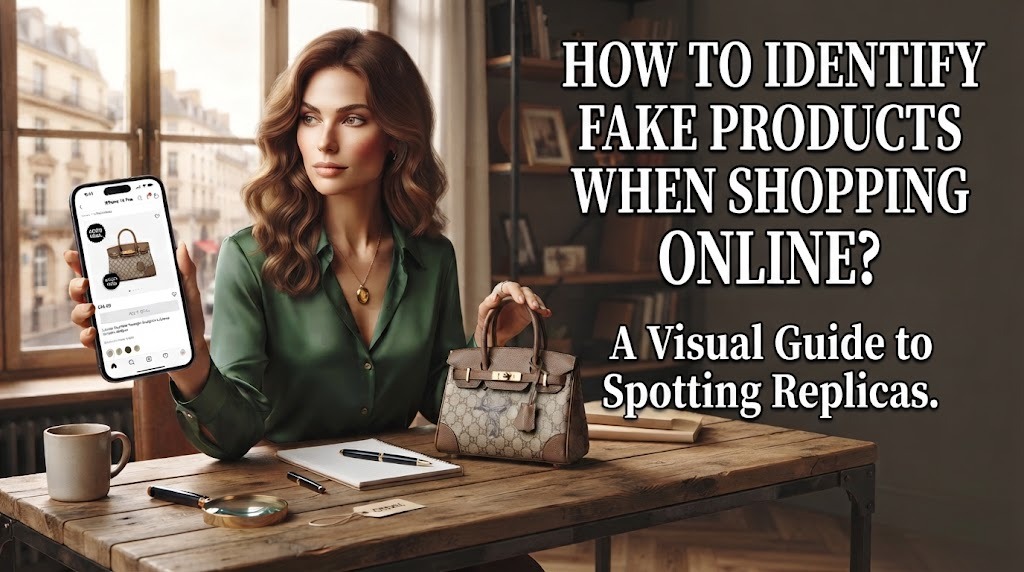
Online shopping makes it easy to find products from many sellers, but it also increases the risk of encountering counterfeit goods. Fake products can be difficult to recognize because sellers may use professional photos, attractive descriptions, and convincing advertisements. Consumers may receive an item that looks similar to the original but has different materials, quality, or performance. Therefore, knowing how to identify fake products when shopping online is an important skill for modern consumers. Careful research before payment can help protect both money and personal information.
COMPARE THE PRODUCT PRICE
Price is an important clue when shopping online. An extremely low price can be a warning sign, particularly when the same genuine product normally costs much more elsewhere. Counterfeit sellers may use very low prices to attract consumers and generate quick sales. However, a low price does not automatically prove that a product is fake because legitimate discounts and promotions are common.
Compare the price with several trusted sellers before purchasing. Check whether the discount has a reasonable explanation, such as a seasonal sale, clearance event, older model, or refurbished condition. A large unexplained price difference deserves additional investigation. Consumers should consider price together with seller reputation, product details, and warranty information.
EXAMINE PRODUCT PHOTOS CAREFULLY
Photos are often the main source of product information in online shopping. Sellers may use professional images to make products look attractive and trustworthy. However, some counterfeit sellers copy official product photographs from brands or authorized retailers. This means that a high-quality photograph does not necessarily prove that the seller has a genuine product.
Look for photographs showing the actual item, packaging, labels, serial numbers, and other relevant details. Compare these features with images and information from reliable official sources. If the seller refuses to provide additional photographs when they are reasonably necessary, consider choosing another seller. Visual information should be used together with other authenticity checks.
READ THE PRODUCT DESCRIPTION
A detailed product description can reveal important information about what is actually being sold. Check the product name, model number, size, material, specifications, included accessories, and condition carefully. Counterfeit or misleading listings may contain spelling mistakes, vague statements, inconsistent specifications, or unusual product terminology. A description that does not match the photographs should receive extra attention.
Consumers should also watch for words that suggest the item is not genuine. Terms such as replica, imitation, inspired, copy, or similar expressions may indicate that the product is not an original branded item. Never assume that a familiar logo means the product is authentic. Read the complete listing before making a purchase.
CHECK REVIEWS AND CUSTOMER PHOTOS
Customer reviews can provide useful information about the actual shopping experience. Look for detailed reviews with photographs, videos, and specific comments about packaging and product quality. Reviews from different customers can help reveal whether buyers consistently receive the same product. However, reviews should not be considered absolute proof because some may be misleading or manipulated.
Pay attention to repeated complaints about poor quality, incorrect packaging, missing accessories, or products that differ from the listing. Recent reviews can also be more useful when a seller's inventory may have changed. Patterns across multiple reviews are generally more meaningful than a single comment. Consumers should combine review information with other verification methods.
CHOOSE OFFICIAL OR AUTHORIZED SELLERS
For expensive branded products, one of the safest options is purchasing from an official store or authorized retailer. These sellers are more likely to provide genuine products, valid warranties, proper receipts, and reliable customer support. They may also follow the manufacturer's distribution requirements. This can significantly reduce the risk of receiving counterfeit goods.
If an authorized seller is unavailable, research the marketplace seller carefully before purchasing. Check whether the seller provides consistent information and whether the platform offers buyer protection. A trustworthy source is often more important than finding the lowest possible price. Paying a reasonable price from a reliable seller can prevent larger problems later.
WHAT TO DO IF YOU RECEIVE A SUSPECTED FAKE PRODUCT
If you receive a product that appears counterfeit, do not immediately throw away the packaging or purchase evidence. Keep the product, packaging, receipt, invoice, and seller communication as documentation. Take photographs or videos showing the differences between the received product and the original listing. Then contact the seller through the marketplace and request an appropriate solution.
If the seller does not resolve the issue, use the platform's dispute or reporting system when available. For important branded products, contacting the manufacturer may also help with authentication. Do not resell a product that you reasonably suspect is counterfeit. Reporting suspicious products can help protect other consumers from similar problems.
CONCLUSION
Learning how to identify fake products when shopping online can help consumers avoid financial losses, poor-quality goods, and potential safety problems. The most useful steps include checking the seller, comparing prices, examining photos, reading descriptions, reviewing customer feedback, and verifying available authentication features. Consumers should also check warranty and return policies before completing a purchase.
No single sign can always prove that a product is fake. Several warning signs together provide stronger evidence, especially when combined with information from official sources. Choosing official stores or authorized sellers remains one of the safest approaches for expensive or safety-sensitive products. With careful research and secure payment habits, consumers can enjoy online shopping while reducing the risk of counterfeit purchases.
About the Author
Gusti Ayu Tita P
Author — STEKOM University
An active author focused on academic issues, educational technology, and human resource development in the campus environment.