
How To Improve Leadership Skills Through Independence Values?
Gusti Ayu Tita P
6 Agustus 2026
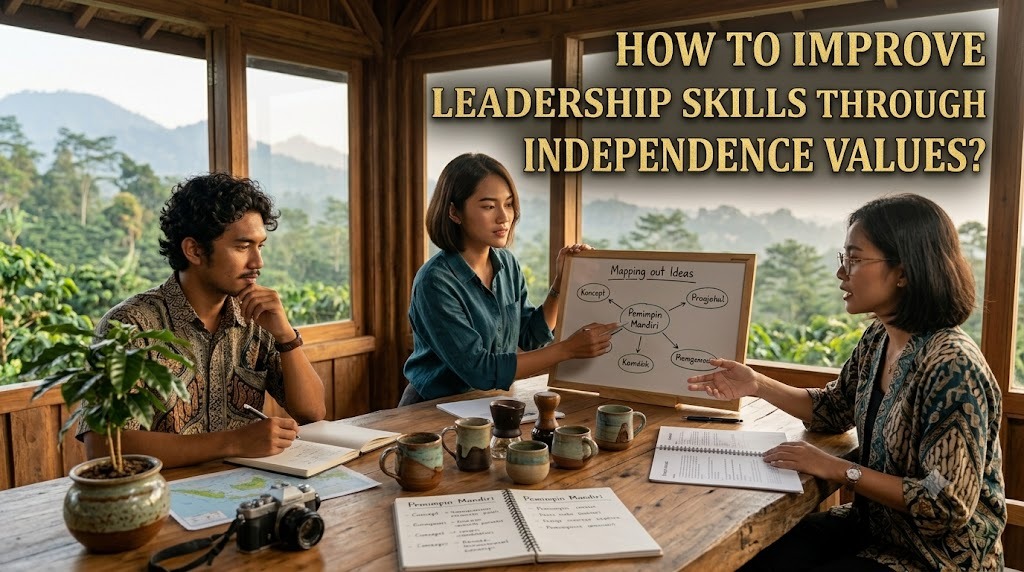
Leadership skills are important for young people because they help individuals make responsible decisions, work with others, and respond to challenges. Good leadership is not only about giving instructions or holding an important position. It also involves responsibility, discipline, courage, integrity, and the ability to respect others. Independence values can help young people develop these qualities through daily actions and experiences. By practicing independence consistently, individuals can gradually become more confident and responsible leaders.
UNDERSTANDING INDEPENDENCE VALUES IN LEADERSHIP
Independence values refer to the ability to take responsibility for decisions and actions without always depending on others. An independent person can identify problems, consider possible solutions, and take appropriate action. In leadership, this quality is important because leaders often need to make decisions and accept the consequences. Independence does not mean refusing help, but knowing when to act independently and when to seek advice. This balance can make leadership more effective.
Young people can develop independence through simple responsibilities at school, home, organizations, and communities. Completing tasks on time and solving problems without immediately relying on others are practical examples. These experiences teach individuals to become more accountable for their choices. Over time, independent behavior can strengthen self-confidence and decision-making skills. These qualities are useful in both personal and professional environments.
BUILD RESPONSIBILITY THROUGH DAILY ACTIONS
Responsibility is one of the most important values for developing leadership. A responsible person understands that every decision can produce consequences. Young people can practice this value by completing assignments, following commitments, and taking care of responsibilities without constant reminders. Small responsibilities can create strong leadership habits when practiced consistently.
Leaders also need to take responsibility when something goes wrong. Instead of blaming other people, they should identify the problem and consider how it can be corrected. This attitude creates trust among team members. A leader who accepts responsibility can become a positive example for others. Accountability builds credibility, which is essential for effective leadership.
DEVELOP CONFIDENCE THROUGH INDEPENDENT DECISIONS
Confidence is necessary when making decisions, especially when facing uncertainty. Independence encourages young people to make choices based on information and careful consideration. They do not need to wait for someone else to decide every small matter. Decision-making practice can gradually increase confidence and reduce excessive dependence on others.
However, confidence should not become arrogance. Independent leaders should remain open to suggestions and recognize when they need additional information. Listening to experienced people can improve the quality of a decision without removing personal responsibility. A strong leader can say, "I need advice" while still taking responsibility for the final decision. This combination creates confident and humble leadership.
IMPROVE PROBLEM SOLVING SKILLS
Leaders regularly encounter problems that require practical solutions. Independence can encourage individuals to analyze problems before immediately asking someone else to solve them. Young people can begin by identifying the cause of a problem, considering possible solutions, and evaluating the consequences of each option. Critical thinking and problem solving are valuable skills that can be strengthened through practice.
Failure can also become part of the learning process. When a solution does not work, individuals can evaluate what went wrong and try another approach. This teaches resilience and adaptability. Independent problem solving helps future leaders remain calm when facing difficult situations. Learning from mistakes can eventually improve judgment and leadership performance.
DEVELOP DISCIPLINE AND SELF MANAGEMENT
Strong leaders need discipline because leadership involves commitments and responsibilities. Independence encourages individuals to manage their own time, tasks, and priorities. Young people can practice this by creating schedules, setting goals, and completing important tasks without constant supervision. Self management helps individuals become more organized and reliable.
Discipline also means maintaining good habits when no one is watching. A person who works responsibly only when being supervised may struggle in a leadership position. Consistent behavior creates trust among colleagues and team members. Over time, discipline can become part of a person's character. Reliable leaders are usually those who can manage themselves before managing others.
PRACTICE COMMUNICATION AND ACTIVE LISTENING
Independence should not make someone ignore the opinions of others. Leadership requires effective communication and the ability to understand different perspectives. Young people can improve these skills by participating in group discussions, organizations, teamwork, and community activities. Active listening is especially important because leaders need to understand problems before making decisions.
Good communication also means expressing ideas clearly and respectfully. A leader should be able to explain goals, provide feedback, and handle disagreements constructively. Independent thinking is valuable, but it becomes more effective when combined with collaboration. Leaders should encourage team members to contribute ideas. This creates a more inclusive and productive leadership environment.
DEVELOP COURAGE TO TAKE INITIATIVE
Leadership often begins with the willingness to take initiative. Independent individuals are more likely to notice problems and think about possible actions instead of waiting for instructions. Young people can practice initiative by volunteering for responsibilities, proposing ideas, or helping solve problems in their communities. Taking initiative can demonstrate confidence and responsibility.
Initiative does not mean acting without considering consequences. A good leader evaluates the situation before taking action. They consider available resources, possible risks, and the needs of other people. This balance between courage and careful thinking is important. Responsible initiative can help young people become proactive leaders.
STRENGTHEN INTEGRITY AND HONESTY
Integrity is a fundamental value in leadership. Independent leaders should make decisions based on ethical principles rather than simply following pressure from others. Honesty and consistency help build trust with team members and the wider community. Young people can practice integrity by telling the truth, keeping promises, and admitting mistakes.
A leader's behavior influences how others behave. If leaders demonstrate honesty, team members are more likely to respect their decisions. Integrity also helps leaders remain consistent when facing difficult situations. Personal values should guide actions even when there is no immediate reward. Trustworthy leadership begins with strong character.
LEARN TO ACCEPT CONSEQUENCES
Independence means understanding that choices have consequences. Young people should learn to evaluate both positive and negative results before making decisions. When a decision produces an undesirable result, avoiding responsibility will not solve the problem. Instead, leaders should acknowledge the outcome and identify what can be improved. Accepting consequences is an important part of maturity.
This mindset also encourages better decision-making in the future. Experience allows individuals to understand which approaches work and which need adjustment. Leaders who learn from consequences can become more careful without becoming afraid to act. They can balance courage with responsibility. This creates mature and adaptable leadership.
DEVELOP TEAMWORK WITHOUT LOSING INDEPENDENCE
Being independent does not mean working alone all the time. Effective leaders know how to combine personal responsibility with teamwork. A leader should be capable of completing individual tasks while also supporting team members. Collaboration and independence can work together when everyone understands their responsibilities.
Young people can practice this balance through group projects, student organizations, volunteer activities, and community programs. Each member can contribute ideas while remaining responsible for assigned tasks. Leaders can delegate work but should still monitor progress and provide support. This approach develops trust and cooperation. Strong leadership comes from helping others succeed while remaining accountable for shared goals.
APPLY INDEPENDENCE VALUES IN DAILY LIFE
Leadership development does not have to begin with a formal leadership position. Young people can practice independence in everyday activities. Managing personal schedules, completing responsibilities, making thoughtful decisions, and helping others are simple ways to develop leadership qualities. Daily habits shape long term character.
The most important part is consistency. Independence becomes meaningful when it is practiced regularly rather than only during special activities. Young people should evaluate their behavior and identify areas that still need improvement. Over time, these habits can influence how they communicate, solve problems, and make decisions. Leadership grows through continuous practice and experience.
CONCLUSION
How to improve leadership skills through independence values can be answered by developing responsibility, confidence, discipline, problem-solving ability, integrity, and initiative. Independence teaches young people to make decisions, accept consequences, and take responsibility for their actions. At the same time, effective leadership requires communication, teamwork, humility, and respect for different perspectives. These values can be developed through simple activities at school, home, organizations, and communities. By consistently practicing independence in daily life, young people can build stronger leadership skills and become responsible individuals who are ready to contribute positively to society.
About the Author
Gusti Ayu Tita P
Author — STEKOM University
An active author focused on academic issues, educational technology, and human resource development in the campus environment.