
How To Improve Professionalism In Structural Positions?
Gusti Ayu Tita P
12 Agustus 2026
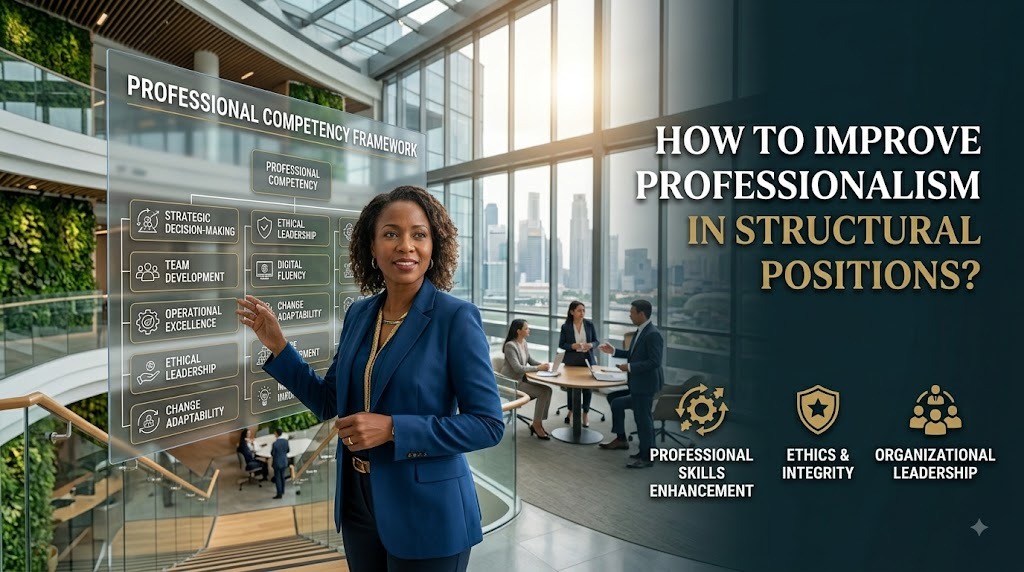
Professionalism is an important quality for individuals who hold structural positions because their behavior can influence employees, organizational culture, and overall performance. A professional leader is expected to perform responsibilities consistently, communicate clearly, make fair decisions, and use authority responsibly. Professionalism is not limited to appearance or formal behavior but also includes competence, integrity, accountability, discipline, and ethical conduct. Strong professionalism helps create a workplace where employees understand expectations and trust their leaders.
Improving professionalism requires continuous effort. Structural leaders need to evaluate their own performance, develop relevant skills, respond to feedback, and adapt to organizational changes. They must also understand that leadership responsibilities affect not only their own work but also the performance of the teams they manage. By developing professional leadership systematically, organizations can improve efficiency, trust, and long term performance.
UNDERSTANDING PROFESSIONALISM IN STRUCTURAL POSITIONS
Professionalism in structural positions refers to the ability to perform leadership responsibilities according to organizational standards, ethical principles, and professional competencies. A professional leader understands the scope of authority and uses it responsibly. The leader also maintains appropriate behavior when dealing with employees, colleagues, and stakeholders. Responsibility and integrity are therefore essential elements of professional conduct.
Professionalism also means being reliable when performing organizational duties. Leaders should complete responsibilities on time, follow established procedures, and remain consistent when handling workplace issues. They should avoid decisions based on personal interests or favoritism. A professional approach creates trust, fairness, and accountability within the organization.
DEVELOPING STRONG MANAGERIAL COMPETENCE
Managerial competence is one of the foundations of professionalism. Structural leaders need to understand planning, organizing, coordinating, monitoring, and evaluating organizational activities. They should be able to translate organizational goals into practical work plans. Strong managerial skills help leaders manage responsibilities more efficiently.
Competence should be developed continuously because organizational demands can change. Leaders can improve their skills through training, mentoring, professional education, and practical experience. They should also learn from previous decisions and performance evaluations. Continuous development allows leaders to provide better direction and more effective management.
IMPROVING COMMUNICATION SKILLS
Clear communication is essential for professional structural leadership. Leaders need to explain goals, responsibilities, policies, and expectations in language that employees can understand. They should also listen actively when employees provide feedback or raise concerns. Effective communication reduces misunderstandings and supports better coordination.
Professional communication requires appropriate tone and timing. Leaders should avoid humiliating employees or communicating important issues in an unnecessarily emotional manner. When difficult information must be delivered, it should be explained honestly and respectfully. Strong communication builds trust, cooperation, and workplace professionalism.
MAKING FAIR AND OBJECTIVE DECISIONS
Professional leaders should make decisions based on relevant information, organizational objectives, rules, and evidence. Personal preferences should not determine decisions involving employees or organizational resources. Leaders should consider different perspectives before selecting an appropriate solution. Fair decision making helps protect organizational credibility.
Objectivity is particularly important when dealing with employee performance or workplace conflicts. Leaders should evaluate situations based on facts rather than assumptions or personal relationships. Decisions should also be documented when organizational procedures require it. This approach strengthens transparency and accountability.
DEVELOPING EMPLOYEE COMPETENCE
Professional structural leaders should support the development of employees rather than focusing only on immediate results. Training, mentoring, coaching, and constructive feedback can help employees improve their abilities. Leaders should identify competency gaps and provide appropriate opportunities for development. Employee development contributes to stronger organizational performance.
Development should be aligned with organizational needs. Employees can be encouraged to improve technical, communication, digital, teamwork, and problem solving skills. Leaders should recognize progress and provide feedback when improvement is still needed. Supporting employee growth creates stronger teams and a more capable workforce.
MANAGING CONFLICT PROFESSIONALLY
Conflict can occur because employees have different opinions, expectations, personalities, or work priorities. Professional leaders should not ignore conflict or allow personal emotions to determine their response. They need to understand the causes and listen to relevant perspectives. Professional conflict management can prevent disagreements from damaging organizational performance.
Leaders should focus on fair and practical solutions. Organizational policies should guide decisions when formal action is required. Leaders should also maintain confidentiality when handling sensitive workplace issues. Effective conflict management can strengthen communication, fairness, and team relationships.
USING TECHNOLOGY RESPONSIBLY
Modern professionalism also includes the ability to use digital tools effectively and responsibly. Structural leaders may use technology for communication, data management, reporting, monitoring, and administrative work. They need sufficient digital competence to understand the benefits and limitations of these tools. Technology should support organizational objectives rather than create unnecessary complexity.
Leaders must also consider information security and privacy. Organizational data should only be accessed, stored, and shared according to appropriate rules and procedures. Employees should receive guidance about responsible technology use. Responsible digital practices support efficiency, security, and organizational credibility.
ACCEPTING FEEDBACK AND EVALUATING PERFORMANCE
Professional leaders should be willing to receive feedback from employees, colleagues, supervisors, and other relevant stakeholders. Feedback can reveal weaknesses that may not be visible through self evaluation. Leaders should respond to criticism objectively rather than defensively. Constructive feedback can become an important tool for professional growth.
Performance evaluation should be conducted regularly and based on clear standards. Leaders can use evaluation results to identify strengths, weaknesses, and development priorities. They should also monitor whether improvements produce meaningful organizational results. Continuous evaluation supports professional growth and better leadership performance.
ADAPTING TO ORGANIZATIONAL CHANGE
Organizations continually face changes in technology, regulations, employee expectations, and operational requirements. Professional structural leaders need to adapt without losing sight of organizational values and objectives. They should explain changes clearly and support employees during the transition. Adaptability is essential for maintaining effective leadership in changing environments.
Leaders should also be willing to revise outdated practices. Not every traditional method remains effective when organizational conditions change. By combining experience with new information and appropriate technology, leaders can improve existing processes. Adaptability helps organizations maintain resilience and long term effectiveness.
BUILDING A PROFESSIONAL WORK CULTURE
Individual professionalism becomes stronger when supported by a positive organizational culture. Structural leaders should establish standards for discipline, communication, ethics, teamwork, and accountability. These standards should be communicated clearly and applied consistently. Professional work culture encourages employees to understand the behavior expected in the organization.
Leaders can strengthen culture through recognition, feedback, training, and consistent enforcement of organizational rules. Employees should feel that professional standards apply fairly to everyone. When leaders and employees share the same commitment to professionalism, workplace cooperation becomes stronger. A positive culture can improve trust, productivity, and organizational performance.
CONCLUSION
How to improve professionalism in structural positions can be answered through continuous competence development, ethical leadership, effective communication, fair decision making, discipline, employee development, and adaptability. Professionalism is not a one time achievement but a continuous process that requires self evaluation and willingness to improve. Leaders must understand that their behavior can influence employee motivation and organizational culture.
Structural leaders can strengthen professionalism by leading by example, accepting feedback, managing conflicts fairly, using technology responsibly, and maintaining accountability. When these practices are consistently applied, structural positions can contribute to a more effective and trustworthy organization. Strong professionalism ultimately supports better teamwork, organizational efficiency, employee development, and sustainable performance.
About the Author
Gusti Ayu Tita P
Author — STEKOM University
An active author focused on academic issues, educational technology, and human resource development in the campus environment.















