
How To Overcome Nervousness During A Proposal Seminar?
Gusti Ayu Tita P
3 September 2026
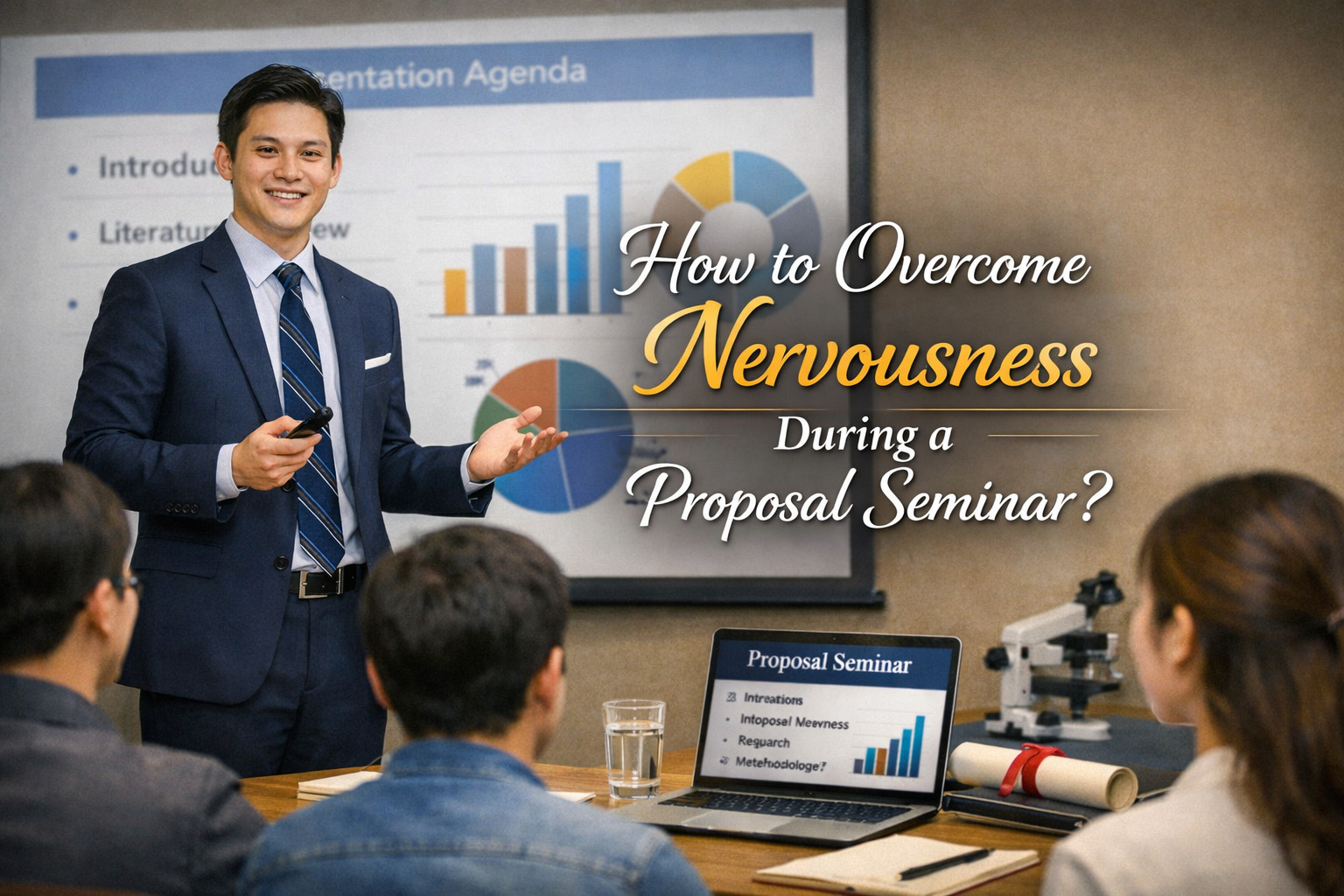
A proposal seminar is one of the most important milestones in completing a thesis. During this stage, students are expected to explain their research plans clearly while answering questions from supervisors and examiners. Feeling nervous is completely normal, but excessive anxiety can affect confidence and presentation performance.
Fortunately, nervousness can be managed with the right preparation and mindset. By applying effective Proposal Seminar Tips, improving Presentation Skills, and maintaining Self Confidence, students can perform more calmly and professionally throughout the seminar.
UNDERSTAND YOUR RESEARCH THOROUGHLY
The first step to reducing nervousness is having a deep understanding of your research. Do not simply memorize your presentation slides; instead, understand the background, objectives, methodology, expected results, and significance of your study. This level of preparation allows you to answer questions naturally rather than relying on memorized sentences.
Review your Research Proposal several times before the seminar. Identify areas that may raise questions from the examiners and prepare logical explanations supported by academic references. Strong preparation is the foundation of lasting Self Confidence.
PRACTICE YOUR PRESENTATION REGULARLY
Consistent practice is one of the most effective ways to overcome anxiety. Rehearse your presentation several times until you become familiar with the flow of your explanation. Speaking repeatedly will improve fluency and reduce hesitation during the actual seminar.
Practice in front of friends, family members, or classmates and ask them to provide constructive feedback. Recording yourself is another useful method because it helps identify speaking habits, body language, and pronunciation that can be improved. Better Presentation Skills come from continuous practice.
MANAGE YOUR BREATHING AND STAY CALM
Physical tension often increases nervousness during a presentation. Before entering the seminar room, take slow and deep breaths to help relax your body and stabilize your heartbeat. Controlled breathing allows your mind to remain focused instead of becoming overwhelmed by anxiety.
Avoid rushing through your presentation. Speak at a comfortable pace, pause briefly between important points, and maintain steady eye contact with your audience. These simple techniques improve both Public Speaking performance and overall confidence.
PREPARE FOR POSSIBLE QUESTIONS
One common reason students become nervous is the fear of unexpected questions. To overcome this concern, create a list of potential questions related to your research objectives, literature review, methodology, and expected outcomes. Preparing thoughtful answers will make you feel more confident during the discussion session.
If you receive a difficult question, remain calm and take a moment before responding. It is perfectly acceptable to organize your thoughts before answering. A clear and logical response demonstrates professionalism and thorough Seminar Preparation.
DEVELOP A POSITIVE MINDSET
Many students focus too much on making mistakes instead of showcasing their knowledge. Replace negative thoughts with positive affirmations by reminding yourself that you have spent months preparing your research. Confidence grows when you acknowledge your hard work and preparation.
Remember that examiners are not trying to make you fail. Their questions are intended to improve your research and strengthen your academic work. Viewing the Proposal Seminar as a learning opportunity rather than a frightening examination helps reduce unnecessary pressure.
TAKE CARE OF YOUR PHYSICAL AND MENTAL HEALTH
Good physical condition contributes significantly to mental performance. Get enough sleep the night before the seminar, eat a balanced meal, and stay hydrated. These habits help improve concentration and reduce fatigue during your presentation.
Avoid excessive caffeine or last-minute cramming, as these may increase stress instead of helping you prepare. Maintaining a healthy routine supports better focus, emotional stability, and stronger Self Confidence throughout the Thesis Seminar.
LEARN FROM EVERY EXPERIENCE
Whether your seminar goes perfectly or presents unexpected challenges, every experience provides valuable lessons. Listen carefully to the feedback from your supervisors and examiners, and use their suggestions to improve your research. Constructive criticism is an essential part of academic growth.
After the seminar, evaluate your performance honestly. Identify your strengths as well as the areas that require improvement. Continuous learning will help you become more confident in future academic presentations and professional situations.
CONCLUSION
Feeling nervous before a proposal seminar is completely natural, but it should never prevent you from performing at your best. With Seminar Preparation, consistent practice, strong Presentation Skills, effective Public Speaking, and positive thinking, students can successfully manage anxiety and deliver a confident presentation. Remember that every seminar is an opportunity to demonstrate your knowledge, receive valuable feedback, and improve your Research Proposal for a stronger final thesis.
About the Author
Gusti Ayu Tita P
Author — STEKOM University
An active author focused on academic issues, educational technology, and human resource development in the campus environment.