
How To Prepare Essential Documents For A Successful Scholarship Application?
Gusti Ayu Tita P
28 Agustus 2026
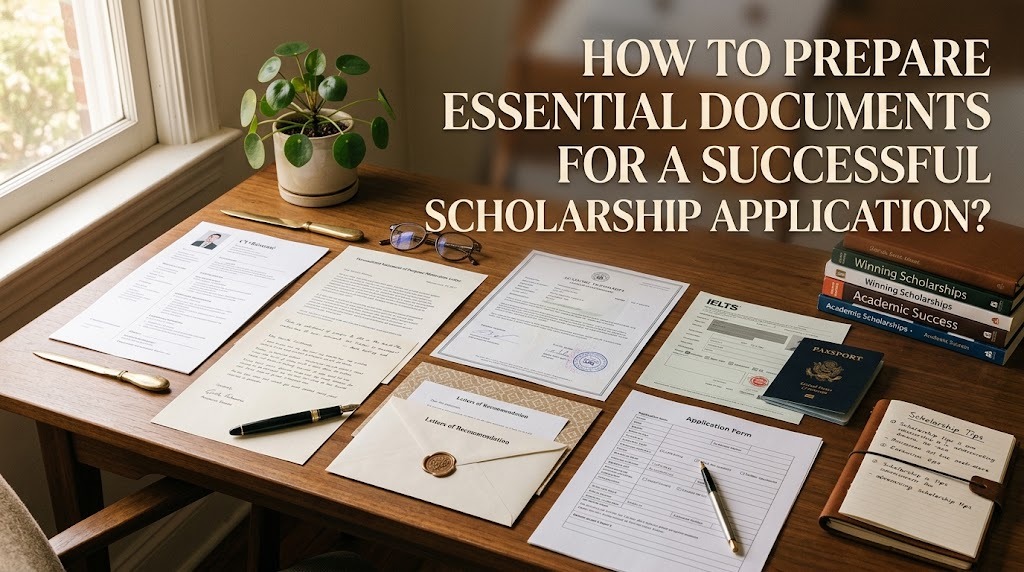
Applying for a scholarship requires more than strong academic performance. Applicants also need to prepare several essential scholarship documents that demonstrate their qualifications, achievements, goals, and personal background. Missing information, incorrect details, or poorly prepared documents can weaken an otherwise strong application. Therefore, students should understand the requirements and organize their documents well before the deadline. Good preparation can make the scholarship application process more efficient and reduce unnecessary stress.
UNDERSTAND THE SCHOLARSHIP REQUIREMENTS
The first step is to carefully read the official scholarship guidelines. Every scholarship program can have different requirements regarding eligibility, documents, deadlines, language, file formats, and submission procedures. Applicants should create a checklist based on the official instructions rather than relying on information from social media or unofficial sources. They should also check whether documents need to be translated, certified, notarized, or submitted through a specific platform. Understanding the requirements early can prevent avoidable mistakes.
Applicants should pay attention to details such as document validity and naming conventions. Some programs may require specific templates or maximum file sizes. Students should keep a copy of the official requirements so they can review their application before submission.
PREPARE A VALID IDENTIFICATION DOCUMENT
A valid identification document is commonly required to verify an applicant's identity. Depending on the scholarship program and country, this may include a passport, national identity card, or other officially accepted identification. Applicants should make sure the document is still valid and that personal information matches the information entered in the application form. The document should also be scanned or photographed clearly if a digital copy is required. Poor-quality copies can make verification more difficult.
Students applying internationally should pay particular attention to their passport validity. If a scholarship involves studying abroad, additional immigration or visa documents may be required later. Applicants should therefore check the scholarship's official instructions and prepare identification documents well in advance.
ORGANIZE ACADEMIC TRANSCRIPTS
Academic transcripts are among the most important documents in many scholarship applications. They provide evidence of academic performance and may be used to determine whether an applicant meets minimum requirements. Students should request official transcripts from their school or university when necessary. They should check that their name, grades, program, and other important information are accurate. Any discrepancy should be addressed before submitting the application.
Some scholarships may also require transcripts from previous levels of education. If the documents are not in the required language, applicants may need an official translation. Students should follow the scholarship provider's instructions regarding certified copies or translations.
PREPARE DIPLOMAS AND CERTIFICATES
Scholarship providers may ask for diplomas, graduation certificates, enrollment certificates, or other proof of educational status. These documents can confirm that applicants have completed or are currently pursuing a particular level of education. Students should prepare clear and complete copies of the required certificates. If they have not graduated yet, they should check whether a temporary graduation statement or enrollment document is accepted. The exact requirements vary between scholarship programs.
Applicants should avoid submitting documents that are not requested unless the application allows additional supporting materials. Too many unnecessary documents can make an application less organized. Following the official checklist is usually the safest approach.
CREATE A STRONG CV OR RESUME
A CV or resume gives scholarship committees a concise overview of an applicant's academic background, experiences, skills, achievements, and activities. Students should keep the document organized and relevant to the scholarship. Important sections may include education, projects, organizational activities, volunteering, internships, awards, certifications, and relevant skills. The information should be accurate and easy to read. Applicants should avoid exaggerating their achievements.
The CV should also reflect the applicant's broader goals. For example, experiences related to the scholarship's field of study or community mission can help demonstrate genuine interest. Students should proofread their CV carefully and ensure that dates and descriptions are consistent with other application documents.
WRITE A COMPELLING PERSONAL STATEMENT
A personal statement allows applicants to explain who they are and why they deserve the scholarship. It should communicate their educational goals, motivations, relevant experiences, and future plans. A strong statement should not simply repeat information from the CV. Instead, it should explain how the applicant's experiences have shaped their goals. Specific examples can make the statement more convincing and authentic.
Applicants should follow the required word count and answer the questions provided by the scholarship committee. They should use clear language and maintain a professional but personal tone. Before submitting the statement, students should check its grammar, structure, clarity, and consistency.
PREPARE ACADEMIC OR PERSONAL ESSAYS
Some scholarship programs require additional essays on topics such as leadership, community involvement, career plans, social issues, or academic interests. Applicants should carefully understand the question before writing. Each essay should have a clear main idea and provide relevant examples. Students should avoid using generic statements that could apply to almost anyone. Original experiences and thoughtful reflections can make an essay more memorable.
Applicants should also make sure that their essays support the overall story of their application. Their goals should be consistent across the personal statement, CV, and interview. Proofreading is essential because grammatical errors and unclear sentences can reduce the professionalism of an otherwise strong application.
REQUEST STRONG LETTERS OF RECOMMENDATION
A letter of recommendation can provide an independent perspective on an applicant's abilities and character. Depending on the scholarship, recommendations may come from teachers, lecturers, academic advisors, employers, or other qualified individuals. Students should choose recommenders who know their work well and can provide specific examples. A recommendation is generally more useful when it contains meaningful evidence rather than only general praise.
Applicants should ask for recommendations well before the deadline. They should provide recommenders with relevant information such as their CV, scholarship details, goals, and important achievements. This can help the recommender write a more specific and relevant recommendation.
PROOFREAD AND VERIFY EVERY DOCUMENT
Before submitting a scholarship application, applicants should conduct a final review. They should check names, dates, grades, addresses, contact information, essay answers, file names, and required attachments. Information should be consistent across all documents. Students should also verify that every required field has been completed. A simple checklist can help identify missing items.
It can also be helpful to ask a teacher, mentor, or trusted person to review important documents. Another person may notice spelling errors or unclear information that the applicant overlooked. A final review can significantly improve the accuracy and professionalism of the application.
SUBMIT BEFORE THE DEADLINE
The final step is submitting the complete application through the official scholarship platform or method. Students should avoid waiting until the last few hours because technical problems, internet issues, or unexpected document errors can occur. After submission, applicants should save the confirmation email, application number, receipt, or submission record if available. These records can be useful if the applicant needs to verify that the application was successfully submitted.
Applicants should also monitor their official email after submission. Scholarship providers may request additional information or invite applicants to the next stage. Responding promptly and carefully can help maintain a professional application process.
CONCLUSION
Preparing essential documents carefully can significantly improve the quality of a scholarship application. Students should begin by understanding the requirements and then organize identification documents, academic records, CVs, essays, recommendation letters, certificates, and other required materials. Each document should be accurate, readable, properly formatted, and submitted according to the scholarship provider's instructions. Early preparation can reduce stress and provide enough time to correct mistakes. With careful organization, thorough proofreading, and timely submission, applicants can approach the scholarship application process with greater confidence.
About the Author
Gusti Ayu Tita P
Author — STEKOM University
An active author focused on academic issues, educational technology, and human resource development in the campus environment.















