
How To Resolve Family Conflict Without Making Relationships Worse?
Gusti Ayu Tita P
8 September 2026
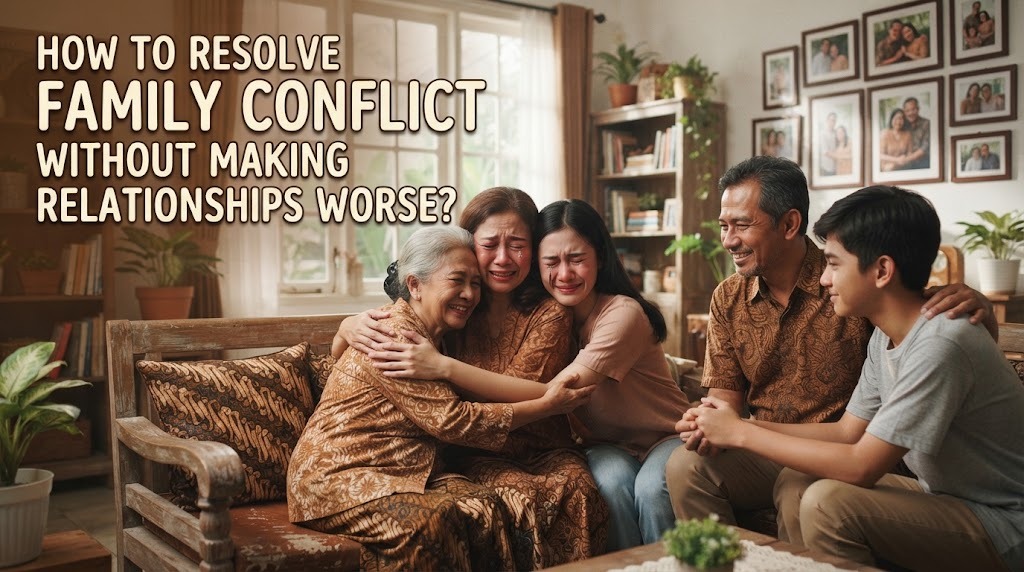
Family conflict is a normal part of living with people who have different personalities, opinions, and expectations. However, the way a conflict is handled can determine whether the relationship becomes stronger or more distant. Angry words, blame, and refusing to listen can make an existing problem even worse. On the other hand, calm communication, empathy, and mutual respect can help family members work through disagreements. Learning how to resolve family conflict wisely is important for maintaining a healthy and supportive family environment.
IDENTIFY THE REAL CAUSE OF THE CONFLICT
Before trying to solve a family problem, it is important to understand what actually caused the disagreement. Family conflicts may come from miscommunication, different expectations, financial concerns, household responsibilities, or personal differences. Focusing only on the latest argument may prevent family members from seeing the deeper issue. Everyone involved should have an opportunity to explain what they experienced and how they felt. Understanding the root cause makes it easier to find a solution instead of creating another argument.
CALM YOURSELF BEFORE STARTING A CONVERSATION
Trying to solve a conflict while emotions are extremely high can make the situation worse. Anger can cause people to speak without thinking and say things that are difficult to take back. Taking a short break can give everyone time to calm down and organize their thoughts. Simple activities such as breathing slowly, taking a walk, or spending some quiet time alone may help reduce emotional tension. Once everyone is calmer, the conversation can be more productive.
CHOOSE WORDS THAT DO NOT ATTACK OTHERS
The way a message is delivered can be just as important as the message itself. Family members should avoid insults, shouting, threats, and statements that attack someone's personality. Instead, use respectful and specific language to explain what happened and how it affected you. Saying that you feel hurt by a particular action is generally more constructive than calling someone a bad person. Careful communication can prevent a discussion from turning into another personal attack.
LISTEN TO EVERYONE INVOLVED
A conflict is difficult to resolve when only one person is allowed to speak. Each family member should have a fair opportunity to explain their feelings and perspective. Active listening means paying attention, avoiding unnecessary interruptions, and asking questions when something is unclear. Listening does not mean that you must agree with everything another person says. It simply shows that you are willing to understand their point of view before making a judgment.
AVOID BLAMING AND BRINGING UP OLD MISTAKES
Blaming someone repeatedly can make them defensive and unwilling to cooperate. Bringing up every mistake from the past can also prevent the family from focusing on the current problem. Instead, concentrate on the specific issue that needs to be solved now. Past experiences can still provide useful lessons, but they should not become weapons during an argument. Focusing on the present gives everyone a better chance to repair the relationship.
FIND A SOLUTION THAT RESPECTS EVERYONE
Resolving family conflict is not about proving who is right or winning an argument. The goal should be finding a solution that addresses the problem while considering the needs of everyone involved. Compromise may be necessary when family members have different priorities or expectations. A good solution should be realistic and clearly understood by everyone. When people participate in creating the solution, they may be more willing to follow it.
LEARN TO APOLOGIZE AND FORGIVE
A sincere apology can be an important step toward repairing a damaged relationship. A meaningful apology should recognize the mistake and show a willingness to change the behavior. At the same time, forgiveness can help reduce resentment and create an opportunity to move forward. Forgiving does not mean ignoring serious problems or accepting repeated harmful behavior. Healthy forgiveness should be combined with accountability and genuine improvement.
RESPECT PERSONAL BOUNDARIES
Even within a close family, every person has different emotional and personal needs. Respecting healthy boundaries can prevent family members from feeling controlled, ignored, or constantly pressured. Boundaries may involve privacy, personal belongings, communication styles, or responsibilities at home. They should be communicated clearly and respectfully rather than used as a way to punish someone. When boundaries are respected, family relationships can become more comfortable and balanced.
REBUILD TRUST THROUGH CONSISTENT ACTIONS
Trust may become weaker after a serious disagreement, and rebuilding it usually takes time. Family members can restore trust by being honest, keeping reasonable promises, and showing positive changes through their actions. Consistency is more effective than making promises without following through. Small acts of kindness and consideration can gradually improve the emotional connection between family members. With patience, these actions can help create a stronger relationship after conflict.
KNOW WHEN TO SEEK HELP
Some family conflicts may continue despite repeated attempts to solve them through communication. If disagreements involve violence, threats, severe emotional harm, or persistent hostility, safety should become the main priority. In complicated situations, a qualified family counselor or other appropriate professional may help family members communicate more effectively. Seeking support does not mean that the family has failed. It can be a responsible step toward creating a healthier and safer relationship.
CONCLUSION
Resolving family conflict without making relationships worse requires patience, self-control, and respect. Family members can begin by understanding the real cause of the problem and calming their emotions before talking. Listening actively, avoiding blame, using respectful language, and finding fair solutions can prevent disagreements from becoming more serious. Apologizing, forgiving, respecting boundaries, and rebuilding trust through consistent actions can also help repair relationships. With healthy communication and a willingness to understand one another, families can overcome conflict without damaging their long-term relationships.
About the Author
Gusti Ayu Tita P
Author — STEKOM University
An active author focused on academic issues, educational technology, and human resource development in the campus environment.















