
How To Save Fuel And Reduce Vehicle Expenses?
Gusti Ayu Tita P
10 Agustus 2026
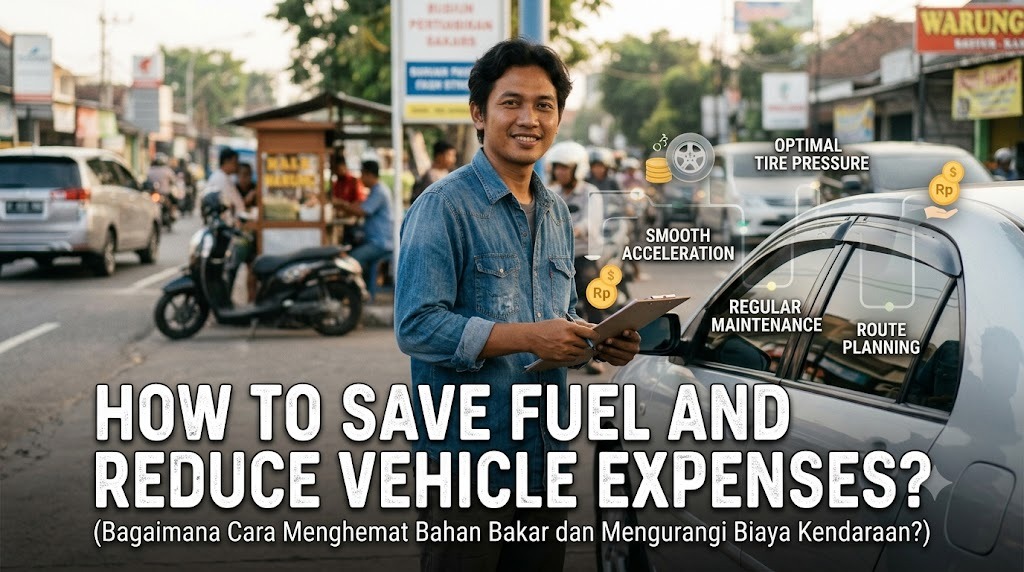
Fuel is one of the regular expenses faced by vehicle owners. The amount of fuel used can be influenced by driving habits, vehicle condition, traffic, road conditions, and travel distance. Saving fuel is not only useful for reducing daily expenses but can also help reduce unnecessary energy consumption. With simple and consistent habits, drivers can improve fuel efficiency without reducing essential mobility.
Reducing vehicle expenses does not always require purchasing a new vehicle. Proper maintenance, efficient driving, and better trip planning can make a noticeable difference. Understanding how a vehicle uses fuel allows drivers to identify wasteful habits and make practical improvements. These steps can help create a more economical and responsible driving routine.
WHY FUEL EFFICIENCY MATTERS
Fuel efficiency refers to how effectively a vehicle converts fuel into useful movement. A vehicle that travels farther using the same amount of fuel generally has better fuel efficiency. Good fuel efficiency can reduce the amount of money spent on fuel over time. It can also reduce the amount of fuel consumed for regular trips.
Fuel efficiency is affected by many factors. Vehicle weight, engine condition, tire pressure, traffic conditions, driving speed, and acceleration patterns can all influence consumption. Drivers cannot control every factor, but they can improve several of them through proper maintenance and driving habits. Understanding these factors is the first step toward reducing fuel expenses.
DRIVE SMOOTHLY AND AVOID SUDDEN ACCELERATION
Driving behavior has a direct influence on fuel consumption. Frequent hard acceleration and sudden braking can cause the engine to use more fuel than necessary. Smooth acceleration allows the vehicle to build speed gradually and can improve efficiency. Maintaining a steady driving style can also make journeys more comfortable.
Drivers should also avoid unnecessary rapid changes in speed. When traffic conditions allow, maintaining a consistent speed can reduce repeated acceleration and braking. However, safety should always come before fuel savings. Drivers should follow traffic rules and adjust their speed according to road and weather conditions.
MAINTAIN THE VEHICLE REGULARLY
A well-maintained vehicle generally operates more efficiently than one with neglected maintenance. Engine problems, clogged filters, worn spark plugs, or incorrect fluid levels can affect performance and fuel consumption. Regular vehicle maintenance helps identify problems before they become more expensive. It also supports reliable and safe vehicle operation.
Routine servicing should follow the manufacturer's recommendations. Oil changes, filter replacement, inspection of the ignition system, and other maintenance tasks should be performed when required. A properly maintained engine does not automatically guarantee low fuel consumption, but poor maintenance can contribute to inefficient operation. Regular inspections are therefore an important part of controlling vehicle expenses.
CHECK TIRE PRESSURE REGULARLY
Tires have an important effect on how efficiently a vehicle moves. Underinflated tires can increase rolling resistance, forcing the engine to work harder. Proper tire pressure can help maintain efficient movement and improve tire performance. Drivers should check tire pressure regularly and follow the pressure recommended by the vehicle manufacturer.
Tire condition should also be monitored. Uneven wear may indicate alignment or suspension problems that need attention. Damaged or excessively worn tires can also create safety risks. Maintaining tires properly therefore supports both fuel efficiency and driving safety.
REDUCE UNNECESSARY VEHICLE LOAD
Carrying excessive weight can increase the amount of energy needed to move a vehicle. Heavy items that remain in the trunk or cabin unnecessarily can contribute to higher fuel consumption. Reducing unnecessary weight is a simple way to make the vehicle more efficient. Drivers should regularly remove items that are not needed for their journeys.
External accessories can also affect efficiency. Certain roof racks, carriers, or other additions may increase aerodynamic resistance, especially at higher speeds. If such equipment is not needed, removing it may help reduce unnecessary resistance. Small changes can become more valuable when they are applied consistently.
PLAN YOUR TRIPS EFFECTIVELY
Trip planning can help drivers reduce both fuel use and travel time. Combining several errands into one journey can prevent repeated trips over the same route. Efficient trip planning can also help drivers avoid heavy traffic when alternative routes or travel times are available. Navigation applications can provide useful information about traffic and route conditions.
Drivers should also consider whether every trip requires a private vehicle. For short journeys, walking or cycling may be practical when conditions are safe. Public transportation or shared rides can also reduce individual fuel consumption. Choosing the most appropriate transportation method can help lower overall mobility expenses.
AVOID UNNECESSARY ENGINE IDLING
Leaving the engine running while the vehicle is stationary can waste fuel. This may happen when drivers wait for someone, stop for a long period, or leave the vehicle running without a clear reason. Reducing unnecessary idling can prevent fuel from being consumed without useful movement. Drivers should follow the vehicle manufacturer's guidance and local traffic regulations regarding engine operation.
Modern vehicles may have different requirements depending on their engine and technology. Therefore, drivers should not apply one rule to every vehicle. For longer stops where it is safe and permitted, turning off the engine can sometimes reduce unnecessary fuel use. The priority should always be safety and proper vehicle operation.
USE AIR CONDITIONING WISELY
Air conditioning can increase fuel consumption because it requires energy from the vehicle's engine or electrical system. The effect varies depending on the vehicle, outside temperature, driving conditions, and air conditioning system. Using air conditioning efficiently can help reduce unnecessary energy consumption. Drivers can set a comfortable temperature instead of using the system at maximum power continuously.
Before starting a journey, allowing excessive heat to build up inside a parked vehicle can make cooling more demanding. When safe and practical, briefly ventilating the cabin before using strong cooling may help. Air conditioning should still be used whenever necessary for comfort and safety. Fuel savings should never compromise the driver's ability to remain focused and comfortable.
CHOOSE THE RIGHT FUEL
Using the correct fuel is essential for proper engine operation. Vehicle manufacturers specify fuel requirements based on engine design and operating characteristics. Choosing the recommended fuel helps ensure that the engine receives fuel appropriate for its design. Using a higher-grade fuel than required does not necessarily provide better fuel economy.
Drivers should check the vehicle owner's manual or manufacturer's specifications before choosing fuel. Fuel quality and compatibility are more important than simply selecting the most expensive option. Using unsuitable fuel can cause performance problems or damage in some circumstances. Making the correct choice can therefore prevent unnecessary maintenance costs.
COMPARE FUEL AND MAINTENANCE EXPENSES
Reducing vehicle expenses requires more than focusing on fuel prices. Maintenance, tires, insurance, parking, repairs, and depreciation can also contribute significantly to the total cost of vehicle ownership. Tracking vehicle expenses helps drivers understand where their money is being spent. This information makes it easier to identify areas where savings are possible.
Drivers can record fuel purchases, mileage, maintenance costs, and major repairs. Over time, these records can reveal changes in fuel efficiency or unusual increases in expenses. If fuel consumption suddenly becomes much higher, the vehicle may require inspection. Monitoring costs regularly can therefore support better financial decisions.
BUILD CONSISTENT FUEL SAVING HABITS
Fuel savings are most effective when good habits become part of everyday driving. Smooth acceleration, regular maintenance, proper tire pressure, and efficient trip planning can work together to reduce unnecessary consumption. Consistent driving habits are more useful than relying on occasional fuel-saving efforts. Small improvements can become meaningful when repeated over weeks and months.
Drivers should also balance efficiency with safety and practicality. Aggressive driving should never be used to save time or fuel, and vehicle maintenance should never be delayed simply to reduce short-term expenses. The best approach is to create a routine that supports economical, safe, and responsible driving.
CONCLUSION
Saving fuel and reducing vehicle expenses can be achieved through practical daily habits. Smooth driving, proper maintenance, correct tire pressure, reduced vehicle weight, efficient trip planning, and appropriate fuel selection can all contribute to better efficiency. These actions can reduce unnecessary fuel consumption while helping maintain vehicle performance.
The most important factor is consistency. Drivers who regularly monitor fuel use and maintain their vehicles are better positioned to identify problems and control costs. By combining fuel efficiency, responsible driving, and preventive maintenance, vehicle owners can save money while using energy more wisely.
About the Author
Gusti Ayu Tita P
Author — STEKOM University
An active author focused on academic issues, educational technology, and human resource development in the campus environment.















