
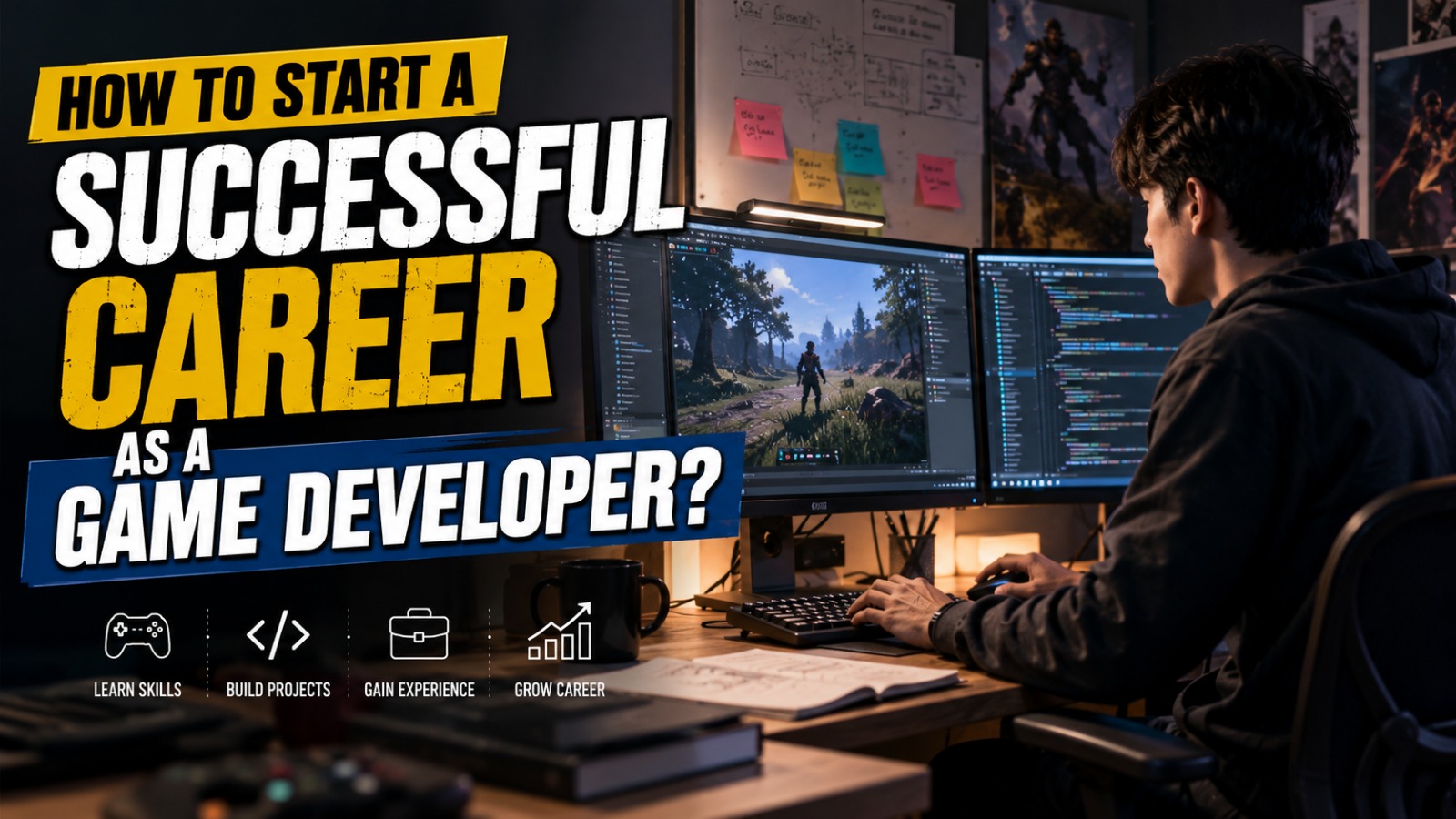
The game industry continues to grow rapidly, creating exciting career opportunities for people who are passionate about technology, creativity, and innovation. As millions of players enjoy games on computers, consoles, and mobile devices, the demand for skilled Game Developers keeps increasing worldwide. This profession is no longer limited to large gaming companies because independent studios and freelance developers are also achieving remarkable success.
Starting a career as a Game Developer may seem challenging at first, but with the right skills, dedication, and continuous learning, anyone can build a rewarding future in this industry. Understanding the essential steps, tools, and career strategies will help beginners prepare for long-term success in game development.
UNDERSTAND THE FUNDAMENTALS OF GAME DEVELOPMENT
The first step toward becoming a successful Game Developer is understanding the basics of game development. Learning programming languages such as C#, C++, or JavaScript provides a strong technical foundation for creating interactive games. Beginners should also understand how games are designed, tested, and optimized before they are released to players.
Besides programming, it is important to learn about game mechanics, storytelling, user experience, and visual design. These elements work together to create engaging gameplay that keeps players interested. Building a strong understanding of these fundamentals makes learning advanced development techniques much easier.
MASTER POPULAR GAME DEVELOPMENT TOOLS
Modern game development relies on powerful software that simplifies the creation process. Popular game engines such as Unity and Unreal Engine are widely used by professional developers because they provide advanced features for building high-quality games. Learning one of these platforms significantly improves your career opportunities.
In addition to game engines, developers should become familiar with version control tools like Git, graphic editing software, and debugging utilities. These tools help teams collaborate efficiently while maintaining organized project development. The more comfortable you become with industry-standard software, the more competitive you will be in the job market.
BUILD A STRONG PORTFOLIO
A professional portfolio is one of the most valuable assets for aspiring Game Developers. Employers and clients often evaluate practical projects rather than academic qualifications alone. Creating several small games demonstrates your technical skills, creativity, and ability to complete real-world projects.
Your portfolio should include different types of games, project descriptions, screenshots, and playable demonstrations whenever possible. Explaining the challenges you solved during development also highlights your problem-solving abilities. A well-organized portfolio can leave a lasting impression on recruiters and potential clients.
CONTINUE LEARNING AND IMPROVING YOUR SKILLS
The gaming industry evolves quickly with new technologies and development practices appearing every year. Successful Game Developers dedicate time to continuous learning by taking online courses, reading technical documentation, and experimenting with new programming techniques. Staying updated ensures your skills remain relevant in a competitive industry.
Joining developer communities, attending workshops, and participating in game jams also provide valuable learning experiences. These activities encourage teamwork, creativity, and practical problem-solving under time constraints. Consistent improvement is one of the most important factors in building a successful long-term career.
DEVELOP PROFESSIONAL NETWORKS
Networking plays an essential role in career growth within the gaming industry. Connecting with experienced developers, artists, designers, and recruiters can lead to valuable learning opportunities and potential job offers. Professional relationships often provide insights that are difficult to gain through self-study alone.
Participating in industry conferences, online forums, and social media communities allows developers to share knowledge and showcase their work. Maintaining positive communication and collaborating on projects can strengthen your reputation. A strong professional network often opens doors to exciting career opportunities.
STAY PERSISTENT AND EMBRACE CHALLENGES
Building a successful career as a Game Developer requires patience, dedication, and resilience. Every developer faces bugs, technical problems, and project setbacks during the learning process. Instead of giving up, successful professionals treat these challenges as opportunities to improve their knowledge and experience.
Persistence, discipline, and a passion for creating interactive experiences are qualities that distinguish successful developers from others. With consistent practice and a willingness to learn, beginners can gradually transform their skills into a rewarding professional career. Long-term commitment is often the key to lasting success in the gaming industry.
CONCLUSION
Starting a successful career as a Game Developer requires a combination of technical knowledge, creative thinking, continuous learning, and practical experience. Mastering programming, learning professional game engines, building a strong portfolio, and developing industry connections all contribute to long-term career growth.
As the global gaming industry continues expanding, the demand for talented developers is expected to remain strong. By staying motivated, improving your skills consistently, and embracing new technologies, you can build a fulfilling and successful career in game development.
About the Author
Gusti Ayu Tita P
Author — STEKOM University
An active author focused on academic issues, educational technology, and human resource development in the campus environment.