Hybrid Learning as a Response to Today’s Educational Needs
Gusti Ayu Tita P
19 Juni 2026
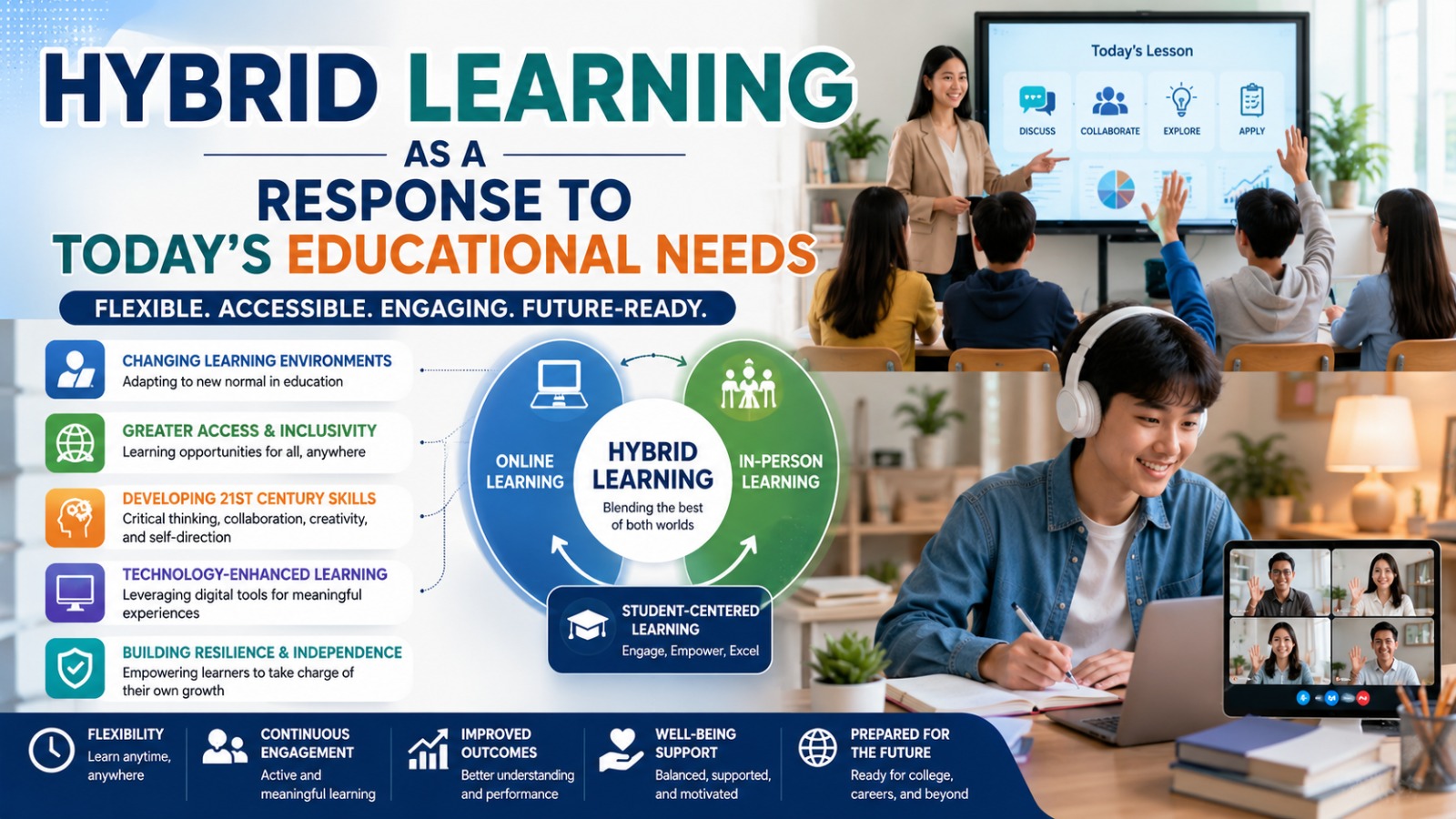
Education today is facing rapid change. Advances in technology, shifting student expectations, and the need for more flexible access to learning have encouraged schools and universities to rethink traditional teaching methods. In this changing environment, hybrid learning has emerged as one of the most practical and effective educational approaches.
Hybrid learning combines face-to-face classroom instruction with online learning activities. This model gives students the benefits of direct teacher interaction while also allowing them to access materials, assignments, and discussions digitally. As a result, hybrid learning has become a strong response to the educational needs of the modern era.
CHANGING DEMANDS IN MODERN EDUCATION
Today’s learners live in a world shaped by digital technology. They are accustomed to quick access to information, flexible schedules, and a wide range of learning resources. Traditional teaching methods alone often struggle to meet these evolving expectations.
Educational institutions are also expected to provide learning systems that are more inclusive, adaptable, and resilient. Students may face different challenges such as distance, time limitations, family responsibilities, or varying learning styles. Because of these realities, a more flexible approach to education is increasingly necessary.
WHAT MAKES HYBRID LEARNING RELEVANT
Hybrid learning answers many of these challenges by combining the strengths of classroom learning and digital education.
Face-to-face sessions allow for direct interaction, immediate feedback, and stronger social connection. Meanwhile, online learning gives students the opportunity to study at their own pace, review materials repeatedly, and access educational content from different locations.
This balance makes hybrid learning especially relevant in a world where flexibility and accessibility are becoming essential parts of effective education.
SUPPORTING DIFFERENT LEARNING STYLES
Not every student learns in the same way. Some understand concepts better through discussion and verbal explanation, while others prefer visual materials, recorded lessons, or independent reading.
Hybrid learning supports these differences by offering multiple ways to engage with content. Teachers can combine classroom explanations with videos, interactive exercises, digital readings, and collaborative online activities.
This variety helps create a more inclusive learning environment where more students can succeed according to their individual strengths.
IMPROVING ACCESS TO EDUCATION
One of the most important educational needs today is broader access. Not all students can attend traditional classes in the same way or under the same circumstances.
Hybrid learning can reduce some of these barriers. Students who miss a class may still access recordings, online assignments, or digital resources. Learners who live farther away or have additional responsibilities can also benefit from greater flexibility.
By expanding access, hybrid learning helps education become more practical and equitable.
ENCOURAGING ESSENTIAL MODERN SKILLS
Modern education is not only about delivering academic content. It is also about preparing students for the future.
Hybrid learning naturally encourages skills that are increasingly valuable in both higher education and professional life. These include digital literacy, self-discipline, communication, collaboration, critical thinking, and independent learning.
Because students often need to manage their own schedules and engage with technology regularly, they gain experience that extends beyond the classroom.
CHALLENGES THAT MUST BE ADDRESSED
Although hybrid learning offers many advantages, successful implementation requires careful planning.
Some students may have limited internet access or lack suitable devices. Teachers may also need training to design effective hybrid lessons and manage digital tools confidently.
In addition, maintaining student engagement across both physical and virtual spaces can be challenging. For hybrid learning to work well, institutions need strong support systems, reliable technology, and thoughtful instructional design.
THE FUTURE OF EDUCATION
Hybrid learning is not simply a temporary trend. It represents a broader shift in how education is delivered.
As technology continues to evolve, learning environments will likely become more personalized, interactive, and flexible. Hybrid learning provides a strong foundation for this future because it combines the human connection of classroom learning with the efficiency of digital access.
Rather than replacing traditional education, hybrid learning strengthens it by making it more responsive to today’s realities.
CONCLUSION
Hybrid learning has become an important response to today’s educational needs. It offers flexibility, accessibility, and adaptability while supporting meaningful teacher-student interaction.
By meeting diverse learning preferences, improving educational access, and developing essential modern skills, hybrid learning helps prepare students for a rapidly changing world.
As education continues to evolve, hybrid learning stands out as a practical and innovative model for the future.
About the Author
Gusti Ayu Tita P
Author — STEKOM University
An active author focused on academic issues, educational technology, and human resource development in the campus environment.