Hydropower Advantages Over Conventional Energy Sources
Gusti Ayu Tita P
31 Agustus 2026
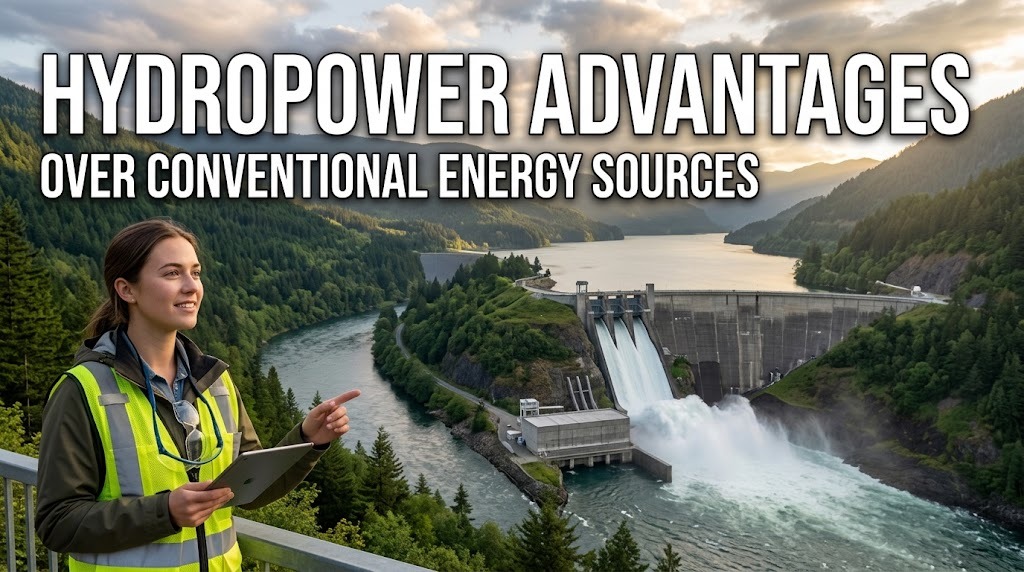
Hydropower is one of the oldest forms of renewable electricity generation and remains an important part of modern energy systems. It uses the natural energy of flowing or falling water to turn turbines and generate electricity. Unlike conventional power plants that commonly rely on coal, oil, or natural gas, hydropower does not require fuel combustion during normal electricity generation.
The advantages of hydropower extend beyond renewable electricity production. Hydropower plants can offer low operational emissions, flexible generation, long operating lifetimes, and energy storage capabilities in certain configurations. However, hydropower also has environmental and social impacts that must be carefully managed. Its benefits are therefore best understood as part of a broader comparison of energy technologies.
HYDROPOWER USES RENEWABLE WATER RESOURCES
The most fundamental advantage of hydropower is its use of the water cycle as an energy resource. Rainfall, rivers, and natural elevation differences provide the water needed to generate electricity. Unlike fossil fuels, water is not permanently consumed during the generation process.
Coal, oil, and natural gas must be extracted and transported continuously to fuel conventional power plants. Hydropower does not require a constant supply of mined or drilled fuel for normal operation. This can reduce exposure to fuel supply disruptions and international fuel price fluctuations. Renewable water resources can therefore provide an important long-term energy foundation where suitable conditions exist.
HYDROPOWER HAS LOW DIRECT OPERATIONAL EMISSIONS
Hydropower plants generate electricity without burning fossil fuels during normal operation. As a result, they do not produce direct combustion emissions such as carbon dioxide, sulfur dioxide, or nitrogen oxides from fuel burning at the plant.
This gives hydropower an important advantage over fossil fuel generation in efforts to reduce greenhouse gas emissions. However, hydropower is not completely emissions-free across its entire life cycle. Reservoirs can produce methane and carbon dioxide under certain conditions, while construction also creates emissions. The climate impact of hydropower depends on project characteristics and location.
HYDROPOWER CAN PROVIDE FLEXIBLE GENERATION
Some hydropower plants can change electricity output relatively quickly. Operators can regulate water flow through turbines according to system requirements, provided sufficient water and generation capacity are available.
This flexibility can be particularly valuable in electricity systems with large amounts of solar and wind power. Solar and wind generation varies according to weather conditions, while flexible hydropower can help respond to changes in supply and demand. Conventional fossil fuel plants can also provide flexibility, but hydropower can do so without continuously burning fossil fuels.
RESERVOIRS CAN STORE ENERGY
Reservoir-based hydropower stores energy in the form of water at elevation. When electricity is needed, water can be released through turbines to generate power. This gives some hydropower plants an ability to shift electricity production over time.
Pumped storage hydropower takes this concept further. Electricity is used to pump water to an upper reservoir, and the stored water is later released through turbines. Pumped storage is one of the largest forms of electricity storage available to modern power systems, although it is different from conventional hydropower because it primarily stores electricity rather than relying solely on natural river inflows.
HYDROPOWER CAN SUPPORT GRID STABILITY
Electricity networks require supply and demand to remain balanced. Hydropower plants with suitable technical capabilities can adjust their output and provide important grid services.
These services can include frequency regulation, balancing, and reserve capacity, depending on plant design and market rules. The ability to respond to changing grid conditions makes hydropower valuable in modern power systems. This role is becoming increasingly important as countries add more variable renewable generation.
HYDROPOWER HAS LONG OPERATING LIFETIMES
Hydropower infrastructure can operate for many decades when properly maintained. Dams, tunnels, waterways, turbines, and generators can often be refurbished or upgraded instead of completely replaced.
Long operating lifetimes can help spread initial construction costs over many years. Modernization can also improve efficiency and reliability. Some older fossil fuel plants may require major replacement as equipment ages or environmental regulations become stricter. Hydropower facilities can often remain useful through refurbishment.
OPERATING COSTS CAN BE RELATIVELY STABLE
Hydropower does not require continuous purchases of coal or natural gas for electricity generation. Once the plant has been constructed, its major ongoing costs are generally related to operation, maintenance, infrastructure management, and water resource management.
This can reduce exposure to fuel price volatility. However, hydropower projects usually require substantial upfront investment, and their financial performance can be affected by construction costs, financing, water availability, and environmental requirements. Therefore, lower fuel costs do not automatically mean lower total costs.
HYDROPOWER CAN STRENGTHEN ENERGY SECURITY
Countries that depend heavily on imported fossil fuels can be vulnerable to international price changes and supply disruptions. Domestic renewable resources can reduce some of this dependence.
Where water resources are suitable, hydropower can provide domestic electricity generation using locally available natural resources. This can improve energy diversification and reduce exposure to external fuel markets. Hydropower is therefore potentially valuable as part of a national energy security strategy.
HYDROPOWER SUPPORTS RENEWABLE ENERGY INTEGRATION
A modern electricity system needs to combine different sources of generation. Solar and wind can provide large amounts of low-carbon electricity, but their output is variable. Hydropower can complement these resources when plant conditions allow.
For example, reservoir hydropower can conserve water when solar and wind output is high and increase generation when output from variable renewables declines. This operational flexibility can help reduce dependence on fossil fuel backup generation.
HYDROPOWER DOES NOT REQUIRE FUEL TRANSPORTATION
Conventional thermal power plants require regular delivery of fuel. Coal must be transported from mines, while oil and natural gas require extensive supply infrastructure.
Hydropower does not need comparable fuel transportation during normal operation. Water reaches the plant naturally through the river system or is stored in a reservoir. This can be a major advantage for locations where fuel transportation is difficult or expensive. Reduced fuel logistics can improve operational independence.
HYDROPOWER CAN SUPPORT REMOTE AREAS
Small and micro hydropower plants can provide electricity in regions that are far from centralized grids. Where suitable rivers exist, these systems can supply homes, schools, healthcare facilities, farms, and local businesses.
Remote communities that rely on diesel generators may use hydropower to reduce fossil fuel consumption. Local generation can also reduce dependence on long-distance transmission. The suitability of hydropower depends strongly on local water availability and terrain.
HYDROPOWER CAN SUPPORT MULTIPLE WATER USES
Some dams are designed for several purposes in addition to electricity generation. Reservoirs may support irrigation, water supply, flood management, recreation, and other activities, depending on local needs and regulations.
Multipurpose infrastructure can provide broader benefits than electricity alone. However, managing several objectives can also create conflicts over water use. Electricity generation must be balanced with environmental requirements and community needs. Effective water governance is therefore essential.
AIR POLLUTION IS LOWER THAN FOSSIL FUEL GENERATION
Coal and oil combustion releases pollutants that can affect air quality and human health. These include sulfur dioxide, nitrogen oxides, particulate matter, and other pollutants.
Hydropower does not burn fossil fuels during normal operation, so it avoids these direct combustion-related air pollutants at the generating facility. This can provide significant local air-quality benefits compared with fossil fuel plants. Nevertheless, construction activities and reservoir conditions can still create environmental effects.
HYDROPOWER CAN HAVE HIGH ENERGY EFFICIENCY
Hydropower systems can convert a substantial portion of the available hydraulic energy into electricity. Water flows directly through turbines, reducing the number of energy conversion stages compared with some thermal generation technologies.
Actual efficiency varies according to turbine design, operating conditions, and plant configuration. Modern turbine technology can improve performance, especially when equipment is properly matched to site conditions. Regular maintenance is also important for maintaining efficiency over time.
HYDROPOWER HAS IMPORTANT ENVIRONMENTAL LIMITATIONS
The advantages of hydropower should not hide its potential impacts. Dams and water diversion can alter river flows, fish migration, sediment transport, habitats, and surrounding landscapes.
Large reservoirs can also inundate land and affect communities. Greenhouse gas emissions from some reservoirs may be significant depending on climate, vegetation, and reservoir characteristics. Responsible planning therefore requires environmental assessment, mitigation, monitoring, and meaningful community participation.
HYDROPOWER DEPENDS ON WATER AVAILABILITY
Unlike fossil fuel plants that can often increase fuel deliveries when demand rises, hydropower depends on available water. Droughts and changing rainfall patterns can reduce generation.
Climate change may increase uncertainty in some regions by altering precipitation and river flows. This means hydropower planning should include hydrological analysis, climate risk assessment, water management, and diversified electricity sources. A reliable power system should not depend excessively on a single resource.
THE ROLE OF HYDROPOWER IN CLEAN ENERGY
Hydropower can play an important role in the transition toward cleaner electricity systems. Its combination of renewable generation and, in some cases, flexible operation makes it different from variable renewable sources.
The International Energy Agency identifies hydropower as an important source of low-emissions electricity and system flexibility, while also noting challenges related to environmental impacts, drought, aging infrastructure, and project development. Hydropower's future role will therefore depend on responsible development and modernization. (iea.org)
CONCLUSION
Hydropower offers several important advantages over conventional fossil fuel energy sources. It uses renewable water resources, does not require fuel combustion during normal operation, can provide flexible electricity generation, and can support grid stability and energy storage. It can also reduce exposure to fossil fuel price volatility and strengthen domestic energy security.
At the same time, hydropower has environmental, social, and climate-related challenges that cannot be ignored. River ecosystems, communities, sediment, water availability, and reservoir emissions all need careful consideration. The strongest hydropower strategy is therefore one that combines technological efficiency with responsible environmental management. When developed under suitable conditions, hydropower can remain a valuable component of a diversified and cleaner energy system.
About the Author
Gusti Ayu Tita P
Author — STEKOM University
An active author focused on academic issues, educational technology, and human resource development in the campus environment.