
Hydropower Impacts on Communities and Natural Ecosystems
Gusti Ayu Tita P
31 Agustus 2026
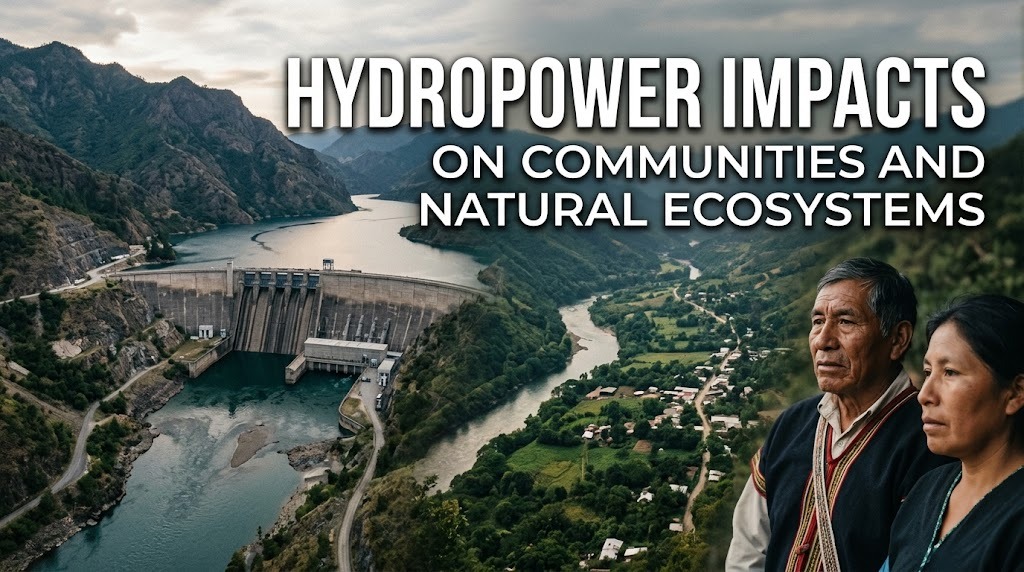
Hydropower is one of the world's most established renewable electricity technologies. It uses moving or falling water to generate electricity without burning coal, oil, or natural gas during normal operation. This makes hydropower an important part of many countries' efforts to develop lower-carbon electricity systems. However, hydropower projects can also change rivers, landscapes, and the lives of communities located near development areas.
The effects of a hydropower project depend on its size, design, location, water management, and local environmental conditions. Large dams and reservoirs can create significant changes, while small run-of-river projects may have different impacts. Understanding both the benefits and potential risks is essential for responsible development. A successful project should provide reliable electricity while protecting ecosystems and respecting affected communities.
HOW HYDROPOWER CHANGES RIVER SYSTEMS?
A hydropower project can change the natural movement of water through a river. Dams may store water, while diversion systems can redirect part of a river toward turbines. These changes can affect the timing, volume, and speed of downstream water flow.
River ecosystems have developed around natural patterns of seasonal water movement. When those patterns change, aquatic plants, fish, insects, and other organisms may also be affected. The severity depends on the type of project and how it is operated. Careful water management can help reduce some of these impacts.
IMPACTS ON AQUATIC ECOSYSTEMS
Rivers provide habitats for many species and support complex food webs. A dam can divide a river into different sections and alter aquatic habitats and ecological connectivity. Changes in water temperature, sediment movement, and flow can affect species that depend on specific river conditions.
Fish migration can be particularly sensitive to barriers. Some species need to move upstream or downstream during different stages of their life cycles. Fish passages, improved turbine designs, and appropriate river management can help reduce certain impacts. However, the effectiveness of mitigation measures depends on local species and project conditions.
SEDIMENT MOVEMENT CAN BE ALTERED
Healthy rivers naturally transport sediment such as sand, silt, and gravel. This material helps maintain river channels, wetlands, floodplains, and downstream habitats. Reservoirs can trap sediment, preventing some of it from continuing downstream.
Over time, sediment accumulation can also reduce reservoir storage capacity. Downstream areas may receive less sediment than under natural conditions, potentially changing river and coastal environments. Sediment management strategies can include monitoring, controlled releases, flushing where feasible, and watershed management. The appropriate approach depends on the river and dam design.
RESERVOIRS CAN CHANGE LANDSCAPES
Large hydropower reservoirs can cover substantial areas of land. Creating a reservoir may require changes in land use, forests, agricultural areas, and existing infrastructure. In some cases, roads, buildings, or other facilities may need to be relocated.
Reservoir creation can also produce benefits such as water storage and improved water management. However, the transformation of natural landscapes should be carefully assessed before construction. Environmental planning can help identify sensitive areas and reduce unnecessary impacts. Project design should consider the entire watershed rather than only the dam site.
HYDROPOWER CAN PROVIDE ECONOMIC BENEFITS
Hydropower projects can create economic opportunities for nearby communities. Construction can generate temporary employment, while plant operation and maintenance can provide longer-term jobs. Reliable electricity can also support businesses, education, healthcare, agriculture, and local industries.
Improved infrastructure may provide additional benefits. Roads, bridges, communication systems, and electricity connections may be developed as part of a project. However, these benefits are not automatically distributed equally. Effective planning is needed to ensure local communities can participate in and benefit from economic opportunities.
COMMUNITIES MAY FACE DISPLACEMENT
One of the most significant social concerns associated with some large hydropower projects is involuntary resettlement. When reservoirs flood inhabited areas, residents may need to move to new locations. Relocation can affect housing, livelihoods, social networks, cultural sites, and access to natural resources.
Compensation alone may not fully replace the social and economic value of an established community. Resettlement planning therefore needs to consider long-term livelihoods, public services, cultural connections, and community participation. Meaningful consultation should take place before major decisions are finalized. The goal should be to avoid displacement where possible and minimize unavoidable harm.
HYDROPOWER CAN IMPROVE ENERGY ACCESS
Electricity is important for modern community development. Hydropower can provide reliable renewable electricity for households, schools, clinics, businesses, and public infrastructure. In areas with limited grid access, small hydropower systems may offer a local alternative.
Better electricity access can support productive activities as well. Farmers may use electricity for irrigation, processing, and refrigeration, while small businesses can operate equipment and communication systems. These benefits can improve local economic resilience. However, electricity access depends on appropriate distribution networks and affordable service.
CULTURAL HERITAGE CAN BE AFFECTED
Hydropower projects may affect cultural and historical sites located within construction or reservoir areas. Archaeological locations, religious places, traditional landscapes, and other culturally important areas may be difficult or impossible to replace once lost.
Cultural heritage assessments should therefore be included in project planning. Important sites should be protected whenever feasible, while documentation or relocation may be considered in specific circumstances. Local communities can provide valuable knowledge about culturally significant places. Respect for cultural heritage should be treated as an important part of responsible development.
WATER QUALITY CAN CHANGE
Hydropower operations can influence water quality under certain conditions. Reservoirs can change water temperature and oxygen levels, while decaying organic material can affect water chemistry. Changes in flow can also influence the concentration and movement of nutrients and pollutants.
Good reservoir and watershed management can help maintain water quality. Monitoring programs can identify changes before they become serious problems. Water quality management is particularly important when reservoirs are also used for drinking water, irrigation, fisheries, or recreation. Multiple water uses require careful coordination.
GREENHOUSE GAS IMPACTS ARE COMPLEX
Hydropower generally produces electricity with relatively low greenhouse gas emissions compared with fossil fuel power generation over its life cycle. However, reservoirs can release methane and carbon dioxide when organic material decomposes underwater. The amount varies significantly depending on climate, vegetation, reservoir characteristics, and other factors.
This means hydropower should not simply be described as having zero emissions. Environmental assessments should consider the full project life cycle and local conditions. Choosing appropriate sites and managing vegetation and water conditions can help reduce certain impacts. The overall climate benefit depends on the specific project.
SMALL HYDROPOWER HAS DIFFERENT IMPACTS
Not all hydropower projects have the same environmental and social footprint. Small and microhydropower facilities can have different effects from large storage dams because they generally involve smaller infrastructure and less extensive reservoirs. They can be useful for communities where large grid connections are difficult.
However, small projects are not automatically impact-free. Diverting water, building intake structures, and installing transmission equipment can still affect river habitats and local land use. Each project therefore requires appropriate environmental assessment. Project size is important, but location and design matter just as much.
ENVIRONMENTAL FLOWS CAN PROTECT RIVERS
One approach to reducing ecological impacts is maintaining environmental flows. This means ensuring that enough water remains in a river, with appropriate timing and variability, to support important ecosystem functions. The exact requirements depend on the river's ecology and local conditions.
Environmental flows can help maintain aquatic habitats, sediment processes, water quality, and downstream ecosystems. They require hydropower operations to balance electricity production with ecological needs. In some locations, seasonal flow patterns may be particularly important. Effective implementation requires monitoring and adaptive management.
COMMUNITY PARTICIPATION IS ESSENTIAL
Local communities often have detailed knowledge about rivers, forests, agriculture, fisheries, and seasonal environmental changes. Their involvement can help identify risks that may not be obvious from technical studies alone. Early and meaningful community participation can improve project planning and reduce conflict.
Consultation should continue throughout the project life cycle rather than occurring only during the approval process. Communities should have access to understandable information about potential impacts, benefits, compensation, and mitigation measures. Transparent communication can build trust. Social responsibility is as important as technical performance in major infrastructure projects.
CLIMATE CHANGE ADDS NEW RISKS
Climate change can affect both hydropower production and surrounding ecosystems. Changes in rainfall, drought frequency, extreme precipitation, and temperature can alter river conditions. These changes may affect reservoir levels, electricity output, flood risks, and ecosystem health.
Future projects should therefore include climate resilience in their design and operation. Better weather forecasting, watershed protection, flexible water management, and stronger infrastructure can reduce certain risks. Climate assessments should consider the expected operating life of the project. Planning for future conditions is more reliable than depending entirely on historical weather patterns.
TECHNOLOGY CAN REDUCE SOME IMPACTS
Modern technology can help operators monitor environmental conditions and plant performance. Sensors can measure water quality, flow levels, temperature, sediment, and equipment conditions. Better data can allow operators to identify environmental changes and adjust operations when appropriate.
Improved turbine designs and fish-friendly technologies can also reduce certain risks to aquatic organisms. Digital systems can support more precise water management and equipment operation. However, technology cannot eliminate every environmental or social impact. Good project design and responsible management remain essential.
BALANCING ENERGY AND ENVIRONMENTAL NEEDS
Hydropower development involves balancing several objectives. A project must consider electricity generation, water supply, ecosystem protection, community interests, climate resilience, and economic feasibility. Prioritizing only electricity output can create problems that become expensive or difficult to solve later.
A balanced approach begins with careful site selection and environmental assessment. Projects with lower social and ecological risks may be preferable when they can provide similar energy benefits. Existing facilities can also be modernized to improve performance without necessarily creating new reservoirs. Responsible hydropower focuses on long-term value rather than capacity alone.
THE FUTURE OF RESPONSIBLE HYDROPOWER
Future hydropower development is likely to place greater emphasis on environmental safeguards, community participation, digital monitoring, and climate adaptation. Modernizing existing facilities may offer opportunities to improve electricity production while avoiding some impacts associated with entirely new projects. Pumped storage can also provide energy-storage services without always requiring a conventional river dam.
The goal is to make hydropower more efficient, resilient, and environmentally responsible. Better planning can help identify projects that provide meaningful energy benefits while avoiding areas with particularly high ecological or social sensitivity. Continuous monitoring can then help operators adapt to changing conditions.
CONCLUSION
Hydropower can provide important benefits to communities and electricity systems, but it can also affect natural ecosystems and local livelihoods. Dams and reservoirs may change river flows, sediment movement, habitats, landscapes, and water conditions. Communities can benefit from reliable electricity, jobs, infrastructure, and economic opportunities, but some projects may also create difficult challenges such as displacement or changes to traditional livelihoods.
The key is responsible hydropower development. Environmental flows, watershed protection, community participation, climate adaptation, modern technology, and effective impact management can help reduce negative effects. When energy needs are balanced with ecological and social priorities, hydropower can contribute to a cleaner electricity system while supporting healthier communities and natural ecosystems.
About the Author
Gusti Ayu Tita P
Author — STEKOM University
An active author focused on academic issues, educational technology, and human resource development in the campus environment.