
Hydropower Plants and the Challenge of Stable Electricity
Gusti Ayu Tita P
31 Agustus 2026
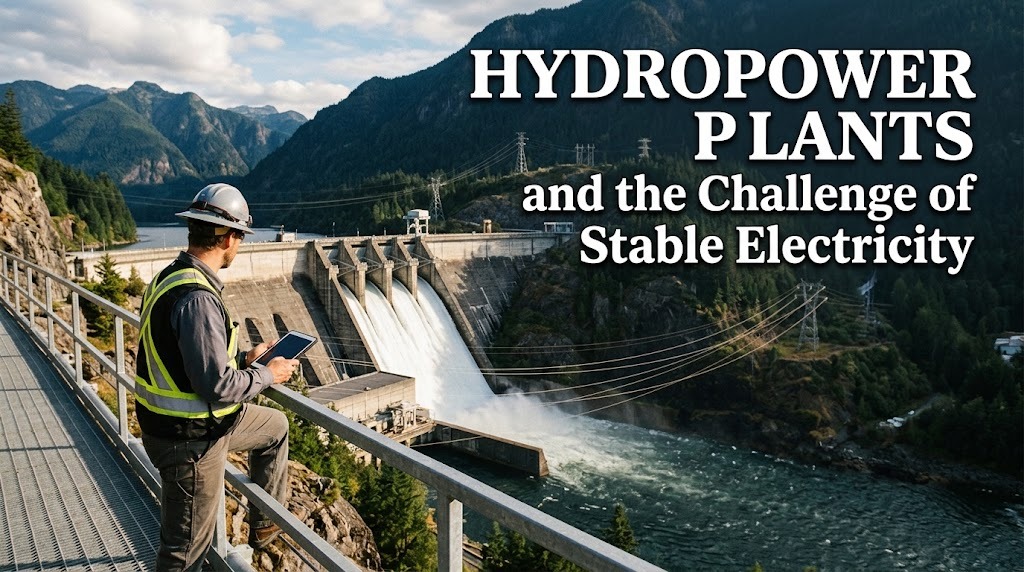
Stable electricity supply is essential for households, businesses, industries, hospitals, schools, and digital infrastructure. As electricity demand continues to increase, power systems need generation sources that can provide enough electricity while responding to changes in demand. Hydropower plants can play an important role because many facilities are able to adjust their electricity output relatively quickly. However, maintaining stable generation is not always simple because hydropower depends heavily on water availability and weather conditions.
Hydropower is widely recognized as a flexible source of low-carbon electricity. The International Energy Agency notes that hydropower can ramp generation up and down rapidly compared with many other conventional power plants, helping electricity systems respond to changes in demand and variable renewable generation. Despite this advantage, hydropower operators must manage challenges such as drought, extreme rainfall, aging equipment, sedimentation, and changing climate patterns.
WHY STABLE ELECTRICITY MATTERS?
A stable electricity system must continuously maintain a balance between electricity supply and demand. When demand suddenly increases, generators need to respond to prevent shortages or system instability. Similarly, excessive generation compared with demand can also create operational problems. This is why power systems require flexible resources that can adjust their output when necessary.
Electricity stability is especially important as modern society becomes more dependent on digital technology and electric equipment. Interruptions can affect factories, transportation systems, communication networks, businesses, and essential public services. Reliable electricity is therefore a foundation of economic and social activity. Hydropower can contribute to this reliability when it is supported by sufficient water resources and well-maintained infrastructure.
HOW HYDROPOWER SUPPORTS GRID FLEXIBILITY?
One of the main strengths of hydropower is its operational flexibility. Many hydroelectric units can increase or decrease generation faster than several other types of large power plants. This allows operators to respond to changes in electricity demand or supply.
This capability is particularly useful in modern grids that include large amounts of solar and wind power. Solar and wind generation can change according to weather and time of day. Flexible hydropower can help compensate for some of these changes. The IEA identifies hydropower as a major source of electricity-system flexibility and notes its importance for integrating variable renewable energy.
RESERVOIRS HELP MANAGE ELECTRICITY SUPPLY
Reservoir-based hydropower plants have an additional advantage because they can store water before it is used to generate electricity. Water held at a higher elevation contains potential energy. Operators can release some of this water through turbines when electricity is required, subject to operational, environmental, and water-management constraints.
This storage capability allows some plants to shift electricity production between different periods. Water can be retained during periods when demand is lower and used later when demand rises. However, reservoirs have limited storage capacity and must often serve other purposes such as water supply, irrigation, flood management, or environmental needs. Effective reservoir management is therefore essential for reliable generation.
HYDROPOWER AND RENEWABLE ENERGY INTEGRATION
The growth of solar and wind power is changing how electricity grids operate. These sources are renewable and low-carbon, but their output is not constant. Solar generation decreases after sunset, while wind generation varies with wind conditions. Power systems therefore need additional flexibility and storage.
Hydropower can provide part of this flexibility. When renewable generation falls, a flexible hydro plant may increase its output if sufficient water is available. When renewable generation is abundant, hydro generation may sometimes be reduced to conserve water. This ability to adjust production can make hydropower an important partner for variable renewable energy.
PUMPED STORAGE PROVIDES EXTRA FLEXIBILITY
Pumped storage hydropower is designed specifically to store energy for later use. During periods when electricity is available, pumps move water from a lower reservoir to a higher reservoir. When electricity demand increases, the stored water is released through turbines to generate electricity.
This system works like a large-scale energy storage facility. It can help manage periods of high demand and absorb some excess electricity from renewable sources. Pumped storage is particularly valuable when power systems have large amounts of variable renewable generation. Its main benefit is flexibility rather than creating additional primary energy.
WATER AVAILABILITY IS A MAJOR CHALLENGE
The biggest challenge for hydropower stability is that electricity generation depends on water availability. During periods of abundant rainfall, river flows and reservoir levels may support strong generation. During prolonged dry periods, however, available water can fall significantly.
Drought can therefore reduce the amount of electricity that a hydropower plant can produce. This creates a particular risk for countries or regions that depend heavily on hydropower. A reliable electricity strategy should therefore include other generation sources, storage technologies, and strong transmission connections. Hydropower works best as part of a diversified electricity system.
CLIMATE CHANGE CAN AFFECT HYDROPOWER OUTPUT
Climate change adds another layer of uncertainty to hydropower planning. Changes in rainfall patterns, rising temperatures, droughts, extreme rainfall, and other weather events can influence river flows and reservoir conditions. The IEA has identified climate change as an increasing challenge for hydropower in South and Southeast Asia, including changes in rainfall and more frequent extreme weather events.
These changes can affect both the amount and timing of water available for electricity production. Heavy rainfall can also increase flooding, landslides, and sediment loads in some locations. Climate-resilient planning is therefore necessary when designing new projects and managing existing facilities. Hydropower operators increasingly need better forecasting and adaptive water-management strategies.
AGING INFRASTRUCTURE CAN REDUCE RELIABILITY
Many hydropower plants have been operating for several decades. Turbines, generators, electrical systems, control equipment, and other components can gradually deteriorate. Without appropriate maintenance and modernization, aging infrastructure may become less efficient or more vulnerable to unexpected failures.
Modernization can improve both efficiency and reliability. Upgraded turbines and generators can increase performance, while modern monitoring and control systems can provide operators with better information. The IEA estimates that a significant portion of the global hydropower fleet will reach ages requiring major equipment replacement, making modernization an important opportunity to improve flexibility.
SEDIMENTATION CAN AFFECT PERFORMANCE
Rivers naturally carry sediment such as sand, silt, and small particles. When sediment enters reservoirs, some of it can settle and gradually reduce storage capacity. Sediment can also pass through turbines and cause abrasion and equipment wear.
This problem can become more serious after heavy rainfall, floods, or landslides. Reduced reservoir capacity can affect how much water is available for electricity generation, while turbine damage can increase maintenance requirements. Sediment monitoring, watershed management, flushing where appropriate, and other engineering measures can help reduce the risk. Long-term sediment management is an important part of hydropower reliability.
ENVIRONMENTAL CONDITIONS MUST BE CONSIDERED
Hydropower operations cannot focus only on electricity production. Rivers support aquatic ecosystems, agriculture, communities, and other water-dependent activities. Changes in river flow caused by hydropower operations can affect fish habitats, sediment transport, water quality, and downstream ecosystems.
For this reason, operators may need to maintain environmental flows and follow water-management requirements. Reservoir operations may also need to balance electricity generation with irrigation, drinking water, flood control, and other needs. Reliable energy should not come at the expense of sustainable water management.
TRANSMISSION NETWORKS ALSO MATTER
A hydropower plant can produce electricity reliably, but that electricity still needs to reach consumers. Many hydropower resources are located in mountainous or remote areas, while major electricity demand may be concentrated far away. This makes transmission infrastructure an important part of the overall reliability equation.
Strong transmission networks allow electricity to move between regions when supply conditions change. Interconnected grids can also reduce the impact of local generation shortages. If hydropower output falls because of drought in one region, electricity can potentially be supplied from other areas or generation sources. A reliable power system requires coordination between generation, storage, and transmission.
TECHNOLOGY CAN IMPROVE ELECTRICITY STABILITY
Modern technology is helping hydropower plants become more responsive and efficient. Digital sensors can monitor water levels, turbine vibration, temperature, pressure, and generator performance in real time. Operators can use this information to identify unusual conditions and respond before equipment problems become severe.
Advanced forecasting can also help predict river flows and electricity demand. Predictive maintenance can reduce unexpected outages by identifying equipment that may require attention. Automated control systems can further improve the speed and accuracy of plant operations. These technologies can strengthen hydropower's contribution to a stable electricity system.
HYDROPOWER NEEDS A DIVERSIFIED ENERGY MIX
Hydropower can provide valuable flexibility, but it should not be expected to solve every electricity challenge. Drought can reduce hydroelectric production, while extreme weather can damage infrastructure. Solar, wind, geothermal, batteries, and other generation technologies can provide additional resources.
A diversified energy mix spreads risk across different technologies. If one source performs below expectations, other sources can help maintain electricity supply. Strong interconnections and energy storage can further improve resilience. This approach is particularly important as countries transition toward cleaner electricity systems.
THE FUTURE OF STABLE HYDROPOWER
The future of hydropower will depend increasingly on flexibility, modernization, climate resilience, and better water management. Existing facilities can be upgraded with more efficient turbines, modern generators, digital monitoring, and advanced control systems. New projects need to consider long-term water availability and environmental conditions from the beginning.
Pumped storage may also become increasingly important as solar and wind capacity expands. Hydropower can provide both renewable electricity and flexibility, making it a valuable part of future low-carbon power systems. However, climate risks must be incorporated into long-term planning. The strongest hydropower systems will be those designed to remain reliable under changing conditions.
CONCLUSION
Hydropower plants can play a major role in maintaining stable electricity because they can provide flexible, renewable, and relatively low-carbon generation. Reservoirs can store water for later electricity production, while pumped storage can provide additional energy-storage capability. These characteristics allow hydropower to support changing demand and help integrate solar and wind power.
However, stable hydropower generation depends on more than turbines and generators. Water availability, climate change, aging infrastructure, sedimentation, environmental requirements, and transmission capacity all influence reliability. With modernization, better forecasting, responsible water management, energy storage, and a diversified generation mix, hydropower can continue to support secure and stable electricity systems.
About the Author
Gusti Ayu Tita P
Author — STEKOM University
An active author focused on academic issues, educational technology, and human resource development in the campus environment.