Hydropower Solutions for Remote and Isolated Regions
Gusti Ayu Tita P
31 Agustus 2026
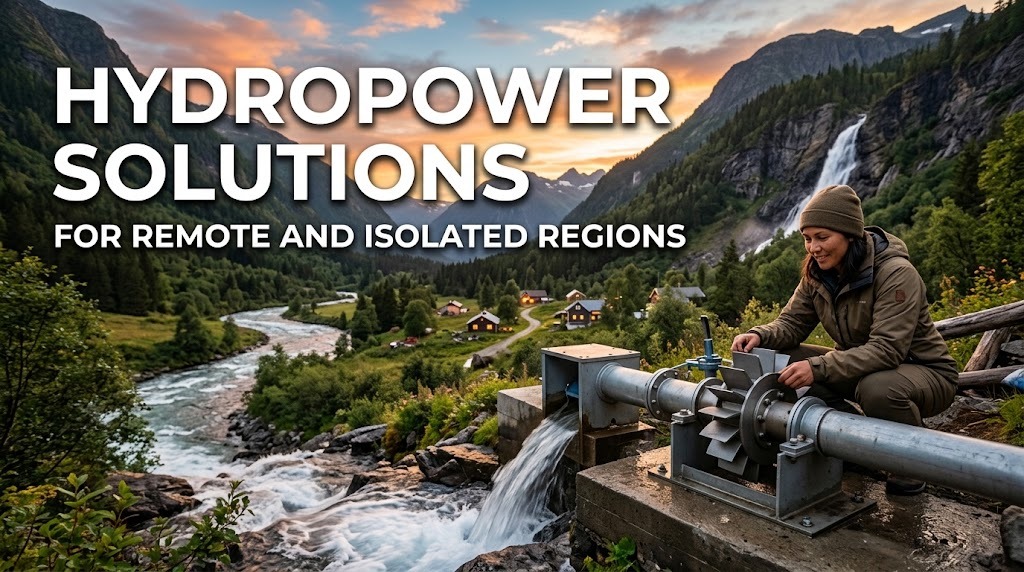
Hydropower solutions can provide reliable renewable electricity for remote and isolated regions that face challenges connecting to large power grids. Many rural communities are located far from transmission networks, while difficult terrain can make grid expansion expensive and complicated. When suitable rivers or streams are available, hydropower can offer a local source of electricity.
Small and micro hydropower systems are particularly useful for communities with sufficient water flow and elevation differences. These systems can supply electricity for households, schools, health facilities, agriculture, and small businesses. However, successful development requires more than installing turbines. Water availability, environmental protection, community participation, financing, and long-term maintenance all need to be considered.
WHY REMOTE REGIONS NEED LOCAL POWER?
Remote communities often face unique electricity challenges. Long distances from centralized power plants can make transmission infrastructure costly to build and maintain. Some areas may also depend on diesel generators, which require regular fuel transportation.
A local hydropower system can generate electricity closer to consumers. Local generation can reduce dependence on long-distance transmission and, in some circumstances, reduce the need for diesel fuel. Reliable electricity can also support education, healthcare, communication, and economic activities. This makes energy access an important part of regional development.
WHAT IS SMALL HYDROPOWER?
Small hydropower uses the same basic principle as large hydropower. Water flows through a turbine, causing it to rotate, while a generator converts that mechanical energy into electricity. The difference is mainly the scale and capacity of the installation.
There is no single global capacity definition for small hydropower because classifications vary between countries and organizations. Some projects are described as mini or micro hydropower when they serve very small communities. The appropriate system depends on local electricity demand and available water resources.
HOW MICRO HYDROPOWER WORKS?
Micro hydropower is designed for relatively small electricity needs. A typical system uses an intake to collect part of the water flow, a conveyance system to move the water, a turbine to convert water energy into mechanical energy, and a generator to produce electricity.
After passing through the turbine, water is normally returned to the river. Many microhydropower systems do not require large reservoirs. This can make them suitable for mountainous or rural locations where a natural stream has sufficient flow and hydraulic head.
RUN OF RIVER SYSTEMS FOR REMOTE AREAS
A run-of-river hydropower system generally diverts part of a river's flow toward a turbine without creating a large storage reservoir. This design can be useful for remote regions because the infrastructure can be smaller than that of a major dam project.
However, run-of-river systems still interact with natural river processes. The diverted section needs enough water to maintain important ecological functions. Environmental flow requirements should therefore be considered during design and operation. A smaller project should still undergo appropriate environmental assessment.
WATER FLOW DETERMINES POWER OUTPUT
The amount of electricity a hydropower system can produce depends strongly on water flow and hydraulic head. A site with a large elevation difference and sufficient water flow may have good generation potential.
However, river flow can change significantly between wet and dry seasons. A system designed using only peak water conditions may not provide reliable electricity throughout the year. Developers need hydrological studies that examine seasonal and long-term water availability. Accurate assessment helps ensure that equipment is appropriately sized.
HYDROPOWER CAN REPLACE DIESEL GENERATION
Diesel generators are widely used in some isolated electricity systems because they can operate independently of large grids. However, diesel systems require continuous fuel supplies and are exposed to fuel transportation costs and price fluctuations.
Where water resources are suitable, small hydropower can reduce dependence on diesel generators. Once constructed, a hydropower plant does not require fossil fuel deliveries for normal electricity generation. This can improve energy security for communities that are difficult to reach. The economic benefit still depends on construction, maintenance, financing, and water conditions.
ELECTRICITY CAN SUPPORT LOCAL DEVELOPMENT
Access to reliable electricity can transform economic opportunities in remote communities. Businesses can operate refrigerators, pumps, machinery, computers, communication equipment, and processing tools. Farmers can use electricity for irrigation and agricultural processing.
Electricity can also improve public services. Schools can use computers and lighting, while healthcare facilities can operate essential equipment and refrigeration. Reliable power can therefore support both social services and local economic development. Energy access is closely connected with community resilience.
HYDROPOWER CAN SUPPORT HEALTHCARE
Healthcare facilities require dependable electricity for lighting, refrigeration, medical equipment, communications, and information systems. Power interruptions can create significant difficulties, especially in isolated locations.
A properly designed local hydropower system can provide a stable electricity source for rural clinics and health centers. Reliable electricity can help maintain essential services and improve working conditions for healthcare staff. In some areas, hydropower can be combined with solar panels and batteries to increase resilience.
HYDROPOWER CAN IMPROVE EDUCATION
Electricity can expand educational opportunities in remote communities. Schools can use lighting, computers, internet equipment, projectors, and other digital learning tools. Students can also study after daylight hours.
Reliable electricity can therefore support digital education and communication. However, power generation alone does not guarantee educational improvement. Internet access, equipment, teacher availability, and digital skills are also important. Hydropower should be viewed as one component of broader community development.
HYBRID SYSTEMS CAN IMPROVE RELIABILITY
Remote regions do not necessarily need to rely on a single energy source. Hydropower, solar power, batteries, and other generation technologies can be combined into a hybrid energy system.
For example, solar power can produce electricity during sunny daytime periods, while hydropower can provide generation at other times when sufficient water is available. Batteries can help manage short-term differences between supply and demand. Combining resources can reduce the impact of fluctuations in any single source.
BATTERY STORAGE ADDS FLEXIBILITY
Battery storage can complement small hydropower, especially when electricity demand changes quickly. Batteries can store excess electricity and release it when additional power is required.
A battery can also help stabilize a local mini-grid. Energy storage may reduce the need to operate backup diesel generators during short periods of high demand. The appropriate battery size depends on electricity consumption, hydropower output, solar generation, and system design.
MINI GRIDS CONNECT LOCAL USERS
A mini grid is a local electricity network that can supply multiple consumers. It can operate independently from a national grid or, in some cases, connect to the main grid.
Hydropower can serve as the main generation source for a renewable mini grid when local water conditions are suitable. The network can distribute electricity to households, businesses, public buildings, and productive facilities. Good load planning is important because electricity demand may grow as the community gains access to reliable power.
ENVIRONMENTAL PROTECTION REMAINS IMPORTANT
Remote locations are often home to valuable ecosystems. Rivers and surrounding forests can support fish, wildlife, plants, agriculture, and community livelihoods. Hydropower projects should therefore avoid unnecessary environmental damage.
Planning should consider river flows, fish movement, sediment, water quality, vegetation, and sensitive habitats. Appropriate environmental flow measures can help maintain river functions. Environmental monitoring should continue after construction to identify unexpected changes.
COMMUNITY PARTICIPATION IS ESSENTIAL
A hydropower system is more likely to succeed when local communities are involved in its development. Residents understand local river conditions and can provide practical knowledge about water use, seasonal changes, agriculture, and community needs.
Community participation should begin before construction. Local people should understand how the project will operate and how electricity will be distributed. Training community members to operate and maintain the system can also strengthen local ownership. Long-term success depends on having people who can respond to routine technical problems.
MAINTENANCE IS A KEY CHALLENGE
Remote hydropower systems can be difficult to repair when spare parts and technical specialists are far away. A small equipment failure can become a major problem if there is no local maintenance capacity.
Developers should therefore design systems with simple maintenance requirements, available spare parts, and trained local operators. Regular inspections can identify problems before they cause extended outages. Remote monitoring can also allow technical teams to check plant performance from a distance.
DIGITAL MONITORING CAN SUPPORT REMOTE PLANTS
Modern sensors can monitor water levels, flow rates, turbine speed, generator output, temperature, and other operating conditions. Data can be transmitted to operators or technical teams when communication networks are available.
Remote monitoring can reduce the need for frequent physical inspections. It can also provide early warnings when equipment operates outside normal conditions. This is particularly useful for isolated plants where travel may be difficult. Digital systems should nevertheless include appropriate cybersecurity and backup procedures.
CLIMATE CHANGE CREATES NEW RISKS
Remote hydropower systems depend on local water resources, making them sensitive to changes in rainfall and drought conditions. Climate change can alter seasonal river flows and increase uncertainty about future water availability.
Project planning should therefore consider climate resilience. Historical water data should be combined with climate projections and risk assessments where appropriate. Watershed protection can also help maintain healthier river systems. Designing systems with realistic expectations about future water conditions can improve long-term reliability.
FINANCING CAN BE DIFFICULT
Small projects can have significant costs relative to the number of people they serve. Construction may require civil works, turbines, generators, distribution lines, roads, and other infrastructure. Remote locations can increase transportation and construction expenses.
Financing models should consider the community's ability to pay for electricity while ensuring the system can cover operation and maintenance costs. Long-term financial planning is essential. Grants, public programs, development financing, or community-based models may be relevant depending on local circumstances.
ENERGY DEMAND SHOULD BE PLANNED CAREFULLY
A hydropower system should be designed around realistic electricity demand. If equipment is too small, the system may struggle to meet demand. If it is significantly oversized, unnecessary investment can increase project costs.
Planners should examine current and expected future consumption. Households, businesses, schools, clinics, agricultural activities, and productive enterprises should all be considered. Demand can increase after reliable electricity becomes available, so expansion possibilities should also be evaluated.
THE FUTURE OF REMOTE HYDROPOWER
The future of hydropower in isolated regions will likely involve greater integration with solar power, battery storage, digital monitoring, and renewable mini grids. These technologies can make local electricity systems more flexible and resilient.
Small hydropower can be especially valuable where rivers provide dependable year-round resources. However, not every remote location is suitable. Projects should be selected based on water availability, environmental conditions, community needs, technical feasibility, and economic viability. The best solution is one that remains useful and maintainable for many years.
CONCLUSION
Hydropower can provide a practical renewable energy solution for remote and isolated regions when suitable water resources are available. Small and micro hydropower systems can supply electricity for households, schools, healthcare facilities, agriculture, and local businesses. They can also reduce dependence on diesel fuel and support renewable mini grids.
Successful projects require more than suitable rivers. Environmental protection, community participation, accurate hydrological studies, reliable distribution networks, maintenance capacity, financing, and climate resilience all matter. By combining hydropower with modern technology and other renewable resources, isolated communities can develop cleaner and more reliable local electricity systems.
About the Author
Gusti Ayu Tita P
Author — STEKOM University
An active author focused on academic issues, educational technology, and human resource development in the campus environment.