Hydropower’s Role in Strengthening National Energy Security
Gusti Ayu Tita P
31 Agustus 2026
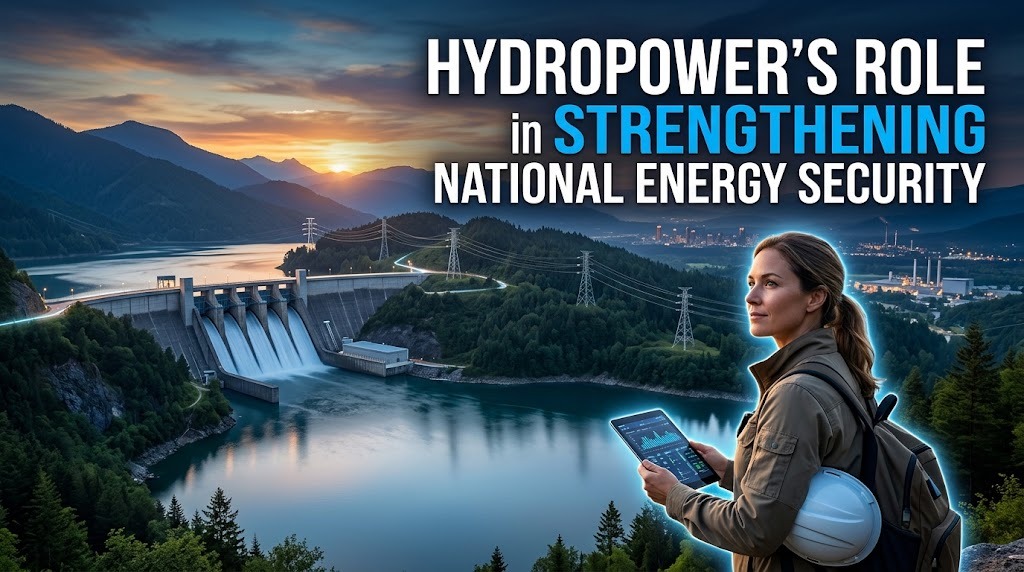
Energy security is essential for a country's economic growth, public services, industry, and daily life. A reliable energy system must be able to provide enough electricity while managing risks such as fuel shortages, price volatility, extreme weather, and infrastructure failures. Hydropower can help address some of these challenges because it uses water as a renewable domestic energy resource. With proper planning and management, hydropower can strengthen the reliability and diversity of a national electricity system.
Hydropower is not a complete solution to every energy security challenge. Its performance depends on water availability, weather patterns, infrastructure, and environmental conditions. However, its ability to generate electricity without continuously importing or purchasing fossil fuels makes it strategically valuable. A diversified energy mix that includes hydropower can reduce excessive dependence on a single energy source and improve long-term energy resilience.
WHAT ENERGY SECURITY MEANS?
Energy security refers to the ability of a country to maintain a reliable, affordable, and sufficient energy supply. Electricity shortages can affect households, hospitals, transportation, communication, manufacturing, and other essential activities. A strong energy system therefore needs enough generation capacity as well as reliable transmission and distribution networks.
Energy security also involves preparing for unexpected disruptions. Fuel supply problems, international price changes, natural disasters, and extreme weather can all affect electricity systems. Diversification is one important strategy because dependence on a limited number of energy sources can increase vulnerability. Renewable resources such as hydropower can contribute to this diversification.
HYDROPOWER USES A DOMESTIC RESOURCE
One major advantage of hydropower is its use of water as a local energy resource. Countries with suitable rivers, reservoirs, and terrain can generate electricity from resources available within their own territory. Unlike fossil fuel plants, hydropower does not require a continuous supply of coal, oil, or natural gas during normal operation.
Using domestic resources can reduce exposure to international fuel markets. Countries that import large amounts of fossil fuels may face higher electricity costs when global fuel prices rise. Hydropower can provide a degree of protection against such changes. Domestic renewable generation can therefore strengthen energy independence, although water availability must still be carefully managed.
REDUCING DEPENDENCE ON FOSSIL FUELS
Heavy dependence on fossil fuels can create several energy security risks. Fuel prices can change quickly, while transportation problems or geopolitical events can disrupt supply chains. Power plants that rely on imported fuels may become more expensive to operate during periods of market instability.
Hydropower can reduce some of these risks by producing electricity without consuming fossil fuel. Every unit of hydropower generation can reduce the need for electricity from other sources, depending on how the national grid is operated. This does not eliminate fossil fuels immediately, but it can gradually reduce their role in the electricity mix. A broader generation portfolio gives energy planners more options.
HYDROPOWER SUPPORTS GRID RELIABILITY
Electricity demand changes throughout the day and across seasons. A national grid must continuously adjust generation to match consumption. Some hydropower plants, particularly those with reservoirs, can change their output according to system requirements within their technical limits. This flexibility can support grid reliability.
Hydropower can also provide services that help maintain power system stability. Depending on the plant and grid design, hydro units may contribute to frequency regulation, reserve capacity, and other grid-support functions. These capabilities become increasingly useful as power systems integrate more variable renewable sources. Solar and wind generation can fluctuate with weather, while flexible hydropower can help manage some of these changes.
RESERVOIRS PROVIDE OPERATIONAL FLEXIBILITY
Reservoir-based hydropower has an important advantage because water can be stored before it is needed for electricity generation. Operators can release water through turbines when electricity demand is higher, subject to water availability, safety requirements, environmental needs, and other uses of the reservoir. This provides greater operational flexibility than many plants that depend directly on current river flow.
Reservoirs can also help manage seasonal variations in water availability. During wetter periods, water may be stored for later use. During dry periods, stored water can help maintain generation for some time. However, reservoirs have finite storage capacity and cannot eliminate the effects of prolonged drought. Good reservoir management is therefore essential for energy security.
HYDROPOWER CAN SUPPORT RENEWABLE ENERGY
Modern electricity systems are increasingly adding solar and wind power. These technologies are important for reducing fossil fuel use, but their output varies with sunlight and wind conditions. Hydropower can complement them when suitable hydro capacity is available. Flexible hydropower can help balance changes in renewable generation.
For example, electricity from solar power may decline rapidly as daylight ends. A flexible hydropower plant may increase generation to help meet evening demand. The exact response depends on plant design, water availability, and grid conditions. Combining different renewable technologies can create a more resilient electricity system than relying heavily on a single source.
PUMPED STORAGE STRENGTHENS ENERGY FLEXIBILITY
Pumped storage hydropower can play a special role in energy security because it works as a form of large-scale energy storage. During periods when electricity is abundant, water can be pumped from a lower reservoir to a higher reservoir. When electricity is needed, the stored water flows back through turbines to generate power.
This technology can help manage short-term changes in electricity supply and demand. It can also support systems with large amounts of solar and wind generation. Pumped storage does not create new energy; instead, it stores electricity for later use with energy losses during the storage cycle. Its value comes from providing flexibility and storage capacity to the grid.
HYDROPOWER CAN REDUCE FUEL PRICE RISKS
Fossil fuel prices are influenced by global markets and can change due to economic, political, or supply conditions. These changes can increase the cost of electricity generation in countries that depend heavily on fuel-based power plants. Hydropower has a different cost structure because it does not require a continuous fuel purchase.
Once a hydropower plant is operating, its main ongoing expenses are related to maintenance, operations, water management, and infrastructure rather than fuel consumption. This can provide more predictable operating costs under suitable conditions. However, hydropower projects usually require significant upfront investment. Financial planning must therefore consider construction costs, financing, maintenance, and long-term performance.
HYDROPOWER SUPPORTS LOCAL DEVELOPMENT
Energy security is not only about national power plants. It also involves ensuring that electricity reaches communities, businesses, and essential services. Hydropower projects can help improve electricity supply in regions with suitable water resources. Small hydropower facilities may also provide electricity for remote communities and isolated grids.
Reliable electricity can support schools, healthcare facilities, agriculture, manufacturing, communications, and local businesses. Better access to energy can therefore strengthen economic resilience. However, projects must be designed with consideration for local communities and environmental conditions. Energy development should create long-term benefits rather than simply increase generation capacity.
CLIMATE CHANGE CREATES NEW RISKS
Hydropower is renewable, but it is highly connected to the water cycle. Climate change can alter rainfall patterns, increase drought risks in some areas, and intensify extreme rainfall in others. These changes can affect river flows and reservoir levels. Climate resilience is therefore becoming a critical part of hydropower planning.
Energy planners need to use updated hydrological and climate information when evaluating existing and future hydropower facilities. Reservoir operations may need to become more adaptive, while infrastructure may require stronger protection against extreme events. Protecting watersheds can also help maintain water quality and reduce sedimentation. A hydropower system that ignores climate risks may become less reliable over time.
ENVIRONMENTAL MANAGEMENT MATTERS
Hydropower projects can affect rivers and surrounding ecosystems. Dams may change natural river flows, sediment transport, aquatic habitats, and fish migration. Large reservoirs can also affect land use and communities in project areas. These impacts mean that environmental planning is an important part of energy security.
A reliable energy system must remain sustainable over the long term. Environmental flow management, sediment control, ecosystem protection, and community engagement can help reduce negative impacts. Each project requires solutions suited to its location and design. Responsible hydropower development can balance electricity production with the protection of water resources and local environments.
MODERN TECHNOLOGY IMPROVES HYDROPOWER SECURITY
Technology can make hydropower plants more reliable and responsive. Digital sensors can monitor water levels, turbine conditions, vibration, temperature, pressure, and electrical performance. Real-time monitoring allows operators to identify unusual conditions and respond more quickly.
Predictive maintenance can also reduce unexpected equipment failures. Modern control systems can improve the efficiency of turbines and generators while helping operators respond to changes in electricity demand. Upgrading older hydropower facilities may increase efficiency and reliability without requiring an entirely new dam. Modernization is therefore an important energy security strategy.
DIVERSIFICATION MAKES THE SYSTEM MORE RESILIENT
Although hydropower provides many benefits, a national electricity system should not rely on it alone. Droughts and changing rainfall can reduce hydroelectric output. Other renewable sources can also experience weather-related fluctuations. A diverse energy mix can reduce the impact when one source performs below expectations.
A resilient electricity system may combine hydropower with solar, wind, geothermal energy, batteries, natural gas, and other technologies according to national conditions. Transmission networks are equally important because electricity must be moved from generation centers to areas of demand. Coordinated planning across generation, storage, and networks can provide stronger overall energy security.
THE FUTURE OF HYDROPOWER AND ENERGY SECURITY
The future role of hydropower will depend on how effectively countries manage water, infrastructure, technology, and environmental risks. New projects should be evaluated using technical, economic, climate, environmental, and social criteria. Existing plants can also be modernized to improve their performance and reliability.
Hydropower is likely to remain particularly valuable where suitable water resources exist and electricity systems need flexible renewable generation. Pumped storage may become increasingly important as variable renewable energy expands. By combining hydropower with other clean technologies and stronger grid infrastructure, countries can build electricity systems that are more flexible and resilient.
CONCLUSION
Hydropower can make an important contribution to national energy security by providing renewable electricity from domestic water resources, reducing dependence on fossil fuels, and supporting grid flexibility. Reservoir-based facilities can store water for later generation, while pumped storage can provide large-scale energy storage. These characteristics make hydropower more than a source of electricity; it can also serve as a strategic asset for a resilient energy system.
However, hydropower must be developed and managed responsibly. Climate change, drought, environmental impacts, high initial investment, and water competition can affect its long-term performance. With modern technology, careful watershed management, climate adaptation, and a diversified energy mix, hydropower can continue to strengthen reliable and sustainable electricity systems.
About the Author
Gusti Ayu Tita P
Author — STEKOM University
An active author focused on academic issues, educational technology, and human resource development in the campus environment.