Important Documents Needed in a Land Dispute
Gusti Ayu Tita P
2 September 2026
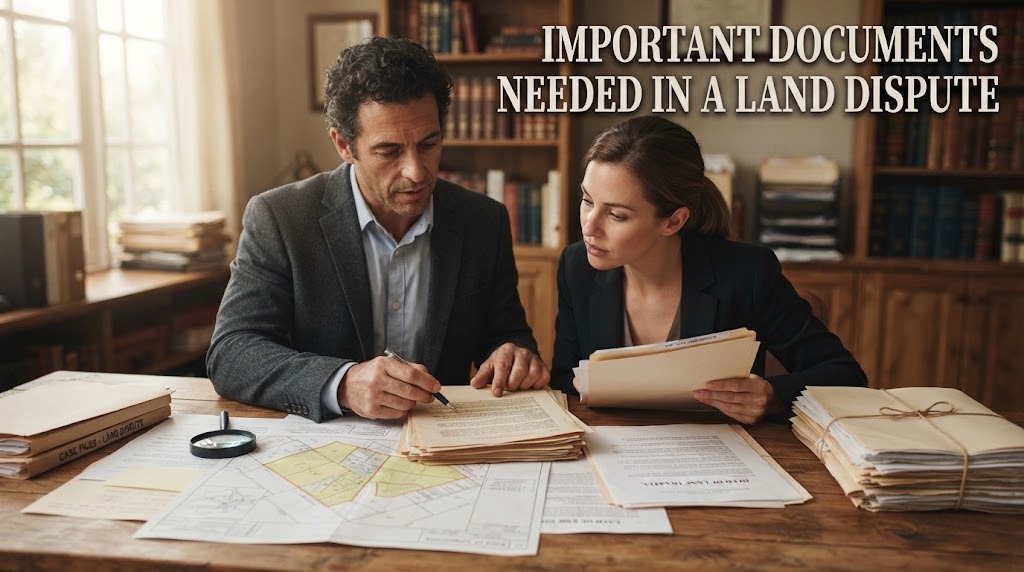
Land disputes can become complicated when the parties involved have different claims regarding ownership, boundaries, or control of a property. Documents are essential because they can help establish the history, legal status, and rights associated with the disputed land. The required evidence may vary depending on the nature of the dispute and the legal process being used. Therefore, preparing relevant documents from the beginning can make the dispute resolution process more organized and effective.
LAND CERTIFICATE
A land certificate is one of the most important documents in a land dispute. It contains information concerning the registered rights and certain physical and legal data associated with the property. Depending on the type of registered right, the certificate may show ownership or another form of land right. However, a certificate should still be assessed together with other evidence and the circumstances of the case.
Landowners should keep the original certificate in a secure place and make copies for administrative purposes. The information in the certificate should also be checked against the actual condition of the property. If there are concerns about its validity or accuracy, verification through the relevant land authority may be necessary.
DEED OF SALE OR TRANSFER DOCUMENTS
A deed of sale or other transfer documents can be important when a dispute involves the purchase or transfer of land. These documents can help demonstrate how rights over the property were transferred from one party to another. Supporting documents may include agreements, payment records, or other documents connected to the transaction. The documents should be examined as a complete set rather than relying on a single piece of evidence.
Buyers should make sure that the transaction was carried out according to the applicable legal procedures. The identity of the seller and the legal status of the property should also be verified. Proper documentation can help reduce uncertainty if a dispute occurs later.
INHERITANCE DOCUMENTS
Inheritance documents are particularly important when a land dispute involves property passed down after the death of an owner. Relevant documents may include proof of death, documents establishing the heirs, wills where applicable, and agreements concerning the distribution of inherited property. These records can help clarify who may have legal interests in the property. Problems often arise when inherited land has been occupied or transferred without the agreement of all relevant heirs.
Family members should organize inheritance and land records carefully. Any agreed distribution of the property should be documented properly and processed according to applicable legal requirements. This can help reduce disagreements among heirs in the future.
OLD LAND RECORDS AND POSSESSION DOCUMENTS
Some land disputes involve properties with older records or documents that show historical possession. These may help explain how the land was acquired, occupied, or transferred over time. Depending on the circumstances, relevant records may include older land documents, administrative letters, or other historical evidence. Their legal significance depends on their authenticity, origin, and relationship to the current land records.
Older documents should therefore be preserved rather than discarded simply because they are outdated. They can provide useful information when reconstructing the history of a property. If the legal meaning of an old document is unclear, professional advice may be useful before relying on it as evidence.
PAYMENT RECORDS
Payment records can support claims concerning a land transaction. Examples include receipts, bank transfer records, invoices, or other proof showing that money was paid in connection with the property. Such evidence can help establish that a transaction or financial obligation occurred. However, payment evidence by itself does not necessarily establish legal ownership of the land.
For this reason, payment records should be kept together with the relevant agreements and transfer documents. Important details such as the date, amount, parties involved, and purpose of payment should be identifiable. A well-organized record can make it easier to establish the context of a disputed transaction.
LAND BOUNDARY AND SURVEY DOCUMENTS
Boundary and survey documents can be essential when the dispute concerns the location or size of a property. Depending on the case, relevant evidence may include survey records, maps, measurement documents, boundary information, or other official land records. Photographs of boundary markers and the physical condition of the property may also provide supporting evidence. These materials can help determine whether the physical property matches the available records.
If there is a disagreement regarding boundaries, landowners should avoid moving or replacing boundary markers unilaterally. An appropriate survey or official verification may be needed to clarify the situation. Maintaining accurate records of the property's boundaries can also help prevent future disputes.
AGREEMENTS AND WRITTEN COMMUNICATION
Written agreements and communications can provide important supporting evidence in a land dispute. These may include contracts, settlement agreements, letters, emails, or other communications directly related to the property. Such records can help explain what the parties previously discussed or agreed upon. They may also provide information about the timeline of the dispute.
Original documents should be preserved whenever possible. Digital copies can be created as backups, but their authenticity and context should also be maintained. If electronic evidence is intended to be used in legal proceedings, it should comply with the applicable rules of evidence.
TAX AND PROPERTY RECORDS
Tax payment records and property-related administrative documents can provide additional information about the history and use of land. They may help demonstrate that a person has been associated with or responsible for certain obligations concerning the property. However, payment of property-related taxes should not automatically be treated as conclusive proof of legal ownership. Their significance depends on the facts and the other evidence available.
These records should therefore be used as supporting evidence rather than as the sole basis for an ownership claim. Keeping tax documents together with certificates, transaction records, and other land documents can create a more complete record of the property.
HOW TO ORGANIZE DOCUMENTS FOR A LAND DISPUTE
All documents related to the property should be collected before taking major legal action. Arrange them chronologically, starting with the earliest available ownership or possession records and continuing through transactions and events that led to the dispute. Keep the original documents securely and prepare copies or digital backups. A written timeline can also make it easier to explain the history of the property.
If important documents are missing, damaged, or contain inconsistent information, the relevant authority may need to be contacted for verification or replacement procedures. For complex disputes, a qualified legal professional can help identify which documents are most relevant. Good preparation can make the dispute resolution process more efficient and easier to understand.
CONCLUSION
The important documents needed in a land dispute may include land certificates, sale or transfer deeds, inheritance records, old land documents, payment records, boundary documents, written agreements, and supporting administrative records. Not every document has the same evidentiary value, so its relevance must be assessed according to the circumstances of the dispute. Keeping documents complete, authentic, and well organized is essential for protecting land rights. When a dispute becomes complex, seeking advice from the relevant land authority or a qualified legal professional can help determine the appropriate next steps.
About the Author
Gusti Ayu Tita P
Author — STEKOM University
An active author focused on academic issues, educational technology, and human resource development in the campus environment.