
Indonesia Return Traffic What Time Should You Leave?
Gusti Ayu Tita P
10 Agustus 2026
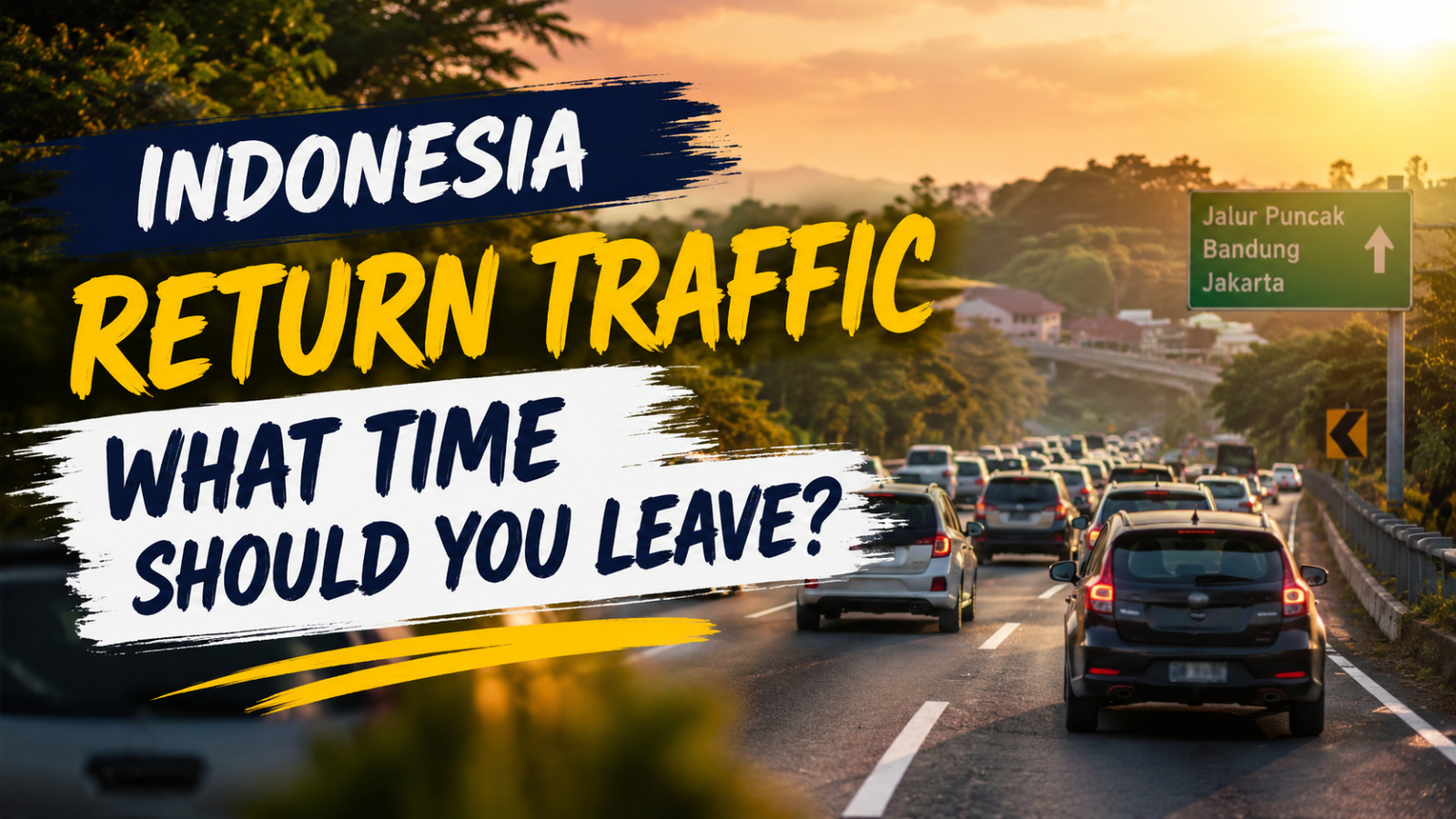
Returning home after a holiday can be challenging, especially when many travelers leave at nearly the same time. Return traffic in Indonesia can become crowded on major highways, toll roads, and routes connecting popular destinations with large cities. Choosing the right departure time can help travelers reduce the risk of getting stuck in severe congestion and make the journey more comfortable.
UNDERSTANDING INDONESIA RETURN TRAFFIC
Indonesia return traffic usually becomes heavier when large numbers of travelers begin their journeys home within the same period. Roads connecting tourist destinations, hometowns, and major cities can experience significant increases in vehicle volume. The situation may become more difficult near toll gates, rest areas, road intersections, and urban entrances. Travelers should therefore consider both the expected traffic pattern and their own travel conditions before deciding when to leave.
Another important factor is the holiday return period. Many people prefer to travel during weekends, public holidays, or the final days of a holiday because they want to maximize their time at their destination. This can create concentrated traffic flows during certain hours. Checking official traffic updates before departure can help travelers identify potentially congested routes and choose better alternatives.
WHAT TIME SHOULD YOU LEAVE?
There is no single departure time that guarantees an empty road because traffic conditions can change depending on the destination, route, weather, accidents, and traffic management policies. However, travelers can generally consider leaving early in the morning or later in the evening when planning a long-distance return journey. Avoiding the periods when most travelers are expected to depart can reduce exposure to peak congestion.
Travelers should also consider their driving condition and rest needs rather than choosing a departure time based only on traffic. Leaving very early may be useful if the driver is well rested and prepared. Meanwhile, traveling at night may reduce traffic on some routes but requires greater attention because visibility can be lower and fatigue can become a serious safety risk. The safest departure time is therefore one that balances traffic conditions with the driver's physical condition.
CHECK TRAFFIC CONDITIONS BEFORE DEPARTURE
Before leaving, travelers should check real-time traffic information through official transportation channels and reliable navigation applications. Information about congestion, accidents, road closures, weather, and traffic diversions can change quickly. Checking these updates shortly before departure can provide a more accurate picture than relying only on general predictions.
It is also useful to prepare an alternative route in advance. Route planning can prevent travelers from making rushed decisions when they encounter unexpected congestion. However, alternative roads should be evaluated carefully because smaller roads may also become crowded during major return periods. Travelers should prioritize routes that are safe, suitable for their vehicles, and supported by reliable traffic information.
PREPARE THE VEHICLE BEFORE TRAVELING
A well-prepared vehicle is essential for a long return journey. Drivers should check the tires, brakes, engine oil, coolant, battery, lights, and windshield wipers before departure. Tire pressure should follow the manufacturer's recommendations, while worn tires should be replaced before starting a long trip. These simple checks can reduce the risk of vehicle problems during heavy traffic.
Drivers should also make sure that fuel or battery capacity is sufficient for the planned journey. Long traffic jams can increase fuel or energy consumption because vehicles may move slowly or stop repeatedly. Carrying essential items such as drinking water, basic emergency equipment, and necessary documents can also make the journey easier. A little preparation can prevent minor problems from becoming major disruptions.
PLAN REST STOPS AND AVOID DRIVER FATIGUE
Long-distance return travel can be physically demanding, particularly when traffic moves slowly for several hours. Drivers should schedule regular rest breaks and avoid continuing to drive when they feel sleepy or exhausted. Rest areas, service areas, and other safe stopping locations can be used to recover before continuing the journey.
Driver fatigue can reduce concentration, reaction speed, and decision-making ability. For travelers using a private car with more than one licensed driver, sharing the driving responsibility can help reduce fatigue. Passengers can also support the driver by helping with navigation and monitoring traffic information. Safety should always take priority over arriving quickly.
CONCLUSION
Choosing the right departure time can make an important difference during Indonesia return traffic. Travelers should consider expected congestion, route conditions, weather, and their personal travel schedule before leaving. Early morning or later departures may help avoid some peak periods, but the safest choice depends on the specific route and the driver's condition.
The best approach is to plan ahead, check traffic updates, prepare the vehicle, and take sufficient rest. By combining smart departure planning with responsible driving habits, travelers can make their post-holiday journey safer, more comfortable, and less stressful.
About the Author
Gusti Ayu Tita P
Author — STEKOM University
An active author focused on academic issues, educational technology, and human resource development in the campus environment.















