
Indonesian History During the Colonial Era Explained
Gusti Ayu Tita P
5 Agustus 2026
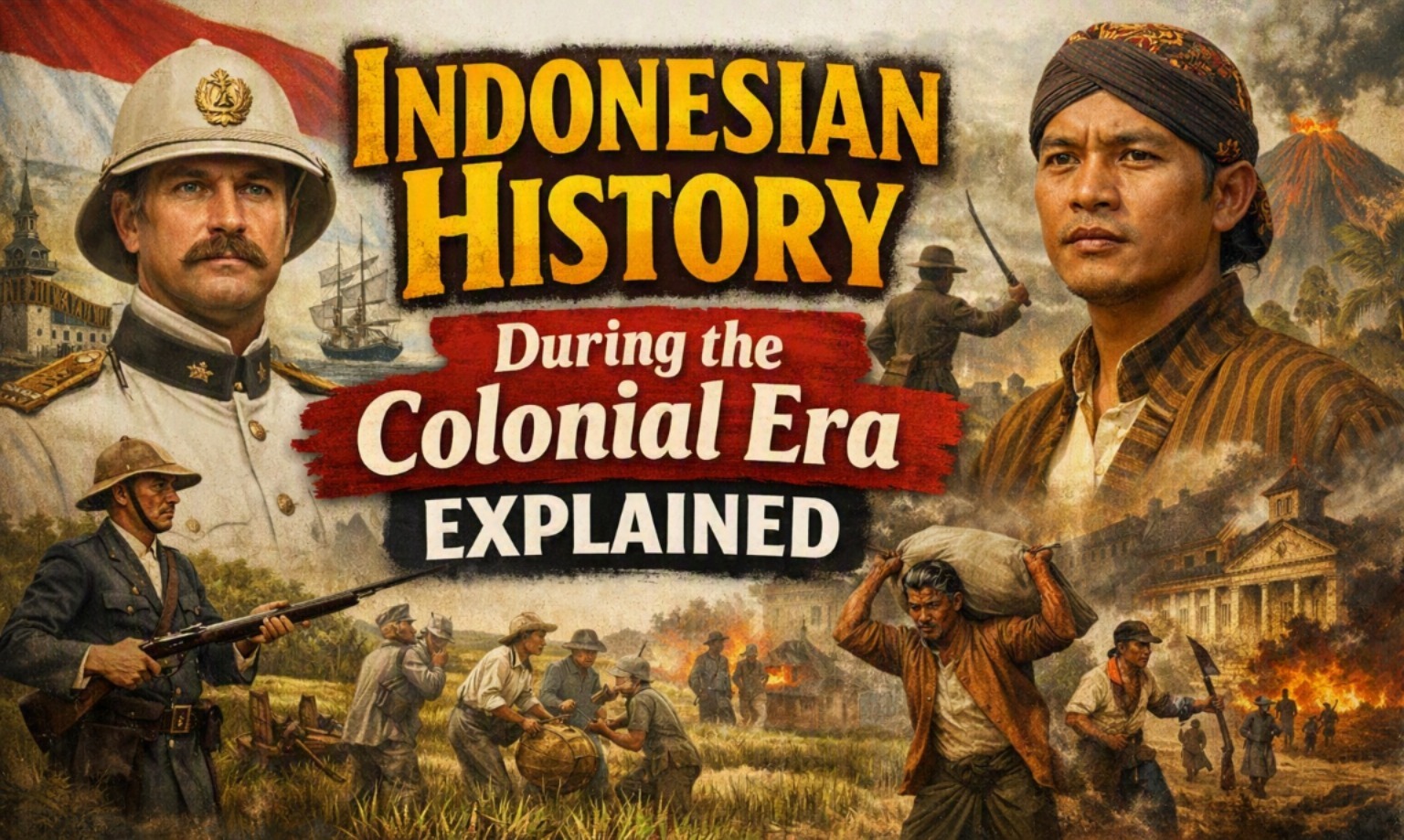
Indonesian history during the colonial era is an important chapter that shaped the country's political, economic, social, and cultural development. For more than three centuries, different European powers influenced the Indonesian archipelago through trade, administration, and military expansion. The colonial period brought both major challenges and lasting changes that affected people's daily lives. It also encouraged the growth of national awareness that eventually led to the struggle for independence. Understanding this historical period helps readers appreciate how Indonesia transformed into a modern nation.
THE ARRIVAL OF EUROPEAN POWERS IN INDONESIA
The colonial era in Indonesia began when Portuguese traders arrived in the early 16th century seeking valuable spices. Their arrival marked the beginning of European competition in Southeast Asia. Later, the Dutch East India Company (VOC) became the dominant force by controlling important ports and trade routes across the archipelago. The VOC established trading posts, signed agreements with local rulers, and gradually expanded its political influence.
After the VOC collapsed in 1799 due to financial problems and corruption, the Dutch government officially took control of its territories. Indonesia then entered a new phase known as the Dutch East Indies. Colonial authorities strengthened their administration, increased taxation, and expanded infrastructure to support economic activities. These policies helped the Dutch maintain control over vast regions for many decades.
ECONOMIC POLICIES AND THEIR IMPACT ON INDONESIAN SOCIETY
One of the most significant colonial policies was the Cultivation System, introduced in 1830. Under this system, many farmers were required to grow export crops such as coffee, sugar, and indigo instead of food crops. These agricultural products generated enormous profits for the Dutch government. However, many local communities experienced poverty, food shortages, and difficult living conditions because their agricultural production was heavily regulated.
The colonial economy also encouraged the development of plantations, mining, and transportation networks. Railways, roads, and ports were expanded to support exports rather than local needs. While these developments improved connectivity, most economic benefits were enjoyed by the colonial administration and foreign companies. As a result, economic inequality became increasingly visible throughout the archipelago.
SOCIAL CHANGES UNDER COLONIAL RULE
Colonial rule introduced significant changes to Indonesian society. The government established schools, although educational opportunities were generally limited to certain social groups. A small number of Indonesians gained access to modern education, which later contributed to the rise of educated leaders and intellectuals. These individuals played an important role in spreading new ideas about freedom, justice, and national identity.
The colonial administration also created a social hierarchy based on ethnicity and legal status. Europeans occupied the highest social position, followed by foreign Asian communities, while indigenous Indonesians faced the greatest restrictions. This unequal system influenced employment, education, and legal rights. Despite these challenges, education gradually encouraged greater awareness of equality and independence.
THE GROWTH OF NATIONALISM AND RESISTANCE
Resistance against colonial rule appeared in many regions of Indonesia. Early struggles were often led by local kingdoms and community leaders who opposed foreign domination. Famous conflicts such as the Java War, the Aceh War, and other regional resistance movements demonstrated the determination of Indonesians to defend their land. Although many of these uprisings were eventually suppressed, they inspired future generations.
During the early 20th century, resistance shifted from military action to organized political movements. New organizations promoted education, unity, and national consciousness among Indonesians. Youth organizations, newspapers, and political groups strengthened the idea that all people in the archipelago shared a common identity. This growing nationalism became the foundation of Indonesia's independence movement.
THE ROLE OF EDUCATION AND THE YOUTH MOVEMENT
Modern education became an important factor in shaping Indonesia's future leaders. Schools introduced new knowledge, critical thinking, and awareness of international political developments. Educated Indonesians began discussing democracy, human rights, and self-government. These discussions encouraged cooperation among people from different regions and cultural backgrounds.
Youth organizations became increasingly influential during this period. The historic Youth Pledge of 1928 declared one homeland, one nation, and one language, strengthening Indonesian unity. This milestone united young people from across the archipelago under a shared national vision. It remains one of the most significant events in Indonesia's journey toward independence.
THE END OF THE COLONIAL ERA
The colonial system weakened significantly during World War II when Japanese forces occupied Indonesia from 1942 to 1945. Dutch colonial authority collapsed during this occupation, creating a new political situation. Although the Japanese occupation brought its own hardships, it also provided opportunities for Indonesian leaders to organize and strengthen nationalist movements. Political experience gained during this period became valuable after the war.
Following Japan's surrender in 1945, Indonesian leaders proclaimed independence on 17 August 1945. The declaration marked the end of centuries of colonial domination and the beginning of Indonesia's struggle to establish international recognition as a sovereign nation. The colonial era officially ended, but its political, economic, and social influences continued to shape Indonesia's development for many years.
CONCLUSION
Indonesian history during the colonial era explains how foreign domination influenced the country's economy, society, politics, and national identity. Although colonial rule created many hardships, it also encouraged the growth of education, nationalism, and the determination to achieve independence. Understanding this historical period helps people appreciate the sacrifices made by earlier generations. It also provides valuable lessons about resilience, unity, and the importance of protecting national sovereignty. Learning this history allows future generations to better understand Indonesia's journey toward becoming an independent nation.
About the Author
Gusti Ayu Tita P
Author — STEKOM University
An active author focused on academic issues, educational technology, and human resource development in the campus environment.















