Indonesian Independence History And Important Lessons For Today’s Generation
Gusti Ayu Tita P
10 Agustus 2026
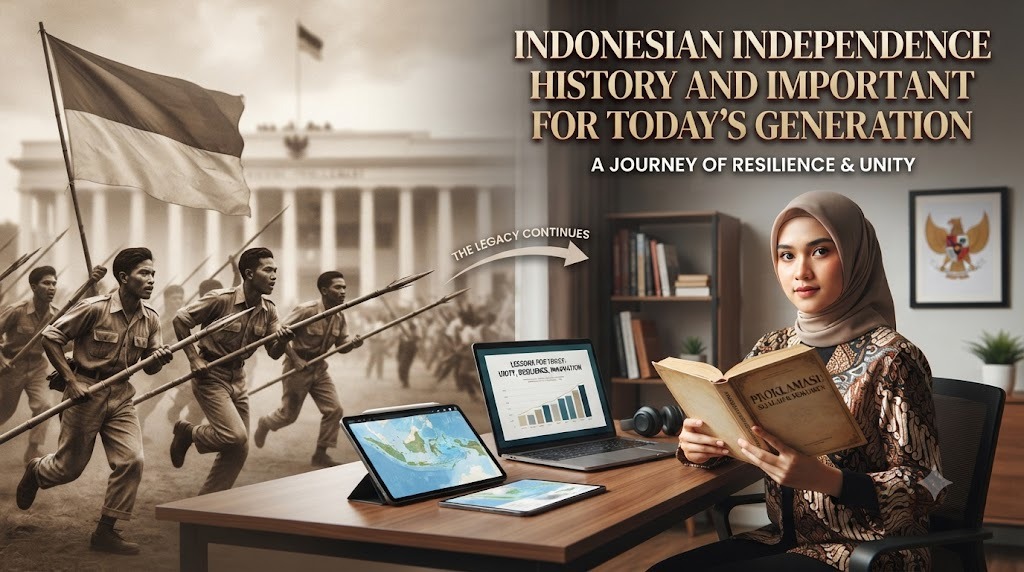
Indonesian Independence History is an important part of the nation's identity and a valuable source of inspiration for future generations. The journey toward independence was achieved through determination, unity, sacrifice, and strong national spirit. On August 17, 1945, Indonesia officially proclaimed its independence, marking the beginning of a new chapter in the country's history. Understanding this historical journey helps young people appreciate the freedom and opportunities they enjoy today.
Learning about independence is not only about remembering historical dates and events. It is also about understanding the values that enabled Indonesia to become an independent nation. These values remain relevant in modern life, especially when facing global competition, technological change, and social challenges. History provides lessons that can guide today's generation in building a better future.
THE BACKGROUND OF INDONESIA'S STRUGGLE FOR INDEPENDENCE
Before gaining independence, Indonesia experienced a long period of colonial rule that affected many aspects of society. Economic resources were controlled by foreign powers, educational opportunities were limited, and many people faced unequal treatment. These conditions encouraged Indonesians to develop a stronger sense of national awareness and unity. Over time, organizations and community leaders worked together to inspire people to pursue independence.
The independence movement developed through various approaches, including education, diplomacy, social organizations, journalism, and political activities. Many individuals contributed according to their abilities and circumstances. Although the journey was challenging, their commitment strengthened the national movement. Collective determination became one of the main foundations of Indonesia's independence.
THE PROCLAMATION OF INDEPENDENCE
The Proclamation of Independence on August 17, 1945, became one of the most important moments in Indonesian history. It officially declared Indonesia as an independent nation after years of struggle. The proclamation represented the hopes and aspirations of millions of Indonesians who wanted freedom and self determination. It also marked the beginning of building a sovereign country.
The proclamation was more than a formal declaration. It symbolized the courage, unity, and responsibility of the Indonesian people. After independence was proclaimed, many challenges remained, including maintaining national unity and establishing government institutions. The proclamation became the foundation for Indonesia's future development.
THE IMPORTANCE OF NATIONAL UNITY
One of the greatest lessons from Indonesian independence is the importance of national unity. Indonesia consists of many ethnic groups, languages, cultures, and religions. Despite these differences, the people worked together to achieve a shared goal. This demonstrates that cooperation can overcome significant challenges.
Today, unity remains essential for national progress. People should continue respecting diversity while working together for common interests. Schools, families, and communities all have roles in strengthening mutual understanding. Unity remains one of Indonesia's greatest strengths in facing modern challenges.
THE VALUE OF SACRIFICE
Many people contributed to Indonesia's independence through different forms of sacrifice. Some dedicated their knowledge, time, energy, and leadership, while others faced significant personal risks. Their willingness to prioritize the nation above personal interests demonstrates the importance of responsibility and commitment. These sacrifices created opportunities for future generations.
Modern society may not experience the same historical conditions, but the value of sacrifice remains relevant. Students can demonstrate it through dedication to learning, while professionals can contribute through honest work and responsible service. Communities can also help one another through volunteer activities and social programs. Meaningful contributions often require personal commitment and responsibility.
LEARNING FROM INDONESIAN HEROES
Indonesia's independence was made possible by the efforts of many national figures and ordinary citizens. Leaders such as Soekarno and Mohammad Hatta played important roles in the independence movement. Many other heroes also contributed through education, diplomacy, military service, journalism, and community leadership. Their achievements demonstrate different ways of serving the nation.
Young people can learn important qualities from these historical figures. Leadership, courage, discipline, perseverance, integrity, and cooperation remain valuable in education, careers, and community life. Rather than simply memorizing historical names, students should understand the principles these individuals demonstrated. Applying these values can make history more meaningful in everyday life.
THE ROLE OF EDUCATION IN NATION BUILDING
Education has always played an important role in national development. During the independence movement, education helped develop critical thinking, national awareness, and leadership. Today, education continues to prepare future generations to contribute to society. Knowledge allows people to solve problems and respond to changing circumstances.
Modern education also includes digital literacy, communication skills, creativity, and lifelong learning. Students should develop both academic knowledge and positive character. Education becomes more valuable when it encourages responsible action rather than only academic achievement. An educated generation can strengthen national development and innovation.
TECHNOLOGY AND NATIONAL PROGRESS
Technology has transformed the way people communicate, learn, and work. Today's generation can use digital technology to preserve history, promote Indonesian culture, and improve education. Digital archives, educational videos, virtual museums, and online discussions make historical knowledge more accessible. Technology can therefore support historical learning in creative ways.
However, technology should be used responsibly. Young people should verify information before sharing it and avoid spreading misinformation. They should also respect historical facts and cultural heritage when creating digital content. Responsible digital literacy helps preserve historical accuracy while encouraging innovation.
PRESERVING CULTURAL HERITAGE
Indonesia's cultural diversity is one of the nation's greatest strengths. Traditional arts, languages, music, dances, architecture, and local customs reflect the country's rich heritage. Preserving these traditions helps strengthen national identity. Cultural appreciation also supports tourism, education, and community pride.
Young people can participate by learning local traditions, supporting cultural events, documenting heritage, and creating educational content. Technology can help introduce Indonesian culture to wider audiences without changing its original meaning. Cultural preservation and innovation can work together to strengthen national identity.
APPLYING INDEPENDENCE VALUES IN DAILY LIFE
The values of independence remain relevant beyond historical commemorations. Individuals can demonstrate these principles through discipline, responsibility, honesty, cooperation, respect, and continuous learning. Students can contribute by studying seriously and participating in positive school activities. Professionals can contribute through ethical work and quality public service.
Communities can also strengthen independence values through volunteer activities, environmental programs, and social cooperation. Small daily actions can have meaningful long term effects when practiced consistently. Patriotism is demonstrated through responsible behavior and positive contributions, not only through ceremonies.
THE RESPONSIBILITY OF TODAY'S GENERATION
Today's generation has the responsibility to continue the progress achieved by previous generations. This does not require repeating historical struggles but responding to modern challenges with knowledge, innovation, and collaboration. Young people can contribute through entrepreneurship, education, research, technology, creative industries, and community service. Their ideas and actions can shape Indonesia's future.
Success requires continuous learning and adaptability. Global competition, environmental issues, and digital transformation demand new skills and creative thinking. At the same time, young people should continue respecting national values and cultural heritage. Balancing innovation with tradition can help create sustainable national progress.
BUILDING A BETTER FUTURE THROUGH HISTORY
History is not only a record of past events but also a guide for future decisions. By understanding Indonesia's independence journey, people can appreciate the importance of unity, resilience, responsibility, and cooperation. These principles remain valuable in education, careers, business, and community development. Historical awareness encourages thoughtful and responsible citizenship.
Every generation has its own challenges and opportunities. Although today's circumstances differ from those of the independence era, the underlying values remain meaningful. Learning from history helps individuals make better decisions and contribute positively to society. A nation that understands its history is better prepared for its future.
CONCLUSION
Indonesian Independence History provides valuable lessons that remain relevant for today's generation. The struggle for independence demonstrates the importance of unity, sacrifice, leadership, education, resilience, and responsibility. These values continue to guide national development and help individuals contribute positively to society. Understanding history also strengthens appreciation for the freedoms enjoyed today.
The younger generation can honor the legacy of independence by combining knowledge, innovation, integrity, collaboration, and respect for cultural heritage. Rather than viewing history only as a school subject, they can apply its lessons in everyday life. Through continuous learning and responsible action, today's generation can help build a stronger, more united, and more prosperous Indonesia.
About the Author
Gusti Ayu Tita P
Author — STEKOM University
An active author focused on academic issues, educational technology, and human resource development in the campus environment.