Indonesian Palace Architecture and the Philosophy Behind It
Gusti Ayu Tita P
4 September 2026
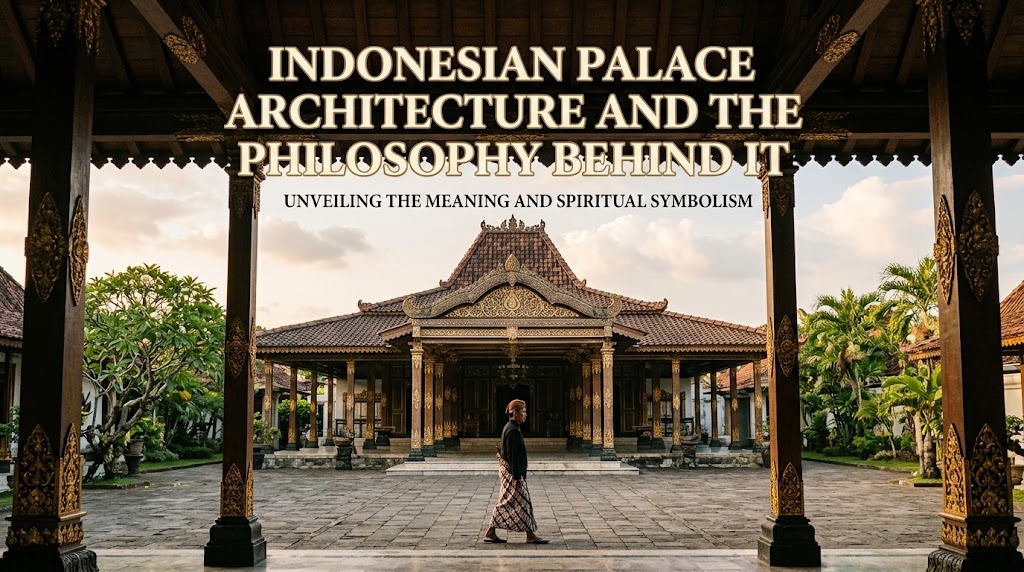
Indonesian palace architecture is more than a collection of beautiful buildings. It reflects the history, cultural values, social structure, and philosophy of the communities that created and preserved it. In Java, traditional palaces are especially interesting because their buildings, courtyards, gates, and ornaments often contain meanings connected to human life and the relationship between people, nature, and the divine.
Many historic palaces can still be found in Indonesia today, including the Keraton Yogyakarta and Keraton Surakarta. Although each palace has its own characteristics, traditional Javanese palace architecture generally follows concepts that emphasize balance, order, harmony, and respect. Understanding these architectural principles allows visitors to appreciate Indonesian cultural heritage beyond its visual beauty.
THE BASIC CHARACTERISTICS OF INDONESIAN PALACE ARCHITECTURE
Traditional Indonesian palaces usually consist of several important areas rather than a single main building. These areas can include large courtyards, traditional halls, gates, royal residences, gardens, and supporting buildings. The arrangement of these spaces was carefully planned to support different activities, from official ceremonies to daily life within the palace community.
Javanese palaces commonly feature traditional architectural forms such as the joglo, a building characterized by its distinctive roof structure and central supporting columns. The use of open spaces is also important because it allows air, light, and people to move naturally through the complex. The architecture therefore combines practical needs with cultural meaning, creating an environment that is both functional and symbolic.
THE PHILOSOPHY OF SPACE AND BALANCE
One of the most important ideas in Javanese palace architecture is balance. The arrangement of buildings and open spaces can represent the desired harmony between humans, nature, society, and the spiritual world. This philosophy can be seen in the relationship between different areas of the palace, where each space has a particular function and level of importance.
The palace is not simply designed for convenience. Movement through different spaces can also represent a journey through different stages of life and social responsibility. Public areas may be positioned closer to entrances, while more private or important spaces are located deeper inside the complex. This arrangement creates a gradual transition from the outside world toward areas considered more significant.
SYMBOLS AND MEANINGS IN PALACE DESIGN
Traditional palace architecture contains many symbols that communicate cultural ideas. Gates, courtyards, trees, ornaments, colors, and building shapes may carry particular meanings depending on the palace and local tradition. These elements help transform architecture into a form of cultural communication that can be understood across generations.
For example, the use of particular plants and landscape elements can reflect ideas about life, protection, prosperity, and harmony. Decorative patterns may also be connected with traditional beliefs and social values. However, the meaning of an architectural element should be understood within its specific historical and cultural context because interpretations can vary between regions and palaces.
THE ROLE OF TRADITIONAL BUILDINGS IN PALACE LIFE
Palace buildings were designed to support many aspects of royal and community life. Large halls could be used for ceremonies, meetings, cultural performances, and important gatherings. Residential areas provided spaces for members of the royal family and palace communities, while other structures supported administrative and traditional activities.
Architecture also helped organize social relationships within the palace. The location and function of certain spaces could reflect social status, responsibility, and ceremonial importance. At the same time, traditional buildings were adapted to Indonesia's tropical climate through features such as open spaces, ventilation, high roofs, and shaded areas. This demonstrates how traditional architecture could combine cultural principles with practical environmental solutions.
PRESERVING PALACE ARCHITECTURE AS CULTURAL HERITAGE
Today, Indonesian palaces remain important because they preserve more than historic structures. They also protect traditional knowledge, ceremonies, arts, architecture, and cultural practices. Palace complexes can become places where younger generations learn about traditional values and where cultural performances continue to be practiced.
Preserving these buildings requires careful attention to their historical character. Restoration should respect traditional materials, architectural forms, and cultural functions whenever possible. Cultural tourism can also support preservation when visitors are encouraged to understand and respect the heritage rather than simply viewing the palace as a tourist attraction.
CONCLUSION
Indonesian palace architecture represents a strong connection between design, philosophy, history, and cultural identity. In particular, Javanese palace architecture demonstrates how buildings can express ideas about harmony, balance, social order, nature, and spirituality. Every courtyard, hall, gate, and traditional ornament can contribute to the cultural story of a palace.
Learning about these architectural traditions helps people recognize that Indonesian palaces are not only historical landmarks. They are living cultural heritage that continues to influence traditions and community life. Protecting their architecture and the philosophy behind it is therefore an important part of preserving Indonesia's cultural identity for future generations.
About the Author
Gusti Ayu Tita P
Author — STEKOM University
An active author focused on academic issues, educational technology, and human resource development in the campus environment.