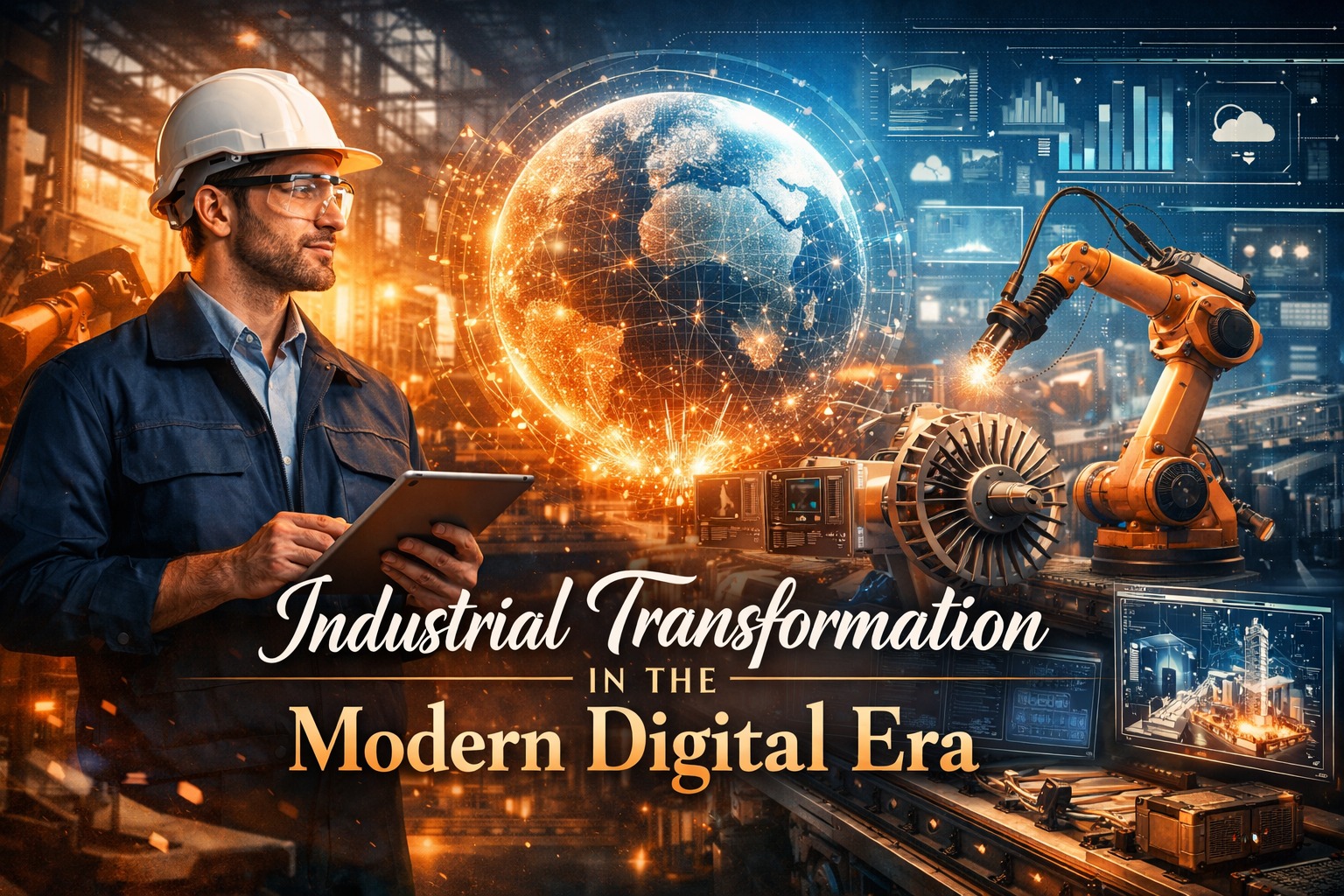
The rapid growth of digital technology has changed the way industries operate around the world. Companies are now adopting automation, artificial intelligence, and smart systems to improve productivity and remain competitive in the global market. Industrial transformation is not only about replacing manual work with machines, but also about creating a more efficient, connected, and data-driven working environment. In the modern digital era, businesses that fail to adapt to technological developments may struggle to survive amid increasing competition.
THE RISE OF DIGITAL TECHNOLOGY IN INDUSTRY
Digital technology has become the backbone of modern industrial development. Many factories and companies now use cloud computing, Internet of Things, and digital analytics to manage production systems more effectively. These technologies help businesses monitor operations in real time, reduce errors, and increase operational efficiency. As a result, production processes become faster and more accurate than traditional methods.
The implementation of digital systems also improves communication between departments and business partners. Companies can quickly analyze market trends and customer demands through digital data collection. This allows industries to make better strategic decisions and respond faster to market changes. The integration of technology has therefore become an essential factor in industrial growth and long-term sustainability.
AUTOMATION AND SMART MANUFACTURING
One of the biggest changes in industrial transformation is the use of automation technology. Modern factories increasingly rely on robotic systems and automated machines to perform repetitive tasks with high precision. Automation helps companies reduce production costs, minimize human error, and improve workplace safety. In addition, automated systems can operate continuously, leading to higher productivity levels.
Smart manufacturing also combines digital technologies with intelligent monitoring systems. Through sensors and connected devices, industries can track machine performance and predict maintenance needs before serious problems occur. This process, often called predictive maintenance, helps companies avoid production delays and reduce repair expenses. Smart manufacturing has become a key strategy for industries seeking efficiency and innovation.
THE IMPACT OF DIGITAL TRANSFORMATION ON WORKERS
Industrial transformation has significantly changed the role of workers in many sectors. Employees are now required to develop digital skills and adapt to new technologies in the workplace. Jobs that once relied heavily on physical labor are increasingly supported by software systems and automated equipment. This shift encourages workers to improve their technical knowledge and problem-solving abilities.
Although automation may reduce some traditional job opportunities, it also creates new careers in technology, engineering, and digital management. Companies need skilled professionals who can manage data systems, cybersecurity, and intelligent machines. Continuous learning and professional training have therefore become highly important in the digital era. Workers who are willing to adapt can benefit from greater career opportunities and improved productivity.
CHALLENGES IN INDUSTRIAL DIGITALIZATION
Despite its many advantages, digital transformation also brings several challenges for industries. One major issue is the high cost of implementing advanced technologies, especially for small and medium-sized businesses. Companies must invest in digital infrastructure, employee training, and cybersecurity systems to support technological changes. Without proper planning, digital transformation may create operational difficulties rather than improvements.
Cybersecurity threats are another serious concern in modern industries. As businesses become more connected through digital networks, the risk of data breaches and cyberattacks also increases. Companies must protect sensitive information and maintain secure digital systems to prevent financial losses and operational disruptions. Strong cybersecurity strategies are therefore essential for sustainable industrial development.
THE FUTURE OF INDUSTRIAL TRANSFORMATION
The future of industry will continue to be shaped by technological innovation and digital connectivity. Emerging technologies such as artificial intelligence, machine learning, and smart robotics are expected to transform production systems even further. Industries will increasingly focus on efficiency, sustainability, and environmentally friendly manufacturing practices. Digital transformation will also encourage global collaboration between businesses and technology providers.
In the coming years, industries that successfully combine technology with human creativity will have a stronger competitive advantage. Companies must remain flexible and open to innovation in order to survive in the rapidly evolving digital economy. Industrial transformation is not simply a temporary trend, but a long-term process that will continue influencing business strategies worldwide. The modern digital era has created new possibilities for industries to grow, innovate, and achieve greater success.
About the Author
Gusti Ayu Tita
Author — STEKOM University
An active author focused on academic issues, educational technology, and human resource development in the campus environment.