
Influential Figures Who Shaped Indonesian History
Gusti Ayu Tita P
5 Agustus 2026
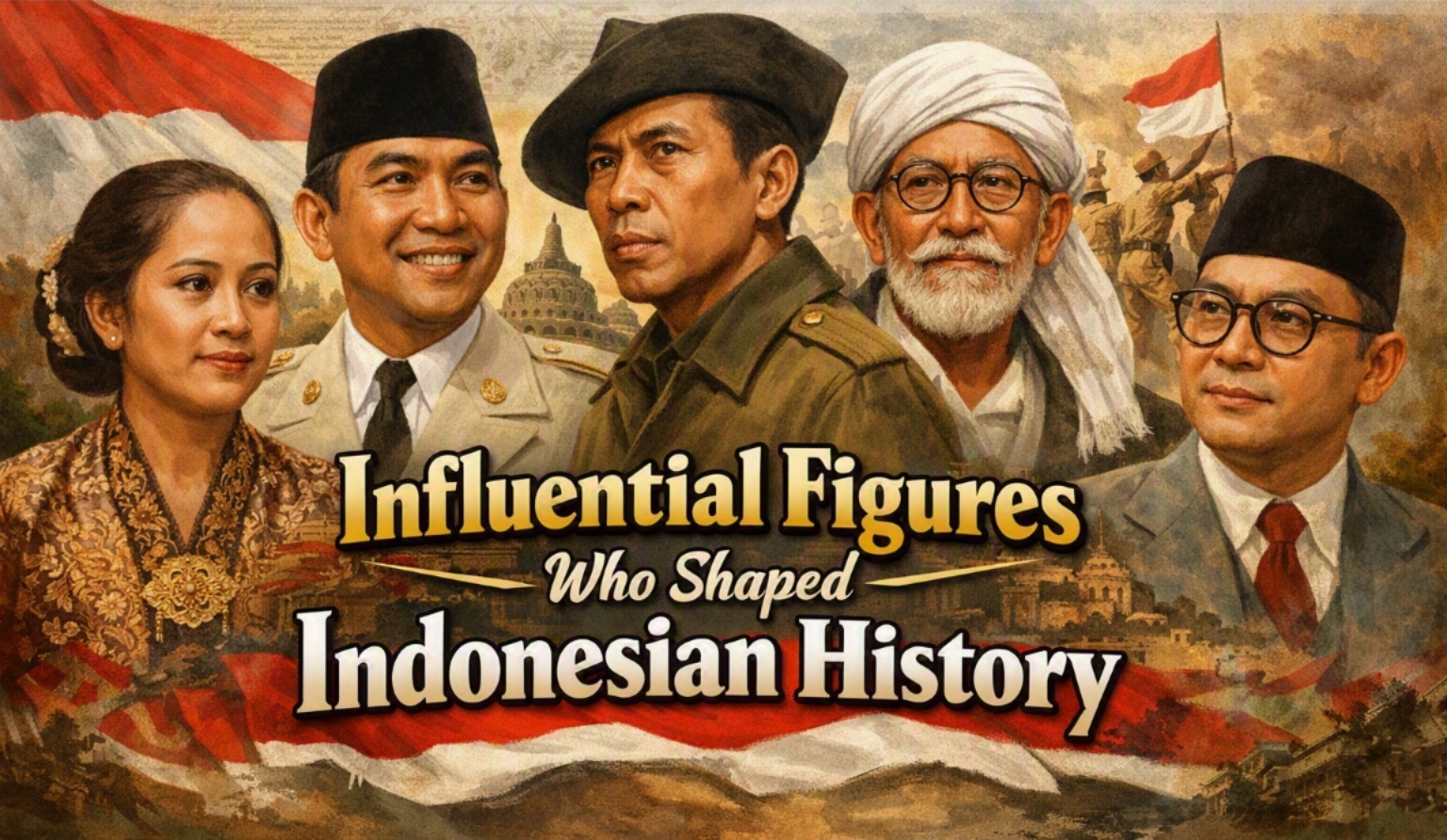
Indonesian history is filled with remarkable individuals who dedicated their lives to freedom, education, unity, and national development. Their ideas, courage, and leadership helped transform Indonesia from a collection of kingdoms and colonies into an independent nation. Many of these influential figures continue to inspire people through their achievements and values.
Understanding the lives of these historical figures helps us appreciate the long journey toward independence and national progress. Their contributions remain relevant because they teach important lessons about leadership, patriotism, and perseverance. Learning about them also strengthens awareness of Indonesia's rich cultural and historical heritage.
SOEKARNO AS THE FATHER OF INDONESIAN INDEPENDENCE
Soekarno was one of the most influential leaders in Indonesian history and became the first President of Indonesia. He played a major role in uniting people from different backgrounds to fight for independence. Together with other national leaders, he proclaimed Indonesian independence on August 17, 1945, marking the birth of the Republic of Indonesia. His powerful speeches inspired millions of Indonesians to believe in freedom and national unity.
Beyond leading the independence movement, Soekarno introduced the national philosophy known as Pancasila, which remains the ideological foundation of Indonesia today. He emphasized cooperation, social justice, and national identity as essential values for the country. His leadership continues to be studied by historians and political scholars around the world. His legacy remains one of the strongest pillars of modern Indonesia.
MOHAMMAD HATTA AND HIS CONTRIBUTION TO THE NATION
Mohammad Hatta, widely known as the first Vice President of Indonesia, was an outstanding statesman and economist. He worked closely with Soekarno in preparing Indonesia's independence and was one of the signatories of the Proclamation of Independence. His calm leadership complemented Soekarno's charismatic style, creating a balanced partnership during the nation's early years.
Besides politics, Hatta strongly promoted the development of cooperatives as a way to improve public welfare. Because of his dedication, he is often referred to as the Father of Indonesian Cooperatives. His vision emphasized economic equality, education, and responsible governance. His ideas continue to influence Indonesia's economic policies and cooperative movement today.
R.A. KARTINI AND THE ADVANCEMENT OF WOMEN'S EDUCATION
Raden Ajeng Kartini became one of Indonesia's most respected national heroes because of her commitment to women's rights and education. During a period when educational opportunities for women were very limited, she believed that education was the key to creating a better society. Through her letters, she expressed progressive ideas about equality, knowledge, and personal freedom.
Kartini's writings were later published and inspired educational reforms across Indonesia. Today, her legacy is celebrated every year on Kartini Day, encouraging women to pursue education and leadership opportunities. Her struggle continues to inspire generations to promote gender equality and lifelong learning. She remains a symbol of courage, intelligence, and social progress.
KI HAJAR DEWANTARA AND THE DEVELOPMENT OF NATIONAL EDUCATION
Ki Hajar Dewantara is recognized as the Father of Indonesian Education because of his lifelong dedication to improving learning opportunities for all Indonesians. He believed that education should develop character, creativity, and independence rather than simply transferring knowledge. To achieve this vision, he founded Taman Siswa, an educational institution that provided quality education based on national values.
His educational philosophy continues to influence Indonesia's education system today. One of his most famous principles, Tut Wuri Handayani, remains the official motto of Indonesia's Ministry of Education. His contributions demonstrate that education is one of the strongest foundations for national development. His ideas continue to guide teachers and students across the country.
GENERAL SUDIRMAN AND THE STRUGGLE TO DEFEND INDEPENDENCE
General Sudirman was one of Indonesia's greatest military leaders during the struggle to defend independence. Despite suffering from serious illness, he continued leading guerrilla warfare against colonial forces with extraordinary determination. His courage inspired soldiers and civilians alike during one of the most difficult periods in Indonesian history.
His leadership demonstrated the importance of discipline, loyalty, and patriotism. General Sudirman's commitment to protecting the nation's sovereignty earned him lasting respect throughout Indonesia. His military strategies and unwavering spirit remain valuable lessons in leadership and resilience. Today, he is remembered as one of the nation's greatest heroes.
CONCLUSION
The contributions of these influential figures continue to shape Indonesia's identity and national values. Their achievements in politics, education, military leadership, and social reform demonstrate that meaningful change requires dedication and perseverance. Each figure made unique contributions that strengthened the country's foundation and inspired future generations.
Studying Indonesian history helps people understand the sacrifices made to achieve independence and national progress. These leaders remind us that unity, education, and responsible leadership are essential for building a prosperous nation. Their stories remain relevant because they encourage citizens to contribute positively to society. Their legacies will continue to inspire Indonesia for generations to come.
About the Author
Gusti Ayu Tita P
Author — STEKOM University
An active author focused on academic issues, educational technology, and human resource development in the campus environment.















