
Information About Career Paths And Competency Development At The Post Office
Gusti Ayu Tita P
31 Agustus 2026
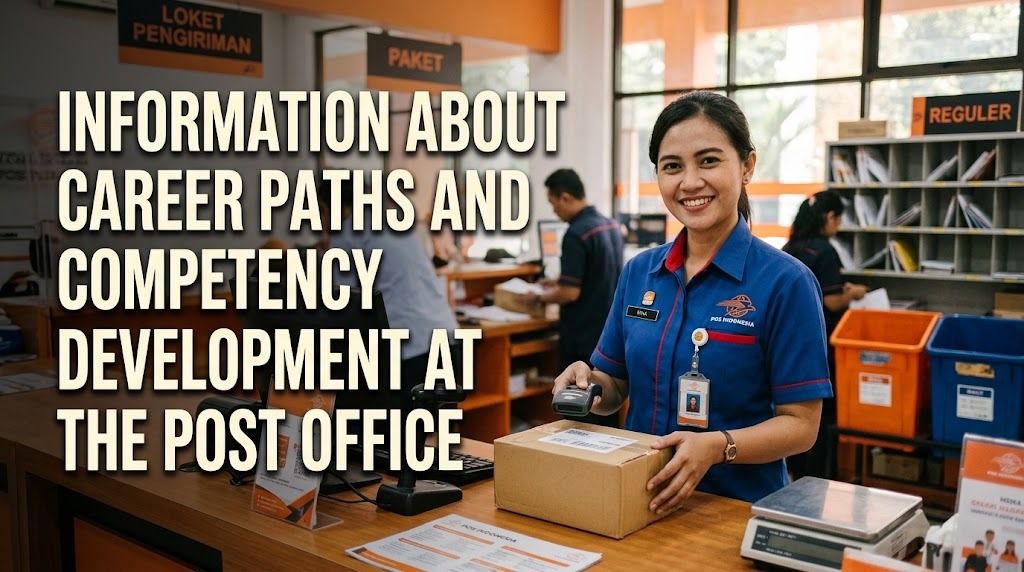
A career at the post office can offer different opportunities depending on an employee's skills, education, experience, and professional goals. Modern postal organizations are not limited to traditional mail delivery because they can also involve logistics, customer service, administration, technology, finance, and management. Understanding possible career paths helps employees plan their professional development. Continuous competency development can also improve their ability to take on greater responsibilities.
UNDERSTAND DIFFERENT POST OFFICE CAREER PATHS
Postal organizations can have many departments and positions with different responsibilities. Employees may work in customer service, operations, logistics, administration, finance, information technology, or management. The specific roles available depend on the organization and its recruitment needs.
Employees can explore career paths that match their interests and existing abilities. Someone with strong communication skills may prefer customer service, while someone interested in technology may pursue a digital or IT-related role. Understanding these options can help employees create a more focused Career Path.
BUILD COMPETENCIES FOR YOUR CURRENT ROLE
Employees should first develop competencies that directly support their current responsibilities. These may include technical knowledge, communication, problem-solving, digital literacy, accuracy, and teamwork. Strong performance in the current position can create a foundation for future professional growth.
Competency development does not always require formal education. Employees can improve through workplace training, mentoring, practical experience, and self-directed learning. Consistently improving job-related abilities can increase Work Competency and workplace effectiveness.
DEVELOP LEADERSHIP AND MANAGEMENT SKILLS
Employees who want to move into supervisory or management positions need additional skills. Leadership, decision-making, communication, delegation, and conflict management can become increasingly important as responsibilities grow. These skills help employees coordinate teams and make appropriate operational decisions.
Leadership development can begin before someone officially becomes a manager. Employees can practice taking responsibility, supporting colleagues, organizing tasks, and solving workplace problems. Building these abilities gradually can support future Leadership Development.
IMPROVE DIGITAL AND TECHNICAL COMPETENCIES
Digital transformation is changing how many postal organizations operate. Employees may increasingly interact with tracking systems, digital platforms, databases, automated processes, and data management tools. Developing digital competencies can therefore improve both current performance and future career opportunities.
Employees do not necessarily need to become technology specialists. However, learning how to use relevant digital tools effectively can make daily work more efficient. Those interested in technology-focused positions can pursue more advanced training to strengthen their Technical Competencies.
USE TRAINING AND PROFESSIONAL DEVELOPMENT
Training programs can help employees improve specific competencies and prepare for greater responsibilities. Depending on the organization, development activities may include workshops, technical training, mentoring, online courses, or internal learning programs. Employees should take advantage of opportunities that are relevant to their career goals.
Professional development works best when it is connected to a clear objective. Identify the skills you need to improve and look for learning opportunities that can strengthen them. A structured approach to Professional Development can make career planning more practical and measurable.
CREATE A LONG-TERM CAREER PLAN
Career development should be viewed as a continuous process rather than a one-time achievement. Employees can set short-term and long-term goals based on their desired position and required competencies. Reviewing these goals regularly can help them adjust their development plans as the organization and industry change.
Keep track of new skills, work achievements, training, and responsibilities gained over time. This information can be useful when applying for internal opportunities or taking on new roles. A clear Career Plan can provide direction and encourage continuous professional growth.
CONCLUSION
Career development at the post office can involve many different paths, from customer service and logistics to technology, administration, finance, and management. Employees should continuously strengthen competencies that support their current roles while preparing for future responsibilities. Developing digital, technical, communication, and leadership skills can create more opportunities for advancement. With consistent professional development and a clear career plan, employees can build a stronger and more sustainable career in the postal industry.
About the Author
Gusti Ayu Tita P
Author — STEKOM University
An active author focused on academic issues, educational technology, and human resource development in the campus environment.