
Innovation in Safety Practices Across Mining Operations
Gusti Ayu Tita P
20 Agustus 2026
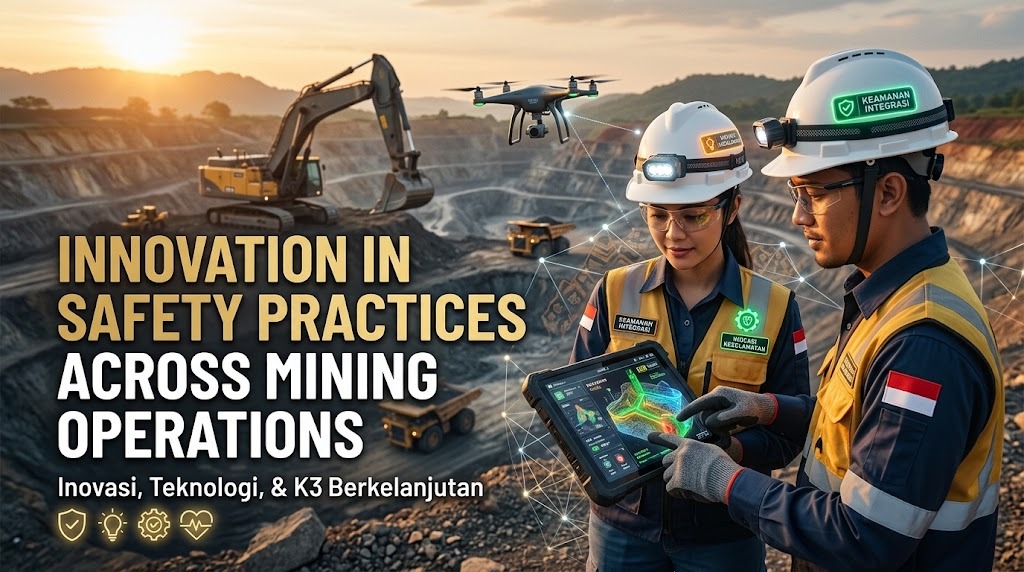
Safety is one of the most important priorities in the mining industry because workers operate heavy machinery and work in environments that can involve complex geological and operational conditions. As mining technology develops, companies are introducing new systems to identify hazards, monitor working conditions, and reduce exposure to workplace risks. These innovations are changing how safety is managed across modern mining operations.
Modern mining safety is no longer based only on protective equipment and manual procedures. Digital monitoring, automation, artificial intelligence, wearable devices, and remote operation can provide additional layers of protection. However, technology works most effectively when combined with proper training, clear procedures, strong leadership, and a workplace culture that consistently prioritizes safety.
DIGITAL MONITORING STRENGTHENS HAZARD DETECTION
Digital monitoring systems allow mining companies to collect information about equipment, workers, and environmental conditions. Sensors can monitor factors such as equipment performance, location, temperature, and other operational indicators. This information can help safety teams identify unusual conditions more quickly.
Real time monitoring can also improve the speed of safety responses. When a potential hazard is detected, relevant personnel can receive information and take appropriate action. Digital records can further help companies analyze incidents and identify patterns that may require changes to procedures or equipment.
AUTOMATION REDUCES EXPOSURE TO HIGH RISK AREAS
Automation can reduce the need for workers to perform certain tasks in potentially hazardous environments. Automated equipment and remotely operated machinery can be used for selected activities such as transportation or equipment control. This can reduce direct exposure to hazards when systems are properly designed and managed.
Remote operation can also allow workers to control equipment from safer locations. However, automation introduces its own technical and operational risks. Companies need reliable communication systems, trained operators, maintenance procedures, and contingency plans to ensure automated equipment operates safely.
ARTIFICIAL INTELLIGENCE SUPPORTS SAFETY ANALYSIS
Artificial intelligence can help mining companies analyze large amounts of safety and operational data. AI systems may identify patterns in equipment behavior, environmental conditions, or previous incidents. These insights can help safety teams identify areas that require additional attention.
Predictive analysis may also support equipment maintenance. When sensors detect unusual operating patterns, maintenance teams can investigate potential problems before equipment failure occurs. While AI can provide useful information, safety decisions should still involve qualified professionals who understand operational conditions and potential risks.
WEARABLE TECHNOLOGY IMPROVES WORKER AWARENESS
Wearable devices are another emerging tool in modern mining safety. Depending on the technology and application, devices can provide information about worker location, environmental conditions, or other safety indicators. Wearable technology can help improve communication and situational awareness in complex work environments.
Some systems can also support emergency response by helping teams determine where workers are located. However, wearable devices must be selected carefully and used according to appropriate privacy, technical, and operational requirements. Technology should support workers rather than create unnecessary distractions during critical tasks.
DRONES SUPPORT REMOTE INSPECTIONS
Drones can provide valuable support for inspecting areas that are difficult or potentially dangerous for workers to access directly. Drone technology can capture aerial images and other information that helps teams examine terrain, structures, stockpiles, and mining areas. This can reduce the need for workers to enter certain locations for routine visual inspections.
Drone data can also support surveying and environmental monitoring. Before using drones, companies need to consider flight regulations, weather conditions, site restrictions, and operator competency. When properly managed, drones can become an additional tool for improving inspection efficiency and safety.
PREDICTIVE MAINTENANCE HELPS PREVENT EQUIPMENT FAILURES
Mining equipment operates under demanding conditions, making maintenance an important part of workplace safety. Predictive maintenance uses sensor data and analytical tools to identify signs of potential equipment problems. This approach can help companies schedule inspections and repairs before a failure creates greater operational risks.
Predictive maintenance can also reduce unexpected downtime and improve equipment availability. However, it should complement rather than replace regular inspections and established maintenance procedures. Combining digital analysis with professional expertise provides a more comprehensive approach to equipment reliability.
TRAINING REMAINS ESSENTIAL FOR MINING SAFETY
Even the most advanced technology cannot replace properly trained workers. Employees need to understand workplace hazards, emergency procedures, equipment controls, and the correct use of safety systems. Safety training should also be updated when new technologies or operational methods are introduced.
Simulation and digital learning tools can make some training activities more interactive and practical. Workers can learn how to respond to specific situations before encountering them in real operations. Regular training, evaluation, and refresher programs help maintain safety awareness across the workforce.
BUILDING A STRONG SAFETY CULTURE
Technology is most effective when supported by a strong safety culture. Employees should feel responsible for identifying hazards and reporting unsafe conditions without fear of negative consequences. Management also needs to demonstrate that safety is a core operational priority rather than a secondary concern.
Companies can strengthen safety culture through regular communication, incident analysis, employee participation, and continuous improvement programs. Lessons learned from incidents and near misses can be used to improve procedures. A proactive approach helps organizations address potential hazards before they result in serious consequences.
THE FUTURE OF MINING SAFETY INNOVATION
The future of mining safety will likely involve greater integration between digital systems, automation, artificial intelligence, connected equipment, and human expertise. These technologies can provide additional information and reduce exposure to certain hazards. At the same time, companies must continue investing in training, equipment maintenance, emergency preparedness, and effective safety management systems.
Successful safety innovation is ultimately about using technology responsibly to protect people. By combining innovation, skilled workers, strong procedures, and continuous monitoring, mining companies can create safer operations while maintaining productivity. A balanced approach will be essential as the industry continues to adopt increasingly advanced technologies.
About the Author
Gusti Ayu Tita P
Author — STEKOM University
An active author focused on academic issues, educational technology, and human resource development in the campus environment.















