Inside the Electricity Generation Process of Hydropower
Gusti Ayu Tita P
31 Agustus 2026
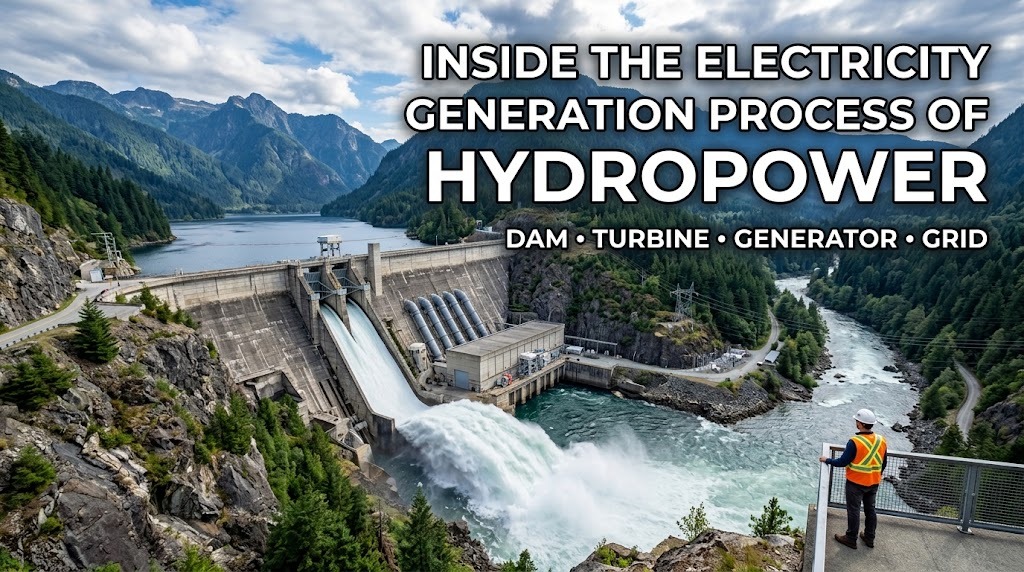
Hydropower electricity generation uses the natural energy of moving or falling water to produce electricity. Unlike fossil fuel power plants, hydropower plants do not need to burn coal, oil, or gas to create the energy used by their turbines. Instead, water is directed through a hydraulic system that converts its energy into mechanical motion and then electrical power.
The process may look simple from the outside, but a hydropower plant contains several interconnected systems. Water intake, penstocks, turbines, generators, transformers, and transmission equipment all work together to deliver electricity to consumers. Understanding this process makes it easier to see why hydropower remains an important renewable energy technology.
WATER PROVIDES THE PRIMARY ENERGY
The electricity generation process begins with water stored in a reservoir or flowing naturally through a river. In a reservoir-based plant, water is held at a higher elevation behind a dam. This elevation gives the water potential energy that can later be converted into electricity.
When water is released, gravity causes it to move toward a lower elevation. The greater the difference in elevation, known as hydraulic head, the greater the potential energy available for generation. Water flow is another important factor because more flowing water can provide more energy under suitable conditions. Both head and flow therefore influence the design and output of a hydropower plant.
WATER ENTERS THROUGH THE INTAKE
Before reaching the turbine, water passes through an intake structure. The intake controls how water enters the hydropower system and helps prevent large debris from reaching sensitive equipment.
Screens or trash racks can capture branches, leaves, and other objects carried by the river. Gates can also regulate the amount of water entering the system. Proper intake management helps protect turbines and maintain reliable operation. Controlled water entry is the first important step in converting river energy into electricity.
PENSTOCKS DIRECT WATER TOWARD THE TURBINE
After entering the system, water may travel through a large pipe called a penstock. The penstock carries water from the reservoir or intake toward the turbine under controlled conditions.
As water moves through the penstock, its potential energy is increasingly converted into kinetic energy. The pipe must be designed to withstand significant pressure and changing flow conditions. Its size, length, material, and elevation are considered carefully during plant design. Efficient water delivery helps minimize energy losses before the water reaches the turbine.
THE TURBINE CONVERTS WATER ENERGY INTO MOTION
The turbine is one of the most important components inside a hydropower plant. Fast-moving water strikes or flows through the turbine blades, causing the turbine runner to rotate. This converts the energy of the water into mechanical rotational energy.
Different turbines are designed for different combinations of water flow and hydraulic head. Francis, Kaplan, and Pelton turbines are among the main types used in hydropower applications. Choosing the appropriate turbine allows the plant to operate efficiently under its specific site conditions.
THE GENERATOR PRODUCES ELECTRICITY
The rotating turbine is connected to a generator through a shaft. When the turbine rotates, it turns the generator's rotor. The movement of the rotor within a magnetic field induces an electrical current in the generator.
This is where mechanical energy becomes electrical energy. The amount of electricity produced depends on factors such as water flow, hydraulic head, turbine efficiency, generator characteristics, and operating conditions. Modern generators are designed to reduce losses and maintain stable electrical output.
ELECTRICITY LEAVES THE GENERATOR
The electricity produced by the generator is typically generated at a voltage that is not yet suitable for long-distance transmission. It therefore passes through electrical equipment that prepares it for delivery to the power grid.
The plant's control systems continuously monitor voltage, current, frequency, power output, and equipment conditions. Operators can adjust plant operation when electricity demand or water conditions change. These controls help keep electricity production within safe operating limits.
TRANSFORMERS INCREASE VOLTAGE
After electricity is generated, it normally passes through a step-up transformer. The transformer increases the voltage so electricity can travel efficiently over long transmission distances.
Higher transmission voltage reduces electrical losses in the transmission lines for a given amount of power. Once electricity reaches the appropriate grid area, other transformers can reduce the voltage for distribution and eventual use by homes, businesses, and industries. Transformers therefore form an important connection between the power plant and the wider electricity network.
TRANSMISSION LINES DELIVER THE POWER
From the transformer, electricity enters the transmission system. High-voltage transmission lines carry electricity over long distances toward areas where it is needed.
Hydropower plants can be located far from major population centers because suitable water resources are often found in mountainous or remote areas. Transmission infrastructure allows electricity generated from rivers to reach cities and industrial regions. Reliable grid connections are therefore essential for maximizing the value of hydropower generation.
WATER RETURNS TO THE RIVER
After passing through the turbine, water is usually discharged through a tailrace back into the river downstream. The water itself is not consumed by the electricity generation process.
The same water can continue downstream and eventually become part of the natural water cycle. However, the quantity and timing of downstream flow can be affected by hydropower operations, especially in systems that divert or store water. Environmental flow management can help maintain important river functions.
CONTROL SYSTEMS MANAGE GENERATION
Modern hydropower plants use sophisticated control and automation systems. These systems can regulate gates, turbine settings, generator output, and other equipment according to operating conditions.
Automatic controls can help the plant respond to changes in electricity demand. Operators can also monitor equipment from centralized control rooms and receive warnings when abnormal conditions are detected. Automation improves precision, reliability, and operational safety.
MONITORING KEEPS EQUIPMENT SAFE
Hydropower equipment operates under significant mechanical and hydraulic forces. Sensors can continuously measure conditions such as temperature, vibration, pressure, water level, rotational speed, and electrical performance.
Monitoring allows operators to identify unusual behavior before it develops into a major equipment failure. Data can also support preventive and predictive maintenance. This can reduce unexpected downtime and extend the useful life of expensive plant components.
HOW POWER OUTPUT IS CONTROLLED?
Hydropower generation can often be adjusted by changing the amount of water passing through the turbine. Increasing water flow can increase power output when the plant has sufficient water and operating capacity. Reducing flow can lower generation and conserve water.
In reservoir-based systems, operators may manage water releases according to electricity demand, reservoir levels, weather conditions, and other water requirements. This flexibility is one reason hydropower can provide valuable support to modern electricity grids.
HYDROPOWER CAN SUPPORT GRID BALANCE
Electricity supply and demand must remain balanced continuously. Hydropower plants with suitable technical characteristics can change their output to respond to system requirements.
This flexibility becomes increasingly valuable as electricity systems add more solar and wind generation, whose output varies with weather conditions. Hydropower can sometimes increase generation when renewable output falls and reduce generation when other renewable sources are producing strongly. The exact capability depends on plant design and operating constraints.
PUMPED STORAGE WORKS DIFFERENTLY
Some hydropower facilities use pumped storage to store electrical energy. During periods when electricity is available, pumps move water from a lower reservoir to an upper reservoir. This stores energy in the elevated water.
When electricity demand rises, the stored water flows downward through turbines to generate electricity. Pumped storage therefore acts as a form of large-scale energy storage rather than simply generating power from natural river inflows. It can help electricity systems manage changes in demand and variable renewable generation.
EFFICIENCY MATTERS IN ELECTRICITY GENERATION
Not all of the energy contained in moving water becomes electricity. Some energy is lost through hydraulic resistance, turbine inefficiency, mechanical friction, generator losses, and electrical equipment.
Modern hydropower technology aims to reduce these losses. Efficient turbine designs, improved generators, digital controls, and regular maintenance can increase overall plant performance. Even relatively small improvements can be valuable for large facilities operating for many years.
ENVIRONMENTAL CONDITIONS AFFECT OPERATION
Hydropower generation depends on water availability, which means natural conditions strongly influence plant performance. Seasonal rainfall, droughts, floods, and changes in river flow can affect how much electricity can be produced.
Responsible operators must balance electricity production with environmental flows, downstream water needs, ecosystem protection, and other uses of water. Climate change can add further uncertainty by altering rainfall patterns and extreme weather. Long-term planning and improved forecasting can help operators manage these challenges.
FROM RIVER TO ELECTRICITY
The entire electricity generation process can be summarized as a chain of energy conversions. Water's potential or kinetic energy becomes mechanical energy in the turbine, and mechanical energy becomes electrical energy in the generator.
The electricity is then transformed to a suitable voltage and delivered through transmission and distribution networks. Meanwhile, the water continues downstream after passing through the turbine. This relatively straightforward chain relies on carefully engineered equipment working together continuously.
CONCLUSION
Hydropower electricity generation is a carefully coordinated process that transforms the energy of water into usable electrical power. Water enters through an intake, travels through a controlled waterway or penstock, rotates a turbine, and drives a generator. Transformers then adjust the electricity voltage before it enters the transmission network.
Modern hydropower plants add automation, monitoring, efficient equipment, predictive maintenance, and advanced control systems to improve reliability and performance. Reservoirs can provide flexibility, while pumped storage can provide energy-storage services. With responsible water management and appropriate environmental safeguards, hydropower can continue to provide reliable renewable electricity for modern power systems.
About the Author
Gusti Ayu Tita P
Author — STEKOM University
An active author focused on academic issues, educational technology, and human resource development in the campus environment.