
Integrated Transport for Efficient Mobility
Gusti Ayu Tita P
11 Agustus 2026
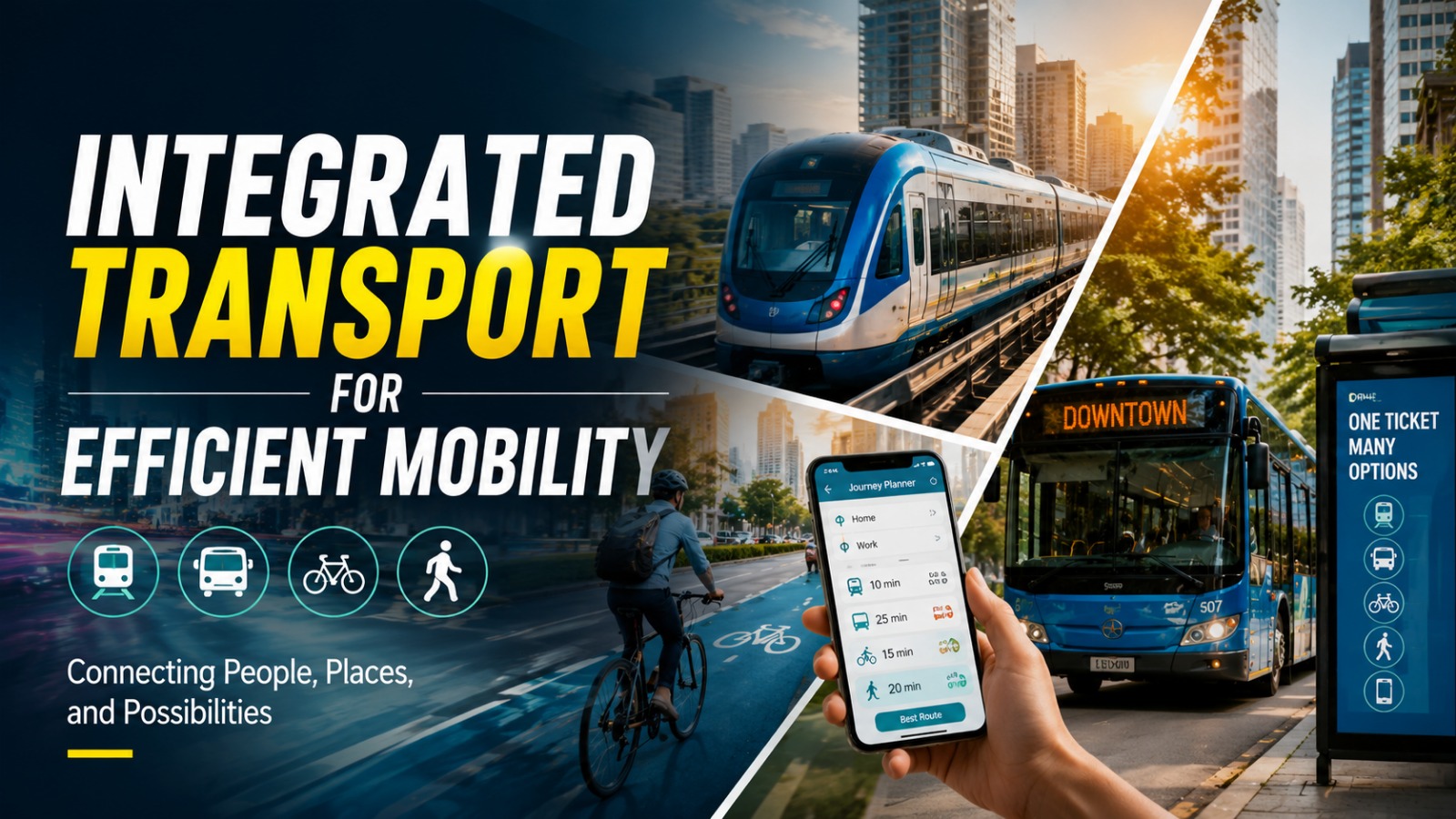
Modern cities need transportation systems that can move people and goods quickly, safely, affordably, and sustainably. As urban populations grow, relying on a single mode of transportation can create congestion, long travel times, and unnecessary pressure on roads. Integrated transport offers a different approach by connecting buses, trains, walking, cycling, taxis, and other mobility services into a coordinated network.
An effective integrated transport system allows passengers to choose different modes during one journey without unnecessary difficulties. Good connections between services can make public transportation more convenient and reduce dependence on private vehicles. When supported by appropriate infrastructure and technology, integrated mobility can improve the overall efficiency of urban transportation.
UNDERSTANDING INTEGRATED TRANSPORT
Integrated transport refers to a transportation system in which different modes and services are planned and connected to work together. A passenger may travel by bus from a residential area, transfer to a train, and then walk or use another local service to reach the final destination. Instead of treating each mode as a separate service, integration focuses on the entire journey.
Integration can involve physical infrastructure, schedules, ticketing, information systems, and transportation policies. Convenient transfers are especially important because passengers are more likely to use public transportation when changing between services is simple and reliable. The goal is to create a seamless journey rather than simply increasing the number of transportation options.
CONNECTING DIFFERENT TRANSPORT MODES
A key feature of integrated mobility is the connection between different transportation modes. Buses can provide access to railway stations, while trains can connect major urban centers with surrounding areas. Walking and cycling facilities can complete the first and last parts of a journey, allowing people to reach stations without relying on private cars.
Transport hubs can play an important role in making these connections practical. A well-designed hub can bring buses, trains, bicycles, taxis, and pedestrian routes together in one location. Shorter transfer distances, clear signs, safe pathways, and organized passenger areas can make changing modes faster and more comfortable.
IMPROVING PUBLIC TRANSPORT EFFICIENCY
Integrated transportation can make public transport more efficient by reducing duplication and improving connections between services. Instead of operating completely independent routes, transport authorities can coordinate schedules and network design based on passenger demand. This can help passengers reach their destinations with fewer unnecessary transfers or long waiting periods.
Integration can also improve the use of transportation infrastructure. High-capacity rail services can handle large passenger volumes along busy corridors, while buses can provide flexible connections to areas that are not directly served by rail. Combining the strengths of different modes can create a more balanced and efficient transportation network.
SMART TICKETING AND DIGITAL TECHNOLOGY
Technology has become an important part of modern integrated transport. Integrated ticketing systems can allow passengers to use one payment method across multiple transportation services. Depending on the system, passengers may use smart cards, mobile applications, QR codes, or contactless payment methods.
Digital platforms can also provide real-time information about vehicle locations, schedules, delays, and route changes. This information helps passengers make better travel decisions and reduces uncertainty during transfers. Real-time travel information is particularly useful when services experience disruptions because passengers can identify alternative routes more quickly.
REDUCING TRAFFIC CONGESTION
One major benefit of integrated transport is its potential to reduce private vehicle dependence. When public transportation is convenient and well connected, more people may choose buses and trains instead of driving alone. Fewer private vehicles on busy roads can help reduce congestion and improve the efficiency of urban travel.
However, integrated transport should not be viewed as a simple replacement for private vehicles. Some journeys require cars, motorcycles, taxis, or other modes because of distance, accessibility, or limited public transport coverage. A flexible and connected transport network gives people more choices and allows each mode to be used where it is most effective.
SUPPORTING WALKING AND CYCLING
Walking and cycling are essential parts of sustainable urban mobility. They produce no direct tailpipe emissions and can help reduce short car trips. When walking and cycling routes are safely connected to public transportation stations, passengers can use these modes for the first or last part of their journey.
Cities can encourage active transportation by providing safe sidewalks, protected bicycle lanes, secure bicycle parking, pedestrian crossings, and accessible station entrances. These facilities should be connected rather than developed as isolated projects. Good first and last mile connections can significantly improve the usefulness of public transport.
MAKING MOBILITY MORE INCLUSIVE
Integrated transport should serve different groups of passengers, including children, older adults, people with disabilities, and residents with limited transportation options. A transportation network is not truly efficient if some people cannot access it safely or affordably. Accessibility therefore needs to be considered when designing stations, vehicles, sidewalks, ticketing systems, and information services.
Accessible design can include step-free entrances, ramps, elevators, priority seating, audio announcements, visual information, and easy-to-understand signs. Affordable fares and convenient connections are also important because transportation costs can influence people's ability to access employment, education, healthcare, and other essential services.
SUPPORTING SUSTAINABLE MOBILITY
Integrated transport can contribute to environmental sustainability by encouraging efficient public transportation and reducing unnecessary private vehicle trips. Rail systems, buses, walking, and cycling can complement one another and provide alternatives to car-dependent travel. Electrification of buses and other vehicles can further reduce direct emissions from transportation.
Sustainability also depends on how infrastructure and services are planned. A poorly connected system may encourage people to use private vehicles even when public transport is available. Efficient network planning, clean vehicle technology, and reliable services can work together to create a transportation system with lower environmental impacts.
THE ROLE OF TRANSPORT HUBS
Transport hubs are important locations where multiple transportation services meet. Examples include railway stations connected with city buses, airports linked to rail and bus services, and major terminals serving several routes. These locations can make transfers easier and improve connections between different parts of a region.
A successful transport hub needs more than multiple vehicles operating in the same place. Passengers need clear wayfinding, comfortable waiting areas, safe pedestrian access, accessible facilities, and reliable service information. Good hub design can reduce transfer stress and make integrated transportation more attractive to daily travelers.
CHALLENGES OF TRANSPORT INTEGRATION
Although integrated transport offers many benefits, implementation can be challenging. Different transport operators may use separate schedules, ticketing systems, technologies, and management structures. Coordination between government agencies and operators is therefore essential for creating a truly connected system.
Infrastructure costs can also be significant, especially when cities need to upgrade stations, build transfer facilities, introduce digital systems, or improve pedestrian connections. Technology alone cannot solve these challenges. Successful integration requires long-term planning, appropriate investment, clear policies, reliable data, and continuous evaluation.
CONCLUSION
Integrated transport for efficient mobility provides a practical approach to the challenges faced by growing cities and regions. By connecting buses, trains, walking, cycling, taxis, and digital services, transportation systems can offer passengers more convenient and reliable journeys. Better integration can also support reduced congestion, improved accessibility, greater public transport use, and more sustainable mobility.
The success of integrated transportation depends on how well the different elements work together. Reliable services, convenient transfers, smart technology, accessible infrastructure, coordinated planning, and passenger-focused policies are all essential. When these elements are properly combined, integrated transport can create a mobility network that is more efficient, inclusive, and prepared for future transportation needs.
About the Author
Gusti Ayu Tita P
Author — STEKOM University
An active author focused on academic issues, educational technology, and human resource development in the campus environment.















