
Interesting Facts About Historic Tombs That Many People Do Not Know
Gusti Ayu Tita P
4 September 2026
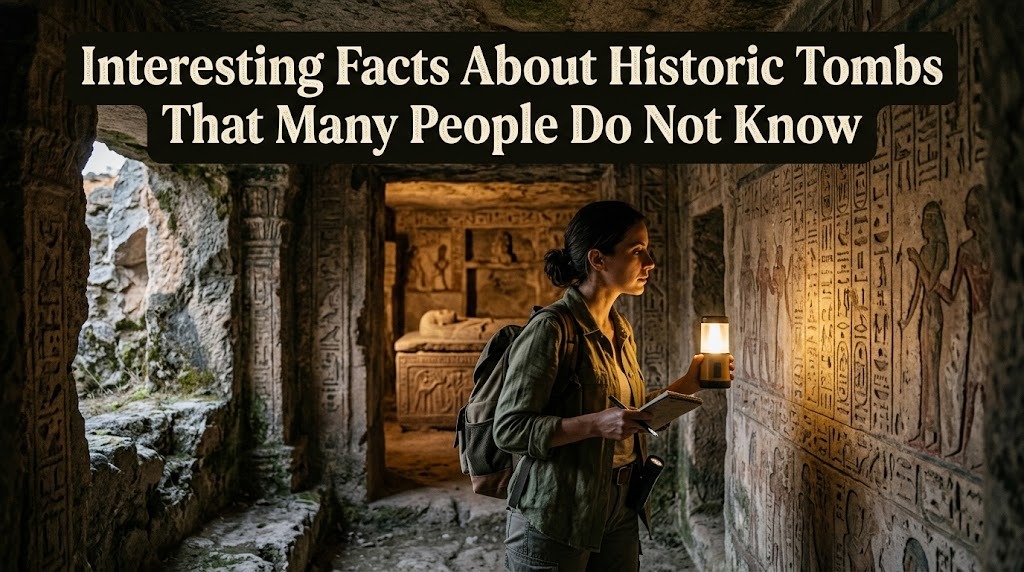
Historic tombs are often seen simply as places where people were buried. In reality, many of them contain valuable evidence about history, culture, architecture, religion, and social life. Their structures, inscriptions, locations, and surrounding landscapes can reveal information that may not appear in written records. Learning these interesting facts can make people more aware of why historic tombs deserve protection.
HISTORIC TOMBS CAN REVEAL MORE THAN NAMES
One interesting fact is that historic tombs can provide information beyond the identity of the person buried there. Inscriptions, symbols, decorations, and construction techniques may reveal the beliefs and values of the society that created the tomb. Researchers can compare these features with other historical evidence to understand a particular period.
The location of a tomb can also be meaningful. Its position within a settlement, religious complex, cemetery, or landscape may provide clues about social organization and cultural practices. This makes burial sites useful resources for historical and archaeological research.
TOMB ARCHITECTURE REFLECTS CULTURAL TRADITIONS
Historic tombs can have very different architectural styles depending on their time and location. Some feature elaborate structures, while others are simple and modest. Building materials, shapes, carvings, and decorative patterns can reflect the artistic and technological abilities of past communities.
Architecture may also communicate ideas about social status and religious beliefs. A large or highly decorated tomb may indicate the importance of the individual or community associated with it. Studying these features allows researchers to understand how architecture and culture influenced one another.
INSCRIPTIONS CAN PROVIDE VALUABLE HISTORICAL EVIDENCE
Many historic tombs contain inscriptions that record names, dates, titles, prayers, symbols, or other information. These inscriptions can become important historical sources when other documents from the same period are limited. Researchers may study writing styles, languages, and symbols to understand the society in which the tomb was created.
However, inscriptions must be interpreted carefully. Their meaning can depend on language, cultural context, and historical circumstances. Comparing inscriptions with other evidence helps researchers develop more reliable interpretations of the past and its communities.
BURIAL PRACTICES SHOW HOW SOCIETIES VIEWED DEATH
Another important fact is that burial practices can reveal how different societies understood death and remembrance. The arrangement of graves, objects associated with burials, tomb designs, and ceremonial traditions may reflect religious or cultural beliefs. These practices can vary significantly between regions and historical periods.
Changes in burial customs can also indicate broader social changes. New religious influences, migration, political developments, or cultural interactions may affect how communities bury and remember their dead. For this reason, burial sites can provide valuable evidence about cultural change.
MODERN TECHNOLOGY HELPS STUDY HISTORIC TOMBS
Modern technology has created new ways to research and document historic tombs. Digital photography, geographic mapping, 3D scanning, and remote sensing can help researchers record structures and surrounding landscapes without unnecessary physical intervention. These methods can be especially useful for fragile or difficult-to-access heritage sites.
Digital records can also support long-term preservation. If part of a structure is damaged, detailed documentation may help specialists understand its original condition. Virtual models and digital archives can further support history education by allowing students and the public to explore heritage sites without physically visiting them.
HISTORIC TOMBS NEED RESPONSIBLE PROTECTION
Despite their historical value, historic tombs can face many threats. Weathering, moisture, pollution, vegetation, vandalism, uncontrolled tourism, and development can gradually damage these sites. Even small amounts of repeated physical contact can affect fragile surfaces and decorations over time.
Responsible preservation requires cooperation between heritage professionals, governments, local communities, researchers, and visitors. Following site regulations, avoiding physical damage, documenting changes, and respecting local traditions can help protect these places. Heritage conservation ensures that the information contained in historic tombs remains available to future generations.
CONCLUSION
Historic tombs contain much more information than many people realize. Their architecture, inscriptions, burial practices, location, and surrounding environment can reveal important details about past societies and cultural traditions. Modern technology has also made it possible to study and document these sites more carefully. By increasing public awareness and practicing responsible preservation, historic tombs can continue to serve as valuable sources of knowledge for generations.
About the Author
Gusti Ayu Tita P
Author — STEKOM University
An active author focused on academic issues, educational technology, and human resource development in the campus environment.