Interesting Facts About Indonesian Royal Palaces You Should Know
Gusti Ayu Tita P
4 September 2026
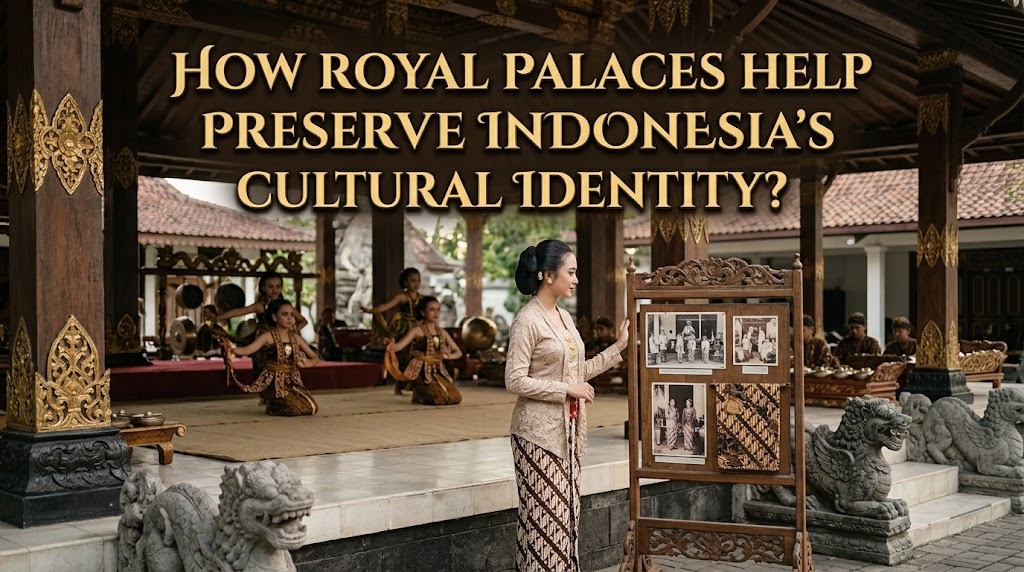
Indonesia is home to many royal palaces that preserve stories, traditions, architecture, and cultural values from different periods of history. These palaces are not simply old buildings. They are living cultural spaces where traditional ceremonies, artistic practices, historical objects, and community traditions can still be found today.
From Java to other parts of the Indonesian archipelago, royal palaces have played an important role in shaping local identity. Learning about them can provide a deeper understanding of Indonesia’s rich cultural diversity and the historical influences that continue to shape society.
ROYAL PALACES ARE LIVING CULTURAL HERITAGE
Indonesian royal palaces are often known as keraton or istana, depending on their historical and cultural context. Many of these places were once centers of political power, administration, religion, and culture. Today, some continue to serve important ceremonial and cultural functions even though their political roles have changed. This makes them different from ordinary historical buildings.
A palace can contain valuable collections such as traditional weapons, royal clothing, manuscripts, musical instruments, artworks, and historical objects. Some palaces also maintain traditional forms of etiquette and cultural knowledge through generations. Visitors can therefore experience aspects of history that are still connected to contemporary life.
JAVANESE PALACES HAVE DISTINCTIVE ARCHITECTURE
One of the most interesting facts about Indonesian royal palaces is their distinctive architectural design. Traditional Javanese palaces often contain important spaces such as pendopo, courtyards, halls, gates, and carefully arranged buildings. The layout is not always based only on practical needs but can also reflect cultural ideas about order, relationships, and harmony.
The pendopo, an open pavilion supported by columns, is particularly significant in Javanese architecture. It can be used for meetings, ceremonies, artistic performances, and other cultural activities. The arrangement of palace buildings may also communicate social and symbolic relationships. As a result, palace architecture provides valuable insight into how Javanese communities understood space and social life.
TRADITIONAL ARTS CONTINUE INSIDE PALACES
Royal palaces have historically been important centers for the development and preservation of Indonesian arts. Traditional performances such as gamelan music, classical dance, wayang, and traditional ceremonies have been associated with several Javanese courts. Palace communities have helped pass artistic knowledge from older generations to younger performers.
These traditions are valuable because they contain more than entertainment. They can communicate history, moral values, philosophy, and cultural identity. Some palace traditions are performed during specific celebrations or ceremonies, while others are presented as cultural attractions. Through continued practice, these arts remain connected to their historical roots while adapting to modern circumstances.
PALACE CEREMONIES HAVE DEEP CULTURAL MEANINGS
Traditional ceremonies are another important part of Indonesian palace culture. Various royal courts have ceremonies connected with religious occasions, royal anniversaries, agricultural traditions, historical events, and community life. The exact traditions differ from one palace to another because each court has its own history and cultural environment.
Some ceremonies involve processions, traditional clothing, music, offerings, or the participation of palace communities. These elements can carry symbolic meanings that have developed over many generations. Understanding these ceremonies requires looking beyond their visual appearance and considering the values behind them. They demonstrate how tradition and community participation can help maintain cultural continuity.
PALACES PRESERVE HISTORICAL STORIES AND OBJECTS
Indonesian royal palaces can also function as important sources of historical information. Their collections may include objects connected to former rulers, court life, diplomacy, warfare, religion, and traditional craftsmanship. Manuscripts and historical records can provide additional information about the societies that developed around these courts.
However, palace history is not limited to objects displayed in museums. Stories passed down through families, palace servants, artists, and local communities can also contribute to cultural memory. This combination of physical heritage and living traditions makes palace culture especially valuable. It allows people to learn about the past while seeing how historical practices continue to influence the present.
ROYAL PALACES ATTRACT CULTURAL TOURISM
Royal palaces have become important destinations for people interested in cultural tourism. Visitors can explore traditional architecture, learn about royal history, observe cultural performances, and discover local customs. Well-managed tourism can help introduce Indonesian heritage to both domestic and international audiences.
At the same time, cultural tourism needs to respect the traditions and rules of each palace. Not every area or ceremony is necessarily open to the public, and visitors should follow local guidelines. Responsible tourism can support heritage preservation and local communities without reducing cultural traditions to simple tourist attractions.
CONCLUSION
Indonesian royal palaces offer many fascinating facts about the country's history and cultural diversity. They preserve architecture, traditional arts, ceremonies, historical collections, and community knowledge that have developed over generations. Their importance comes not only from their age but also from the living traditions that continue to surround them.
Exploring Indonesian royal palaces can therefore be an educational and meaningful cultural experience. By understanding and respecting these heritage sites, younger generations and visitors can help ensure that Indonesia's valuable cultural traditions continue to be appreciated in the future.
About the Author
Gusti Ayu Tita P
Author — STEKOM University
An active author focused on academic issues, educational technology, and human resource development in the campus environment.