
Interesting Independence Festival Traditions Worth Preserving
Gusti Ayu Tita P
5 Agustus 2026
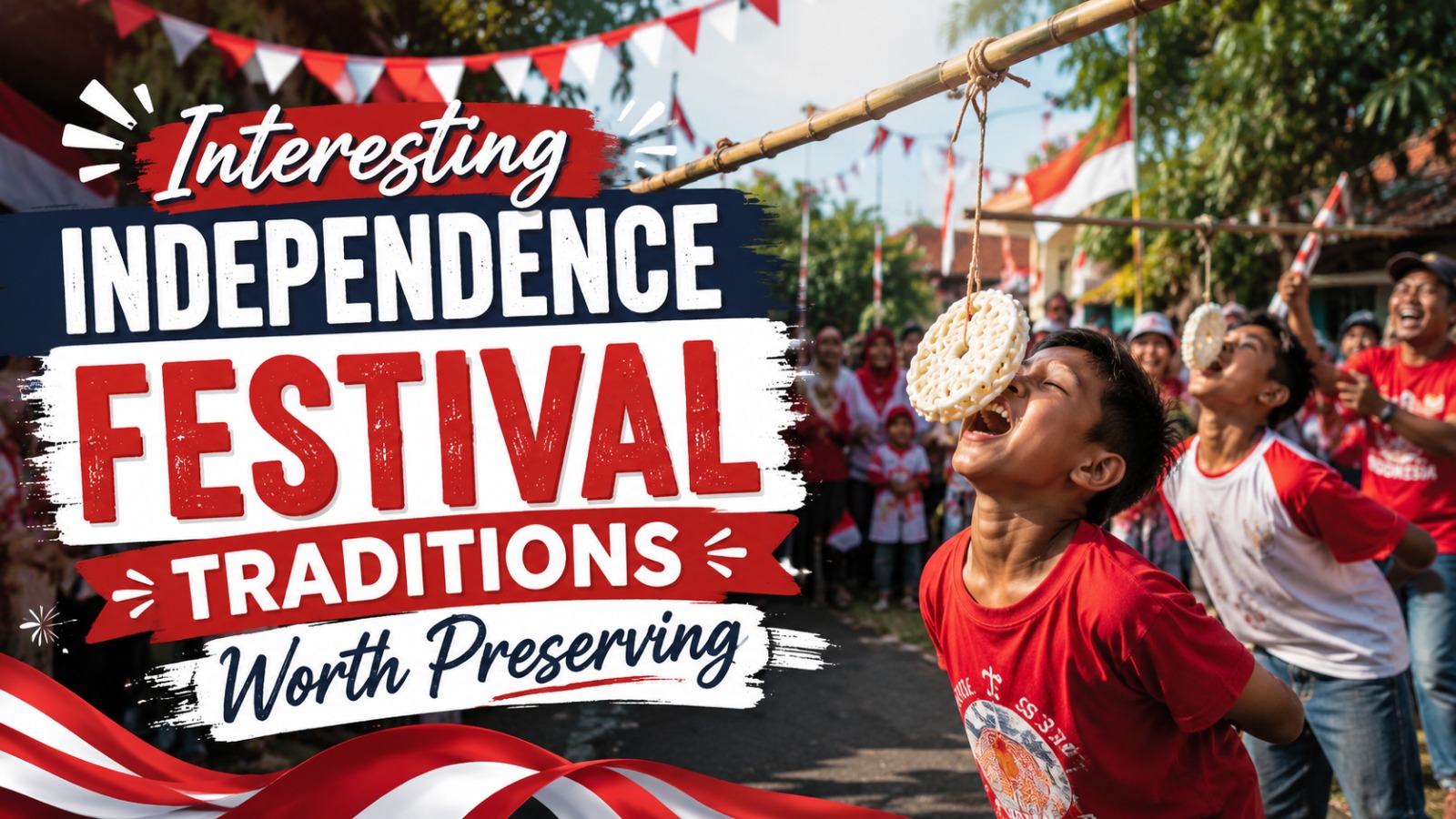
Indonesia’s Independence Day is celebrated every year on August 17. Beyond flag ceremonies and decorations, communities across the country celebrate with unique traditions that bring people together. These activities are often simple, joyful, and closely connected to local culture. They also provide opportunities for younger generations to learn about cooperation, respect, and national identity. Preserving these traditions is important because they are part of Indonesia’s cultural heritage and collective memories.
THE MEANING BEHIND INDONESIAN INDEPENDENCE FESTIVAL TRADITIONS
Independence Festival traditions are more than entertainment because they reflect the spirit of Indonesia’s independence. Many activities encourage people to work together regardless of age, background, or social status. This reflects the importance of gotong royong, or mutual cooperation, in Indonesian society. Through these traditions, communities can strengthen relationships while celebrating the country’s independence.
Traditional celebrations also help younger people understand that independence is not only a historical event. It can be expressed through unity, responsibility, and appreciation for national heritage. When children and teenagers participate in local celebrations, they can learn cultural values in a fun and memorable way.
PANJAT PINANG AS A SYMBOL OF TEAMWORK
Panjat pinang is one of the most recognizable Independence Day traditions in Indonesia. Participants work together to climb a tall, usually greased tree or pole to reach prizes placed at the top. The challenge requires teamwork because one person often cannot reach the prizes alone. Participants must cooperate, communicate, and support each other throughout the competition.
Although the activity is competitive, its deeper meaning is about togetherness and persistence. People often laugh and celebrate regardless of who wins. The tradition teaches that difficult goals can become easier when people work together. For safety, organizers should use suitable equipment, a secure area, and appropriate supervision.
FUN COMMUNITY GAMES FOR ALL AGES
Independence celebrations often include simple games such as sack races, cracker-eating contests, marble-and-spoon races, and tug-of-war. These games are popular because they are affordable and can involve children, teenagers, adults, and older residents. Their simplicity makes them easy to organize in neighborhoods, schools, and community spaces. More importantly, the games create opportunities for people to interact and build stronger social connections.
Community games also bring a cheerful atmosphere to Independence Day celebrations. Participants learn about sportsmanship, patience, cooperation, and fair competition. Organizers can adapt the rules according to participants’ ages and abilities. This makes the activities more inclusive while keeping the traditional spirit alive.
DECORATING NEIGHBORHOODS WITH RED AND WHITE
Red and white decorations are another important part of Indonesia’s Independence Day celebration. Many residents decorate houses, streets, gates, and public spaces with the national colors. Flags, banners, ribbons, and other decorations can make neighborhoods look festive and show collective pride. These activities also encourage residents to work together before the celebration begins.
Decorating the neighborhood can become a meaningful community activity rather than simply a visual tradition. Residents can clean shared spaces, arrange decorations, and prepare gathering areas together. Young people can participate by creating creative but respectful decorations. In this way, the tradition combines national pride with community cooperation.
TRADITIONAL PERFORMANCES AND LOCAL CULTURE
Some communities celebrate Independence Day by presenting traditional dances, music, theatrical performances, or other local cultural activities. These performances allow residents to introduce local heritage to younger generations. They can also provide a platform for children and teenagers to develop confidence and creativity. When traditional arts become part of Independence Day celebrations, cultural preservation becomes more enjoyable and accessible.
Each region of Indonesia has its own cultural characteristics, so local performances can make celebrations more diverse. Communities can feature traditional arts from their own area while also introducing other Indonesian cultures. This approach encourages appreciation for Indonesia’s cultural diversity. It also reminds people that national unity can exist alongside different local identities.
COMMUNITY CLEANUP AS A FORM OF NATIONAL PRIDE
A community cleanup is a simple activity that can strengthen the meaning of Independence Day. Residents can work together to clean streets, public spaces, drainage areas, or neighborhood facilities before the celebration. A clean environment makes public activities more comfortable and safer. It also demonstrates that celebrating independence can involve practical contributions to the community.
This tradition is especially valuable because it connects national celebration with everyday responsibility. Children and young people can learn that caring for their surroundings is part of being a responsible citizen. Adults can encourage participation by dividing tasks fairly and setting a good example. Over time, the activity can become a positive habit beyond Independence Day.
WHY THESE TRADITIONS ARE WORTH PRESERVING
Independence Festival traditions deserve to be preserved because they connect history, culture, and community life. They provide meaningful ways for people to celebrate independence beyond formal ceremonies. Traditional games encourage interaction, while cultural performances help protect local heritage. Community activities also strengthen relationships between neighbors and different generations.
Preservation does not mean that every tradition must remain exactly the same. Communities can modernize certain activities while maintaining their cultural values and historical meaning. Safety, inclusivity, environmental awareness, and accessibility should be considered when organizing celebrations. By adapting traditions responsibly, Indonesia’s Independence Day celebrations can remain relevant and enjoyable for future generations.
CONCLUSION
Interesting Independence Festival traditions are valuable because they bring people together while preserving Indonesia’s cultural identity. Activities such as panjat pinang, traditional games, neighborhood decorations, cultural performances, and community cleanups contain lessons about teamwork and responsibility. They also create shared memories that can strengthen relationships between generations. By continuing these traditions in safe and inclusive ways, communities can celebrate independence while protecting valuable cultural heritage. Most importantly, the spirit of unity and mutual cooperation should remain at the heart of every Independence Day celebration.
About the Author
Gusti Ayu Tita P
Author — STEKOM University
An active author focused on academic issues, educational technology, and human resource development in the campus environment.















