Is a College Degree Enough to Build a Successful Career?
Gusti Ayu Tita P
3 September 2026
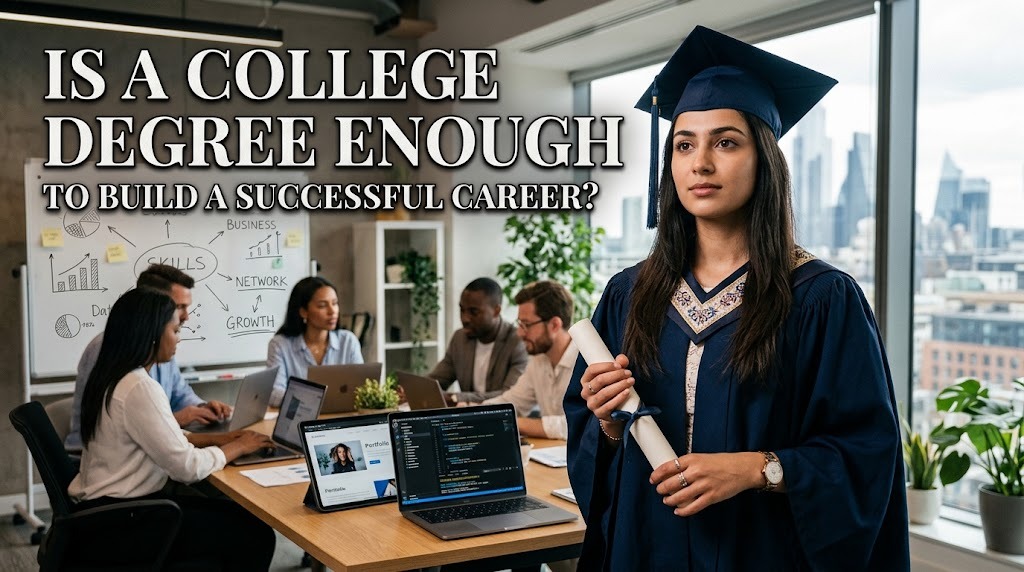
A college degree can provide valuable knowledge and open doors to many career opportunities. However, a degree alone is not always enough to build a successful career. Modern employers often consider practical experience, technical abilities, communication, problem solving, and personal qualities when evaluating candidates. The importance of each qualification can also depend on the industry and type of profession. Therefore, students should view a college degree as an important foundation rather than the only requirement for long term career success.
THE ROLE OF A COLLEGE DEGREE IN CAREER DEVELOPMENT
A college degree can provide students with academic knowledge and specialized expertise related to their chosen field. Some professions also require specific educational qualifications before someone can enter the profession. University education can develop research abilities, analytical thinking, writing skills, and subject knowledge. A degree may also help candidates meet the basic education requirements listed in many job vacancies.
However, having a degree does not automatically guarantee employment or career advancement. Employers may want evidence that candidates can apply what they learned in practical situations. Education provides a foundation, while professional development helps students turn knowledge into useful abilities. Combining academic qualifications with other forms of preparation can therefore create stronger career opportunities.
PRACTICAL EXPERIENCE IS EQUALLY IMPORTANT
Employers often value candidates who understand how to apply knowledge in real situations. Internships, part time jobs, freelance projects, volunteering, and organizational activities can give students practical experience before they graduate. These activities can teach students about deadlines, teamwork, communication, responsibility, and workplace expectations. Practical experience also allows students to discover which types of work suit their interests and abilities.
Experience can make a resume more convincing because students can provide specific examples of what they have done. During an interview, explaining how they solved a problem or completed a project can demonstrate their abilities more effectively than simply listing qualifications. Relevant experience shows that students can connect theory with practice. This can be particularly valuable when competing with other candidates who have similar educational backgrounds.
DEVELOPING TECHNICAL AND DIGITAL SKILLS
The skills required in the workplace continue to change as technology develops. Students should therefore develop technical and digital skills that are relevant to their chosen careers. Depending on the field, these may include data analysis, digital marketing, design software, programming, financial tools, or other specialized technologies. Basic digital abilities are also useful because many workplaces depend on online communication and digital systems.
Students should not stop learning technology after receiving a degree. New software and tools can appear quickly, and employers may expect workers to adapt to these changes. Continuous skill development allows graduates to remain competitive and better prepared for changing workplace requirements. Learning through courses, practical projects, workshops, and independent practice can complement formal education.
COMMUNICATION AND INTERPERSONAL SKILLS MATTER
Professional success often depends on how effectively people communicate and cooperate with others. Communication skills help employees explain ideas, listen to feedback, write clearly, and interact professionally. Teamwork is also important because many workplace projects require people from different roles to cooperate. Students can develop these abilities through presentations, group projects, organizations, internships, and volunteer activities.
Interpersonal skills can also influence relationships with supervisors, coworkers, customers, and business partners. Being respectful, reliable, and willing to listen can create a more positive professional environment. Strong interpersonal skills can complement technical expertise and make employees more effective in their roles. A graduate who combines knowledge with good communication may have an advantage in collaborative workplaces.
PROBLEM SOLVING AND CRITICAL THINKING
A successful career often involves dealing with unexpected problems and making decisions. Students should develop problem solving and critical thinking skills so they can evaluate situations carefully before taking action. These abilities can be practiced through case studies, research projects, business simulations, and real world activities. Students should learn how to identify problems, evaluate information, compare solutions, and consider possible consequences.
Critical thinking is especially important in workplaces where employees handle complex information. It helps people avoid decisions based only on assumptions or incomplete evidence. Employees who can think independently and provide practical solutions can contribute more effectively to their organizations. These skills are useful across many industries, regardless of a person's academic major.
BUILDING A PROFESSIONAL NETWORK
A college degree can introduce students to a valuable professional community. Networking with lecturers, alumni, classmates, industry professionals, and mentors can provide information about careers and professional opportunities. Students can build relationships by attending seminars, career fairs, workshops, internships, and professional events. Networking should focus on genuine communication and learning rather than simply asking people for job opportunities.
A strong professional network can expose students to different career paths and industry perspectives. People in their network may also share advice about skills, workplace expectations, or professional development. Meaningful professional relationships can support long term career growth. Students who begin networking early may have more opportunities to learn and explore their future career options.
DEVELOPING A STRONG PROFESSIONAL ATTITUDE
Professional success is influenced not only by what a person knows but also by how they behave. Students should develop qualities such as discipline, responsibility, honesty, reliability, adaptability, and willingness to learn. These qualities can be practiced through everyday academic responsibilities and extracurricular activities. Meeting deadlines and keeping commitments are simple habits that can prepare students for professional expectations.
A professional attitude also includes the ability to accept constructive feedback. Employees who are willing to learn from mistakes can improve their performance over time. A positive attitude combined with accountability can help build trust in the workplace. These personal qualities can become important advantages when technical qualifications are similar among candidates.
CONTINUOUS LEARNING IS ESSENTIAL
Career development does not stop when someone receives a college degree. Industries can change because of new technology, economic conditions, regulations, and customer expectations. Graduates should therefore develop a habit of continuous learning throughout their careers. They can learn through professional courses, certifications, workshops, industry publications, mentorship, and practical experience.
Continuous learning also helps people discover new opportunities. A graduate may eventually move into a different role or industry that requires new abilities. Being willing to update knowledge and skills can make career development more flexible. Instead of relying only on their degree, professionals can continue building expertise as their career progresses.
CONCLUSION
A college degree is valuable, but it is not the only factor that determines career success. Students should combine their education with practical experience, technical skills, digital abilities, communication, problem solving, networking, and a strong professional attitude. Continuous learning is also important because workplace requirements can change over time. The strongest career preparation comes from combining academic knowledge with real world skills and experience. By developing themselves beyond the classroom, graduates can become more adaptable, competitive, and prepared for long term career growth.
About the Author
Gusti Ayu Tita P
Author — STEKOM University
An active author focused on academic issues, educational technology, and human resource development in the campus environment.