
Is A Four Year College Degree Still Worth It In The Digital Era?
Gusti Ayu Tita P
11 September 2026
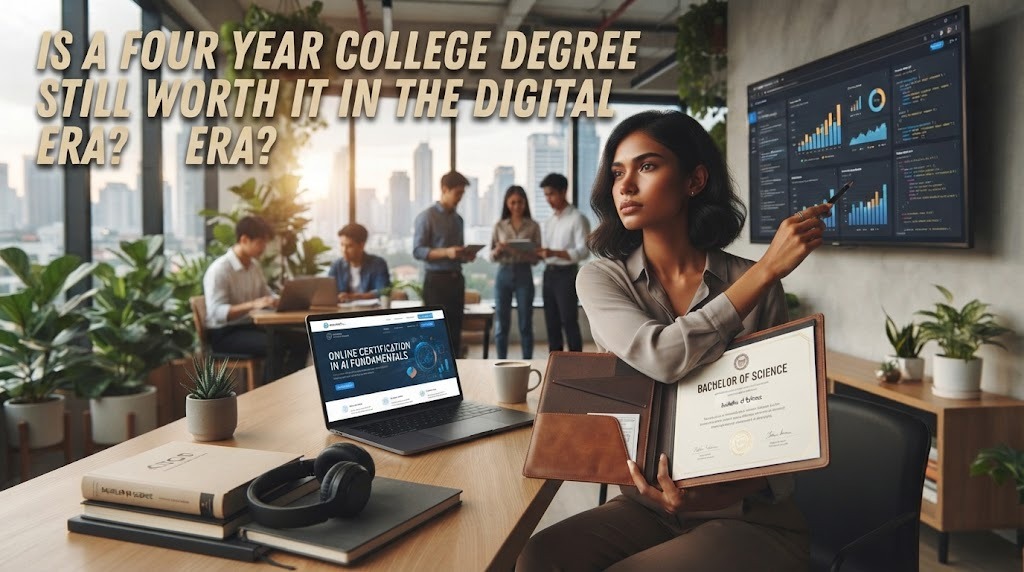
The digital era has changed the way people learn, work, and build careers. Online courses, professional certifications, remote jobs, and digital platforms have created more alternatives to traditional education. Because of these changes, many people are asking whether a four year college degree is still worth the time and money required to complete it.
A college degree can still provide important benefits, but its value depends on a person's career goals, industry, financial situation, and skills. Instead of viewing college as the only path to success, students should consider how a degree can work together with practical experience and digital skills.
THE VALUE OF A COLLEGE DEGREE IN THE DIGITAL ERA
A four year college degree can provide a structured learning environment and a strong academic foundation. Students have opportunities to study their chosen field systematically and develop critical thinking, communication, research, and problem solving skills. These abilities can remain valuable even when technology and job requirements continue to change.
Many employers also use educational qualifications as part of their recruitment process. Some professions, including medicine, engineering, teaching, and certain regulated careers, require specific academic qualifications. Therefore, a college degree remains an important investment for people who want to enter careers where formal education is essential.
WHY DIGITAL SKILLS ARE BECOMING MORE IMPORTANT
Technology has changed the skills employers look for when hiring workers. Knowledge of data analysis, artificial intelligence, digital marketing, programming, cybersecurity, and cloud technology can provide significant advantages in many industries. A degree alone may not be enough if graduates cannot adapt to modern workplace technologies.
Digital skills can also be developed outside traditional universities. Online learning platforms, professional courses, bootcamps, and practical projects allow people to learn specific skills based on their career interests. Combining a college education with relevant digital skills can therefore make graduates more competitive.
COLLEGE EDUCATION CAN PROVIDE MORE THAN A DEGREE
The benefits of college are not limited to receiving a diploma. Students can build professional networks through classmates, lecturers, organizations, internships, seminars, and campus activities. These connections can sometimes lead to internship opportunities, professional relationships, and career opportunities.
College can also help students develop independence and discipline. Managing assignments, presentations, group projects, and deadlines can prepare students for professional responsibilities. For many people, these experiences become valuable parts of their personal and career development.
THE FINANCIAL SIDE OF A FOUR YEAR DEGREE
One major concern is the cost of higher education. Tuition fees, living expenses, transportation, books, and other costs can make a four year degree a significant financial commitment. Students should carefully consider whether the expected career benefits justify the total cost of their education.
The financial value of a degree can also vary between fields. Some degrees may lead to careers with strong employment demand and higher earning potential, while others may require additional qualifications or experience. Comparing education costs, career opportunities, expected income, and personal goals can help students make a more informed decision.
ALTERNATIVES TO TRADITIONAL COLLEGE EDUCATION
The digital era has created several alternatives to traditional four year education. People can develop professional skills through online courses, vocational programs, certifications, apprenticeships, bootcamps, and work experience. These options can be especially useful for careers where employers focus heavily on practical abilities.
However, alternative education does not automatically replace a college degree. Its effectiveness depends on the industry and the specific career path. A person interested in software development may have more flexible education options than someone who wants to become a doctor or licensed professional.
EXPERIENCE AND SKILLS CAN COMPLEMENT A DEGREE
Employers often look beyond academic qualifications when evaluating candidates. Work experience, portfolios, internships, communication skills, teamwork, and problem solving can demonstrate whether someone is ready to perform a job effectively. A graduate who has practical experience may have an advantage over someone who only has academic knowledge.
Students can start building experience while studying. Internships, freelance projects, student organizations, competitions, and personal projects can help create a stronger professional portfolio. This approach allows students to graduate with both a degree and practical evidence of their abilities.
IS A FOUR YEAR DEGREE STILL WORTH IT?
For many people, the answer is yes, especially when the degree is connected to clear career goals. A college education can provide knowledge, professional networks, credentials, and personal development that are difficult to obtain through short-term learning alone. Its value becomes stronger when students actively develop practical skills and gain relevant experience.
However, a four year degree is not necessarily the best choice for everyone. People should consider their desired career, financial resources, learning preferences, and opportunities in their target industry. The most effective approach in the digital era is often to combine formal education with continuous learning and practical experience.
HOW TO MAKE A COLLEGE DEGREE MORE VALUABLE
Students can increase the value of their degree by learning skills that are relevant to the changing job market. They should not rely only on classroom materials but also explore digital tools, industry trends, internships, professional certifications, and real-world projects. This can help connect academic knowledge with workplace expectations.
Building a professional network is also important. Students can participate in seminars, career events, communities, and professional platforms to meet people in their desired industry. By continuously improving their skills and gaining experience, graduates can make their college education more useful in a competitive digital economy.
CONCLUSION
A four year college degree is still valuable in the digital era, but its importance depends on how it is used. Technology has created alternative learning paths, yet formal education remains essential for many professions and can provide valuable knowledge, networks, and credentials.
The strongest career strategy is not simply choosing between college and digital learning. Instead, students can combine academic knowledge, digital skills, practical experience, and continuous learning. In a rapidly changing job market, the ability to adapt and keep developing can be just as important as the degree itself.
About the Author
Gusti Ayu Tita P
Author — STEKOM University
An active author focused on academic issues, educational technology, and human resource development in the campus environment.















