
Is College Still A Place For Learning Or Has It Become A Social Expectation
Gusti Ayu Tita P
21 Agustus 2026
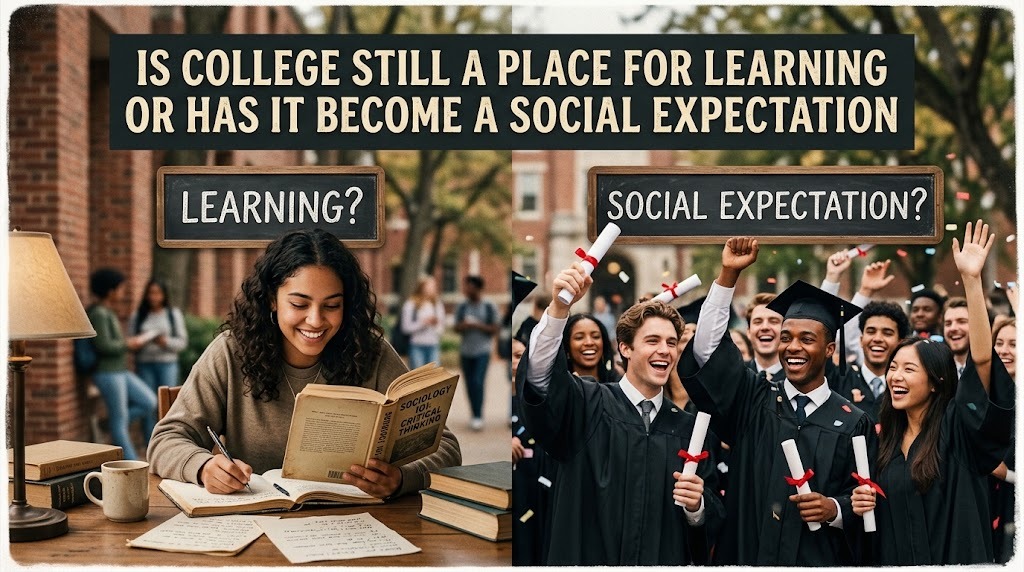
College has traditionally been viewed as a place where students gain knowledge, skills, critical thinking, and professional preparation. However, higher education is also influenced by social expectations. Many young people are encouraged to attend college because their families, communities, or peers consider a degree an important sign of success. This raises an important question: Is college still primarily a place for learning, or has attending college become a social expectation? The answer depends on individual goals, educational systems, cultural values, and how students approach their college experience.
COLLEGE AS A PLACE FOR LEARNING
The primary purpose of college is still education and learning. Universities provide students with structured courses, experienced lecturers, libraries, research resources, laboratories, and opportunities to explore academic subjects. Students can develop specialized knowledge while also improving skills such as communication, research, analysis, and problem solving. These abilities can support both personal development and future careers.
College also provides opportunities to encounter ideas that students may not discover independently. Discussions, research projects, presentations, and practical activities can encourage students to examine different perspectives. A strong college experience can therefore involve much more than attending lectures and passing examinations. Meaningful learning occurs when students actively engage with knowledge and learn how to apply it.
WHY COLLEGE CAN BECOME A SOCIAL EXPECTATION
In many societies, attending college is considered a normal step after finishing secondary education. Parents may encourage their children to earn a degree because they believe it will provide better career opportunities and financial stability. Friends and classmates can also influence students by making university attendance appear like the standard path to adulthood. As a result, some students may enter college because they feel expected to do so rather than because they have a clear educational goal.
Social expectations are not necessarily negative. Encouragement from families and communities can motivate students to pursue education and improve their future prospects. However, problems can arise when students believe that college is the only acceptable path to success. Vocational education, professional training, entrepreneurship, apprenticeships, and work experience can also provide valuable routes toward personal and career development.
THE PRESSURE TO EARN A DEGREE
A college degree can provide important benefits, particularly for professions that require formal qualifications. However, the pressure to earn a degree can sometimes cause students to focus more on obtaining the credential than developing knowledge. They may prioritize passing courses over understanding concepts or choose subjects mainly because they appear prestigious. In this situation, education can become focused on credentials rather than learning.
Students may also compare themselves with peers who appear to be progressing faster. This comparison can create anxiety about academic performance, career choices, and future success. When students view a degree as a social requirement, they may continue studying even when they have not considered whether their chosen field matches their interests or abilities. Personal purpose is therefore important when making decisions about higher education.
THE VALUE OF COLLEGE BEYOND A DEGREE
College can provide benefits that extend beyond the degree itself. Students can build professional networks, communication skills, leadership abilities, research experience, and personal confidence. Working with classmates from different backgrounds can also improve collaboration and broaden perspectives. These experiences can influence students' personal development even when they are not directly measured through examinations.
University life can also encourage students to become more independent. They may need to manage schedules, make decisions, solve problems, and take responsibility for their academic progress. These experiences can help students prepare for professional and adult responsibilities. Therefore, the value of college should not be judged solely by the certificate received at graduation.
WHEN STUDENTS LOSE FOCUS ON LEARNING
Students can lose focus on learning when academic achievement becomes primarily about grades or social recognition. They may memorize information before examinations and quickly forget it afterward. Assignments can become tasks to complete rather than opportunities to explore ideas. This approach can reduce the development of deep knowledge and practical understanding.
A learning focused approach requires students to become active participants. They can ask questions, conduct research, participate in discussions, and connect academic concepts with real situations. Internships and projects can also help students understand how classroom knowledge is used outside university. When students focus on learning rather than simply completing requirements, their college experience can become more meaningful.
COLLEGE AND CAREER PREPARATION
One important reason people attend college is to prepare for a professional career. Higher education can provide specialized knowledge and qualifications required by certain industries. Students can also develop transferable skills such as teamwork, problem solving, communication, and adaptability. These abilities can be valuable when entering a competitive labor market.
However, career preparation does not always require the same educational path for everyone. Some professions value degrees strongly, while others place greater emphasis on portfolios, certifications, technical skills, or experience. Students should therefore consider the requirements of their intended career before choosing an educational pathway. Career planning can help students understand whether college is the right option and how to make the most of it.
HOW STUDENTS CAN MAKE COLLEGE MEANINGFUL
Students can make college more valuable by identifying what they want to learn and why it matters to them. Setting personal learning goals can provide direction even when social expectations influenced their decision to attend. Students can choose electives that match their interests, participate in relevant organizations, and seek practical experiences related to their field. They can also communicate with lecturers and academic advisors when they need guidance.
Students should also look beyond grades and focus on developing abilities that will remain useful after graduation. Reading additional materials, joining projects, practicing communication, and solving real problems can strengthen their education. College becomes more meaningful when students actively shape their own learning experience. Personal engagement can turn university from a social expectation into an opportunity for genuine growth.
IS COLLEGE STILL WORTH IT?
For many students, college remains a valuable investment in education, professional preparation, and personal development. However, its value depends on factors such as the chosen field, educational quality, financial costs, career opportunities, and the student's goals. A degree can be highly useful when it provides relevant knowledge and access to careers that require formal qualifications. Students should therefore evaluate college based on their individual circumstances rather than social pressure alone.
At the same time, society should recognize that success can take different forms. Not everyone needs the same educational pathway, and choosing an alternative to college does not automatically mean choosing a less successful future. What matters is whether a person's education or training helps them develop useful skills and move toward meaningful goals. Education should support individual growth rather than simply satisfy social expectations.
CONCLUSION
College is still an important place for learning, personal development, and career preparation, but social expectations can influence why students choose to attend. The problem is not that society values higher education; the problem occurs when students pursue a degree without understanding their own goals. A meaningful college experience should focus on developing knowledge, practical skills, critical thinking, and professional abilities. Students should also recognize that alternative educational and career pathways can be valuable. Ultimately, college is most beneficial when it is treated not merely as a social requirement but as an opportunity to learn, grow, and prepare for a meaningful future.
About the Author
Gusti Ayu Tita P
Author — STEKOM University
An active author focused on academic issues, educational technology, and human resource development in the campus environment.















