
Key Competencies in Functional Positions
Gusti Ayu Tita P
12 Agustus 2026
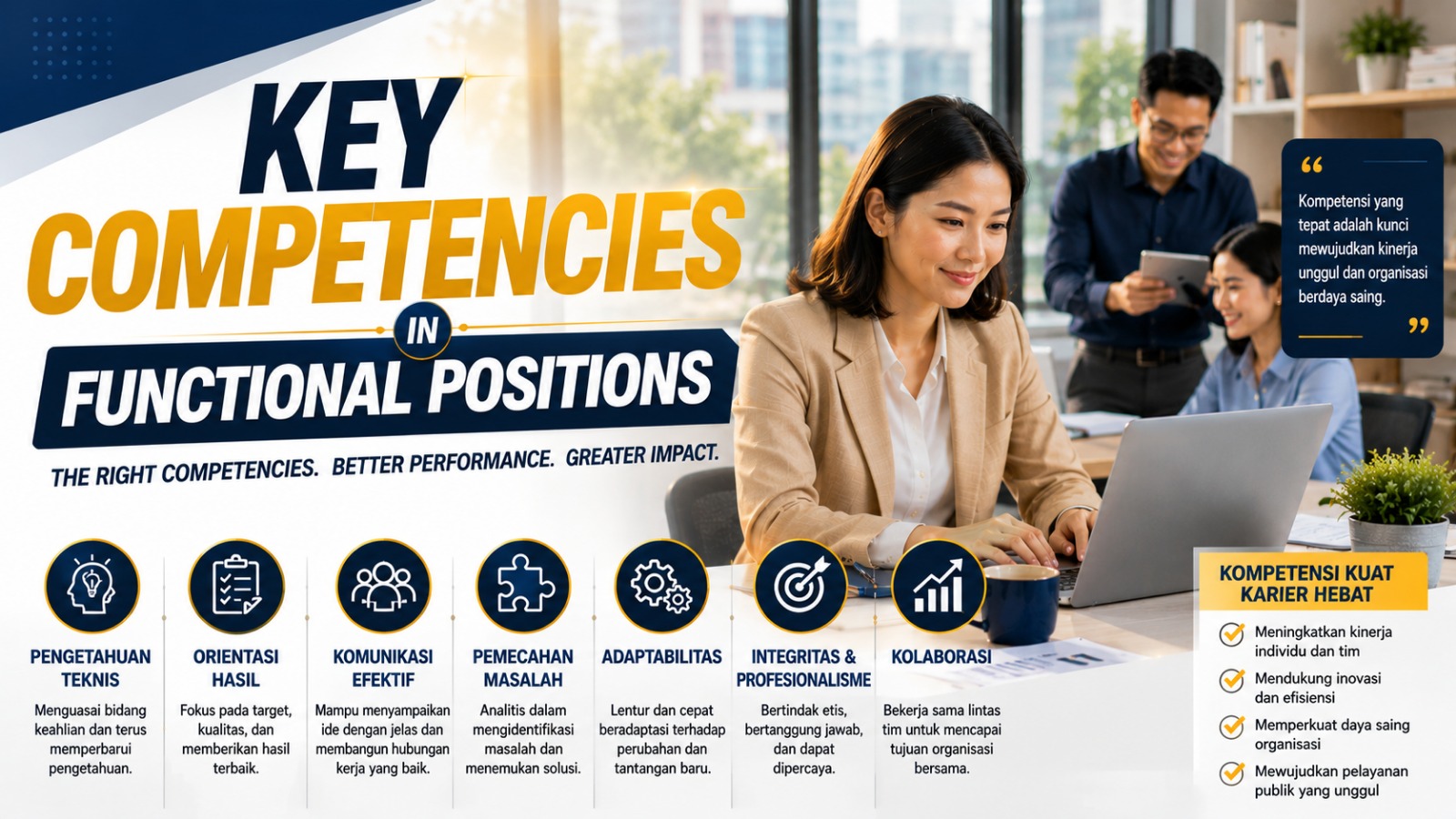
Functional positions require professionals to have specialized knowledge, practical skills, and professional attitudes that match their responsibilities. Unlike roles that mainly focus on management, functional positions emphasize expertise and the quality of work produced in a particular field. Strong competencies help professionals complete tasks accurately while contributing to organizational objectives. As workplace demands continue to change, these competencies also need to be developed continuously.
Modern professionals are expected to do more than understand technical procedures. They need to communicate effectively, solve problems, use technology, and adapt to new situations. A combination of technical and supporting competencies can help employees maintain strong performance and prepare for long-term career development.
TECHNICAL COMPETENCE AS A FOUNDATION
Technical competence is one of the most important requirements in a functional position. It refers to the knowledge and practical skills needed to perform specific responsibilities within a professional field. Employees need to understand the procedures, standards, and methods related to their work. Strong technical competence can improve accuracy and reduce avoidable mistakes.
Technical knowledge should not remain static because professional practices can change over time. New technologies, regulations, and methods may require employees to update their capabilities. Continuous learning allows professionals to maintain relevant technical expertise while improving the quality of their work.
COMMUNICATION SKILLS
Communication is an important supporting competency for professionals in functional positions. Employees often need to explain information, prepare reports, discuss problems, or coordinate tasks with colleagues. Clear communication can prevent misunderstandings and make collaboration more efficient. It also helps professionals present their expertise in a way that others can understand.
Good communication involves both speaking and listening. Professionals need to understand instructions, respond appropriately, and provide information based on facts. By developing effective communication skills, employees can build stronger professional relationships and support better workplace coordination.
PROBLEM SOLVING AND ANALYTICAL THINKING
Functional professionals often encounter problems that require careful analysis. They need to identify the main issue, examine available information, and determine an appropriate solution. Problem solving allows employees to handle unexpected situations without relying only on routine procedures. This competency is especially valuable when dealing with complex or changing work conditions.
Analytical thinking also helps professionals make decisions based on evidence rather than assumptions. Employees can compare different options and consider their potential consequences before taking action. Combining analysis and problem solving can improve the effectiveness of professional decisions.
DIGITAL COMPETENCE
Digital technology has become an important part of modern functional work. Professionals may use digital systems for communication, data management, documentation, analysis, and service delivery. Therefore, digital competence is increasingly necessary across many professional fields. Employees who can use relevant technologies effectively may complete tasks more efficiently.
Digital competence also includes responsible technology use. Professionals need to understand information accuracy, data security, and appropriate handling of digital resources. Combining digital skills with professional expertise can support greater productivity and workplace adaptability.
ADAPTABILITY AND CONTINUOUS LEARNING
Workplace requirements can change because of technology, organizational priorities, and professional developments. Adaptability enables employees to respond to these changes without losing focus on their responsibilities. Professionals who are open to new methods can learn more easily and adjust their work practices when necessary. Adaptability is therefore an important competency for sustainable career development.
Continuous learning supports this ability to adapt. Professionals can improve through training, education, practical experience, mentoring, and independent study. A willingness to learn helps employees maintain relevant and up-to-date competencies throughout their careers.
TEAMWORK AND COLLABORATION
Although functional positions emphasize individual expertise, many professional tasks require collaboration. Employees may need to work with people from different departments or professional backgrounds. Teamwork skills help professionals share information, coordinate responsibilities, and contribute to common goals. Collaboration can also provide opportunities to learn from other areas of expertise.
Effective teamwork requires respect, accountability, and clear communication. Professionals should be able to contribute their knowledge while considering the perspectives of others. Strong collaboration can create more effective solutions and improve overall organizational performance.
PROFESSIONAL INTEGRITY AND RESPONSIBILITY
Competence is incomplete without professional integrity. Employees are expected to perform their responsibilities honestly, responsibly, and according to applicable standards. Professional integrity helps build trust between employees, organizations, and the people they serve. It also supports responsible decision-making when professionals face difficult situations.
Responsibility can be demonstrated through punctuality, accurate work, proper documentation, and accountability for results. Professionals should also be willing to evaluate mistakes and make appropriate improvements. When expertise is combined with integrity and responsibility, functional positions can contribute more effectively to organizational success.
CONCLUSION
Key competencies in functional positions include technical expertise, communication, problem solving, digital competence, adaptability, teamwork, and professional integrity. These abilities work together to help professionals perform their responsibilities effectively. Continuous learning is essential because workplace demands and professional standards can change over time. By developing these competencies consistently, employees can improve their performance and build a stronger long-term professional career.
About the Author
Gusti Ayu Tita P
Author — STEKOM University
An active author focused on academic issues, educational technology, and human resource development in the campus environment.















