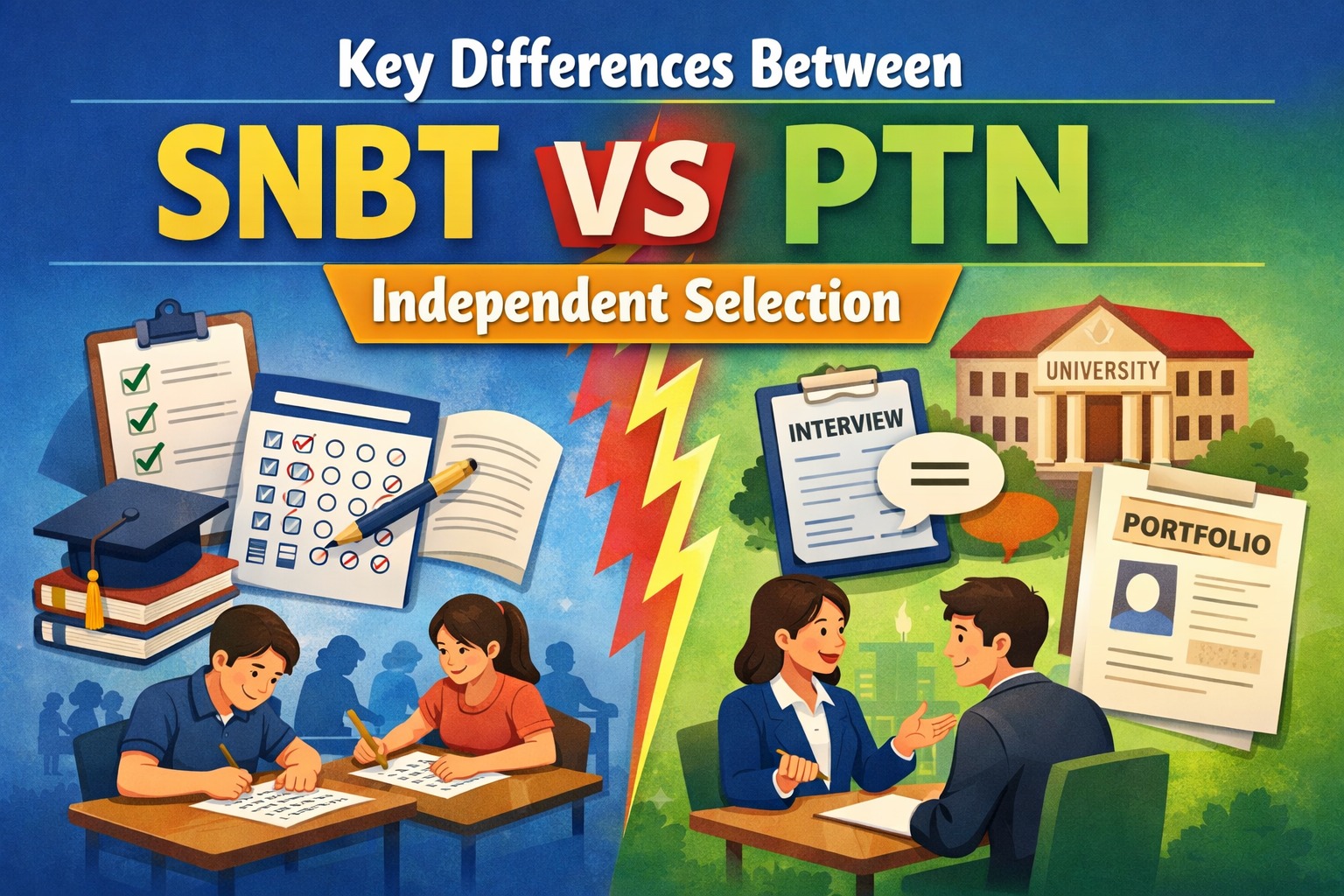
Choosing the right university admission pathway is an important step for students who want to continue their education in Indonesia. Two of the most popular admission systems are SNBT and PTN Independent Selection. Although both provide opportunities to enter public universities, they have different requirements, selection systems, and advantages. Understanding these differences can help students prepare more effectively and increase their chances of being accepted into their dream campus.
WHAT IS SNBT?
SNBT, or Seleksi Nasional Berdasarkan Tes, is a national entrance examination system for public universities in Indonesia. This pathway is organized centrally by the government and uses standardized tests to assess students’ academic abilities.
The SNBT exam usually focuses on scholastic aptitude, reasoning skills, literacy, and problem-solving abilities. Since the system is national, all participants compete under the same standards and regulations.
One of the biggest advantages of SNBT is its transparency. The scoring system and selection process are generally clear, making it easier for students to understand their admission opportunities.
WHAT IS PTN INDEPENDENT SELECTION?
PTN Independent Selection is an admission pathway organized directly by each public university. Unlike SNBT, every university has its own rules, requirements, schedules, and testing methods.
Some universities conduct written exams, while others may consider academic achievements, portfolios, interview results, or even SNBT scores as part of their selection process. Because each campus manages the system independently, the competition and admission standards may vary.
This pathway is often chosen by students who were not accepted through SNBT or who want additional opportunities to enter a specific university.
MAIN DIFFERENCES BETWEEN SNBT AND PTN INDEPENDENT SELECTION
1. ORGANIZER
The most obvious difference is the organizer of the admission process.
- SNBT is managed nationally by the government.
- PTN Independent Selection is managed individually by each public university.
As a result, SNBT has a more standardized system, while independent selection systems can differ from one campus to another.
2. SELECTION METHOD
SNBT mainly relies on standardized test scores. Every participant takes a similar type of exam.
In contrast, PTN Independent Selection may involve:
- Written tests
- Interviews
- Portfolio assessments
- Academic achievement evaluations
- Combination of SNBT scores and campus-specific requirements
This flexibility allows universities to choose students based on their own academic standards.
3. REGISTRATION FEES
Another important difference is the registration fee.
SNBT usually has a relatively affordable and standardized fee because it is regulated nationally. Meanwhile, PTN Independent Selection fees may vary depending on the university and study program.
Some independent pathways also require higher tuition commitments or institutional development fees.
4. COMPETITION LEVEL
SNBT is highly competitive because students from all regions compete through one national system. The passing grade is often very high, especially for popular majors.
PTN Independent Selection can also be competitive, but the competition level depends on the university and the selected program. Some students consider this pathway a second chance after SNBT results are announced.
5. ADMISSION SCHEDULE
SNBT follows a national schedule determined by the government. All students must follow the same registration and examination timeline.
PTN Independent Selection schedules differ between universities. This gives students more flexibility because they can apply to several campuses with different deadlines.
WHICH PATHWAY SHOULD YOU CHOOSE?
The best choice depends on your academic readiness and university goals. Students with strong test-taking skills may benefit from SNBT because the system is standardized and transparent.
On the other hand, students who have strong achievements, portfolios, or specific talents may find better opportunities through PTN Independent Selection. Many students also choose to participate in both pathways to maximize their chances of acceptance.
Preparing early, understanding the admission requirements, and practicing regularly are key factors for success in either pathway.
CONCLUSION
SNBT and PTN Independent Selection both offer valuable opportunities for students who want to study at public universities in Indonesia. SNBT emphasizes standardized national testing, while PTN Independent Selection provides more flexibility through university-specific requirements.
By understanding the key differences between these two admission systems, students can create better preparation strategies and choose the pathway that matches their abilities and goals. Careful planning and consistent preparation will greatly improve the opportunity to enter the desired university.
About the Author
Gusti Ayu Tita P
Author — STEKOM University
An active author focused on academic issues, educational technology, and human resource development in the campus environment.