
Key Routes to Watch During Indonesia Holiday Return Travel
Gusti Ayu Tita P
10 Agustus 2026
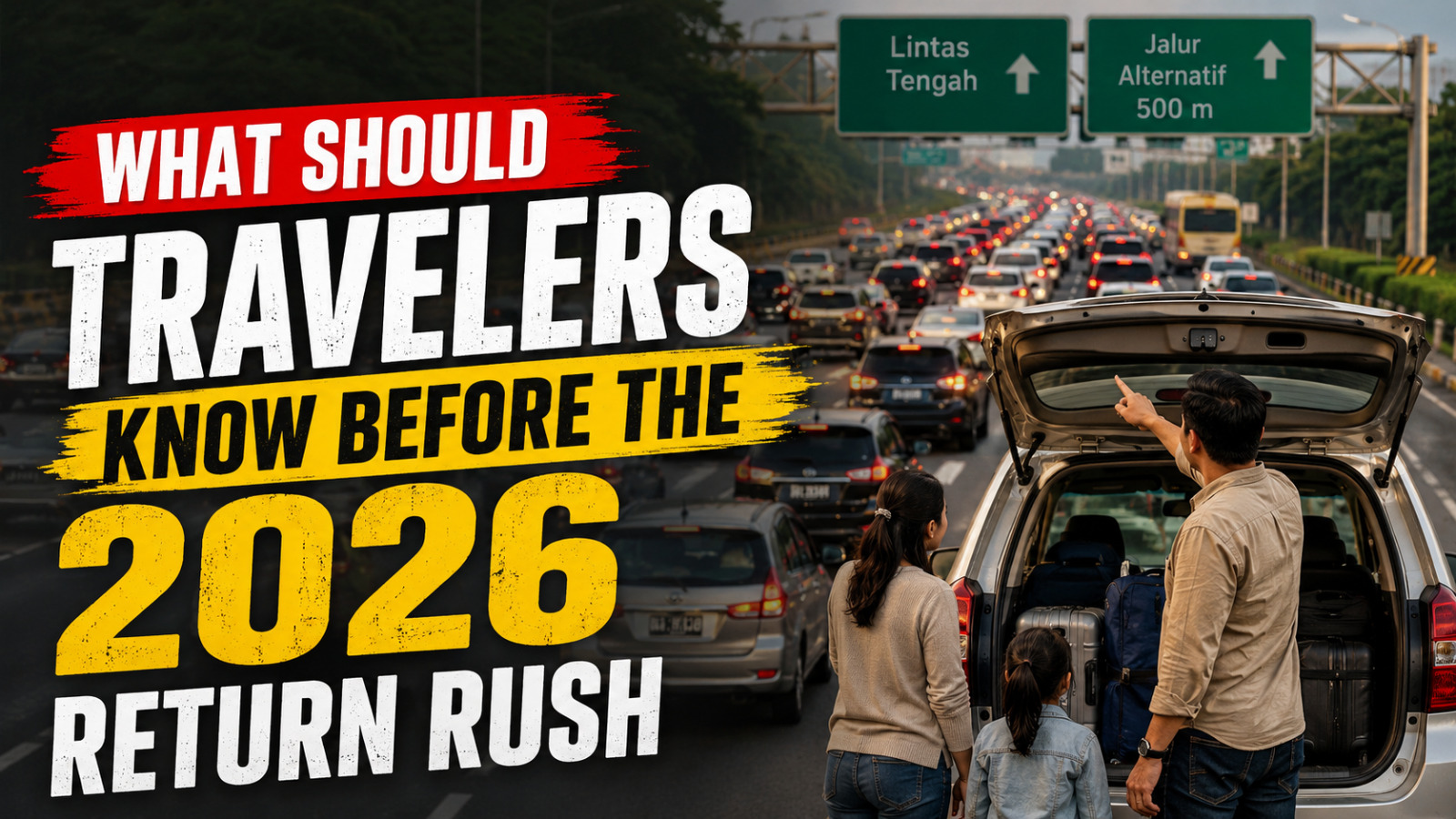
Holiday return travel in Indonesia can become challenging as thousands of travelers head back to major cities after spending time in their hometowns or vacation destinations. Heavy traffic, long travel distances, weather conditions, and vehicle problems can make the journey more difficult. Knowing the key routes that may experience increased traffic can help travelers prepare better.
Understanding Indonesia’s major return routes is also useful for choosing the right departure time and preparing alternative plans. With proper preparation, travelers can reduce unnecessary delays and make their journey home safer and more comfortable.
MAJOR ROUTES TO WATCH DURING THE RETURN JOURNEY
Several major roads in Indonesia commonly become busy during holiday return periods. Routes connecting Central Java, East Java, West Java, and Jakarta often experience significant increases in traffic because many travelers return to large urban areas at approximately the same time. Major toll roads and national highways can therefore become crowded, especially during peak periods.
Important routes may include sections of the Trans-Java Toll Road, which connects several major cities across Java. Roads around Semarang, Solo, Yogyakarta, Surabaya, Cirebon, Bandung, and Jakarta can also experience increased vehicle movement depending on the holiday travel pattern. Travelers should check current traffic information before departure because congestion levels can change quickly.
TRANS-JAVA TOLL ROAD AND CENTRAL JAVA
The Trans-Java Toll Road is one of the most important transportation corridors for holiday travelers returning from Central and East Java toward western parts of Java. High traffic volume can occur on several sections when large numbers of vehicles travel toward Jakarta and surrounding areas.
Travelers using this corridor should monitor traffic conditions before and during the journey. Rest areas can also become crowded, particularly when many drivers stop at similar times. Planning fuel stops, meals, and rest periods in advance can help reduce unnecessary delays.
WEST JAVA AND JAKARTA ACCESS ROUTES
Routes approaching West Java and Jakarta are also important areas to monitor during the return period. Traffic density can increase significantly when vehicles from different regions converge toward metropolitan areas. Toll road entrances, exits, junctions, and connecting roads may become particularly busy.
Travelers should not assume that the toll road will always provide a completely congestion-free journey. Traffic can also build up near major interchanges and city entrances. Checking navigation applications and official traffic updates before entering these areas can help drivers make better decisions.
CHECK TRAFFIC CONDITIONS BEFORE DEPARTURE
Checking traffic conditions is one of the simplest ways to prepare for a long return journey. Travelers can use official traffic information, navigation applications, and transportation updates to identify congested areas and possible delays. Conditions should ideally be checked shortly before departure because traffic situations can change rapidly.
It is also useful to prepare an alternative route when possible. However, drivers should avoid suddenly leaving a major route and entering a small road without checking its condition first. Alternative roads may also become crowded when many drivers attempt to avoid congestion on the main route.
CHOOSE THE RIGHT DEPARTURE TIME
Departure time can have a major impact on the overall return journey. Travelers who have flexibility should consider leaving outside the expected peak traffic period. Starting the journey at a less crowded time may help reduce exposure to long traffic queues.
However, drivers should never choose an unsuitable departure time simply to avoid congestion. Driver alertness and safety must remain the priority, especially for long-distance travel. Drivers who feel tired should stop at a safe location and take enough time to rest.
PREPARE THE VEHICLE BEFORE TRAVELING
A long return journey requires a vehicle that is in good condition. Before departure, travelers should check tires, brakes, engine oil, coolant, lights, battery condition, and fuel levels. These basic checks can help reduce the risk of vehicle problems during the trip.
Drivers should also make sure that emergency equipment is available when needed. A spare tire, basic tools, first aid supplies, drinking water, and a phone charger can be useful during unexpected situations. Vehicle preparation is especially important when traveling with children, elderly passengers, or large groups.
PLAN REST STOPS AND AVOID DRIVER FATIGUE
Long-distance driving can cause fatigue, which may reduce concentration and reaction speed. Travelers should plan regular rest stops instead of continuing to drive for excessive periods without a break. Rest areas and other safe stopping locations can provide opportunities to stretch, eat, drink, and recover.
Drivers should also pay attention to warning signs such as frequent yawning, difficulty focusing, heavy eyelids, or reduced awareness of surrounding traffic. If these signs appear, continuing the journey is not worth the risk. A short rest can be far more valuable than trying to save a few minutes of travel time.
PREPARE FOR WEATHER AND ROAD CONDITIONS
Weather can affect return travel conditions, particularly during long-distance journeys. Heavy rain, reduced visibility, slippery roads, and standing water can make driving more difficult and increase the risk of accidents. Drivers should adjust their speed and maintain a safe distance from other vehicles when weather conditions deteriorate.
Travelers should also check weather forecasts before departure and remain prepared for changes during the journey. Avoiding sudden braking and maintaining proper lighting can improve visibility and vehicle control. If conditions become dangerous, finding a safe place to stop may be the best option.
CONCLUSION
Knowing the key routes to watch during Indonesia holiday return travel can help travelers prepare for possible congestion and delays. Trans-Java routes, major roads in Central and West Java, and access routes toward Jakarta deserve particular attention because they can experience increased traffic during major return periods.
Good preparation involves more than choosing a route. Travelers should check traffic information, select a suitable departure time, inspect their vehicles, plan rest stops, and monitor weather conditions. By preparing carefully and prioritizing safety, travelers can make their return journey more comfortable and reduce unnecessary risks on the road.
About the Author
Gusti Ayu Tita P
Author — STEKOM University
An active author focused on academic issues, educational technology, and human resource development in the campus environment.















